Clocks are valued differently from other furniture because they contain a machine, and the machine is usually where the money is. Two clocks that look almost identical on a mantelpiece can differ several fold in price, and the reasons are almost entirely inside the case.
What matters most?
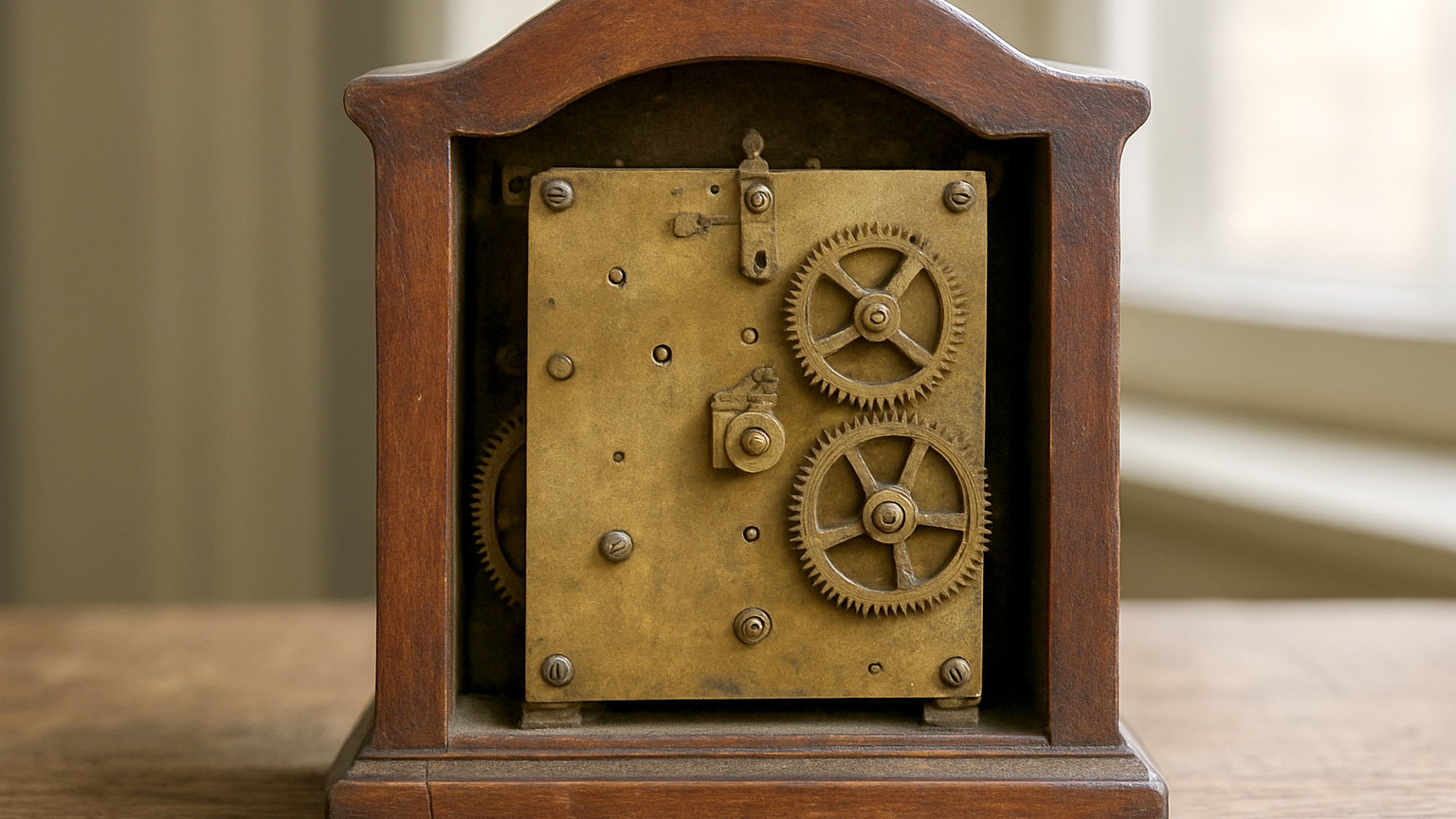
The movement, above everything. Quality of finishing, the type of escapement, the presence of a fusee, jewelled bearings and the general standard of workmanship all separate a fine clock from an ordinary one.
An eight day movement is worth considerably more than a thirty hour one. A fusee movement indicates better English work. Open the back and look before forming any view, since the case tells you about fashion and the movement tells you about quality.
How much does the maker add?
Substantially, where the name is genuine and the quality supports it. Collectors follow particular makers closely and a documented attribution commands a real premium.
Be careful, though, since the name on a dial is frequently a retailer rather than the maker. Check the backplate, verify the named party is recorded as working in that place at that date, and confirm the movement quality is consistent with the reputation.
Why does originality matter so much?
Because clocks are assembled from separable parts and have been recombined constantly. A movement in a case built for another movement is a marriage, and it is worth far less than an original pairing.
Check the seatboard for wear and fixing marks matching the movement on it. Check the dial fills its aperture cleanly. Extra holes, packing pieces or an enlarged opening all indicate the parts did not start life together, and that single finding can halve a value.
Which complications add value?
A repeating mechanism, which strikes the last hour on demand. Calendar work, moon phases, seconds dials and anything requiring additional trains all indicate a more ambitious movement.
They must work, or at least be complete. A complication with missing parts is a liability rather than an asset, since replacements for early movements must frequently be made by hand at real expense. Test everything before paying for it.
How much does the case count?
Considerably to the price even though it carries less horological interest. Timber quality, proportions, figure and decorative execution all matter, and an elegant case with original surface lifts the value substantially.
Height is a practical factor on longcase clocks, since very tall examples will not fit modern rooms and that limits the audience. A well proportioned case of moderate height is worth more than a taller finer one that nobody can accommodate.
What reduces value most?
A repainted dial, a stripped and repolished case, a converted escapement, a battery movement fitted into an old case, and any marriage of parts.
Each of these removes originality, which is what collectors pay for. A repainted dial alone can cost a clock a large part of its worth even though it looks better afterwards, and none of these changes can be undone.
What about condition of the movement?
Servicing is normal and expected, and a movement maintained sympathetically over two centuries is exactly what you want. What counts against is crude repair.
Look for burred screw heads indicating unskilled work, replaced wheels that do not match, and repairs using unsuitable materials. A movement needing a service is a routine cost; a movement that has been badly repaired is a rebuild.
Where is the market now?
Ordinary longcase clocks are among the best value antiques available, because sheer size limits demand and fashion has moved away from them. Prices are a fraction of what they once were.
Exceptional makers, unusual movements, early examples and small clocks that fit modern rooms all continue to attract competition. If you want one to live with rather than trade, this is a good moment to be buying.
Does provenance help with clocks?
Considerably, as it does anywhere. A documented history, an original bill of sale, or a record of the clock in a known house all remove doubt and add real money.
Repairer marks scratched inside the case are a form of provenance too, recording a working life across two centuries, and they should never be cleaned off.