The pendulum is the timekeeping element of most antique clocks and the component most frequently damaged, usually during moving. It hangs from a strip of spring steel that can be bent by careless handling in a second, and a bent suspension spring will stop a clock keeping time however good the movement is.
How does a pendulum control timekeeping?
By the physics of its length. A pendulum swings at a rate determined almost entirely by its effective length, and that rate is remarkably consistent regardless of how far it swings.
The escapement releases the wheel train one step per swing, so the pendulum acts as the governor for the entire clock. Change the length and you change the rate, which is exactly how a clock is regulated.
What are the parts?
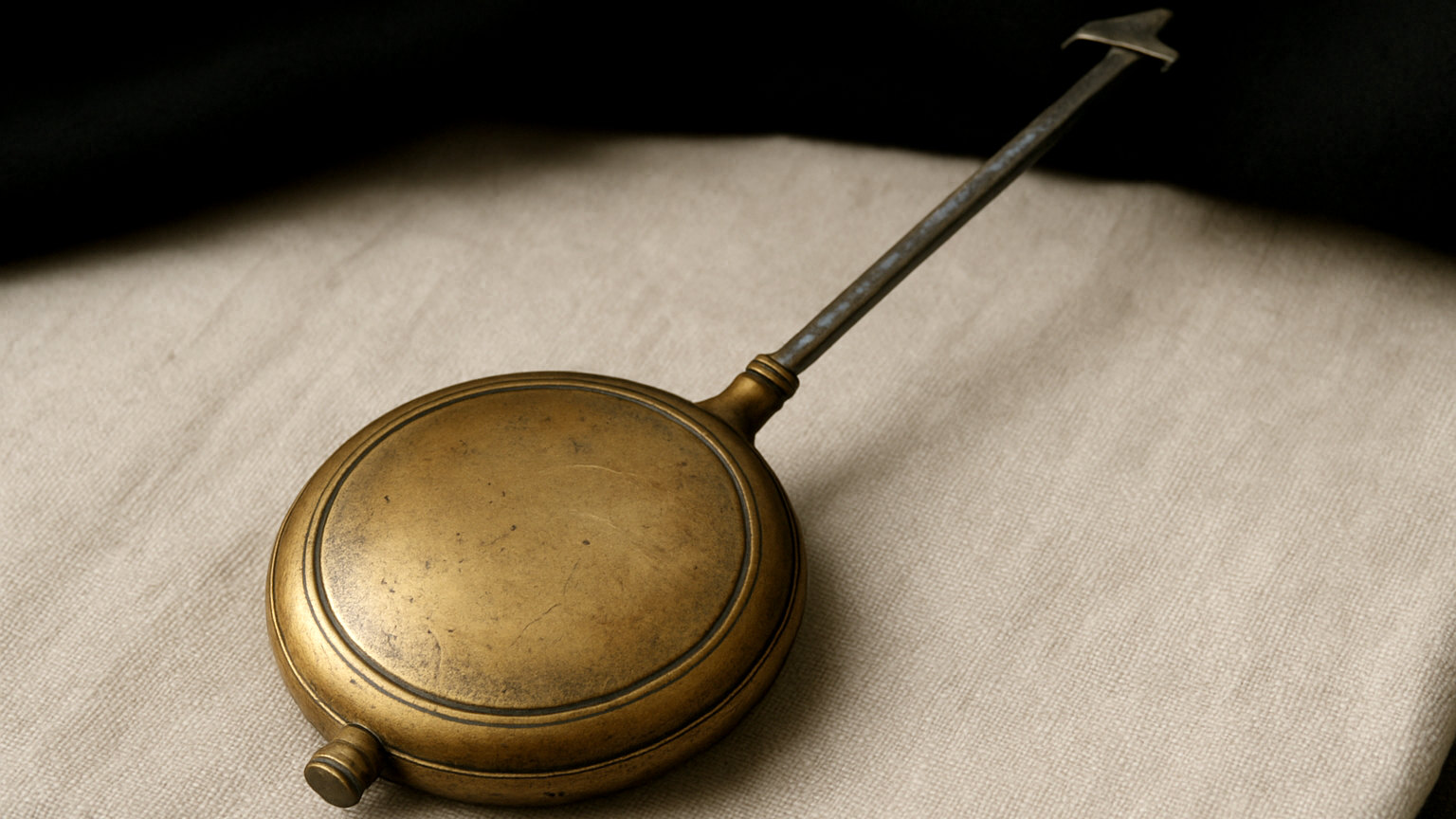
A suspension spring at the top, a rod, and a bob at the bottom, usually with a rating nut beneath the bob for adjustment. The spring is a thin strip of steel from which the whole assembly hangs.
The rod connects to the movement through a crutch, a lever that transmits the impulse from the escapement to the pendulum. Rods may be steel, wood or a compensating arrangement of two metals designed to cancel out temperature effects on better clocks.
Why is the suspension spring so vulnerable?
Because it is extremely thin and it takes the entire weight of the pendulum. Any lateral force bends it, and a bent spring makes the pendulum swing unevenly or fouls the movement.
This is why a pendulum must always be unhooked before a clock is moved. Lift the pendulum slightly to release the suspension rather than pulling downwards, wrap it separately and keep it straight. A pendulum swinging freely in a van will wreck a movement within a few miles.
How do you regulate a clock?
By turning the rating nut, which raises or lowers the bob and therefore changes the effective length. Raising the bob shortens the pendulum and the clock runs faster; lowering it makes the clock run slower.
Make very small adjustments, a fraction of a turn at a time, then leave the clock a full day before judging. Adjusting repeatedly over a few hours simply confuses matters. Note the starting position so you can return if an adjustment overshoots.
What does putting a clock in beat mean?
Setting it so the tick and the tock are evenly spaced. Start the pendulum and listen: a healthy clock has a regular even rhythm, while one out of beat limps with a longer gap on one side.
An out of beat clock stops within hours. On many clocks the fix is to shift the case very slightly to one side until the beat evens out. Some have an adjustable crutch designed for the purpose, which a clockmaker sets properly.
Why does level matter?
Because a pendulum must swing symmetrically, and a case tilted in any direction throws the swing off centre. This is the commonest cause of a clock that runs for a few hours and stops.
Check with a spirit level in both directions and pack the feet until true. On a longcase, level the case then secure it to the wall, since tall clocks settle and lean over time. Get this right before adjusting anything else.
What should you check on the pendulum itself?
That the rod is straight, the bob is secure, and the suspension spring is undamaged. Sight along the rod to check for bends, and examine the spring for kinks, cracks or previous repairs.
Check the pendulum length suits the case, since a marriage of movement and case frequently shows up here. Confirm the bob hangs clear of the case sides and the backboard, and that nothing has fallen into the case to interfere with the swing.
When should a clockmaker be involved?
For any suspension spring replacement, any crutch adjustment you do not fully understand, and any clock that will not stay in beat after the case has been levelled properly.
Also for any clock that has stood unused for many years, since old lubricant turns to varnish and running a dry movement causes wear that costs far more than a service. Never force any adjustment, and never bend a crutch by hand to correct a beat.