Mantel clocks are the most commonly encountered antique clocks and the most varied. They span several centuries, dozens of case styles and movements of wildly differing quality, which makes the category confusing until you learn to look past the case. The movement is where the answer usually sits.
What should you look at first?
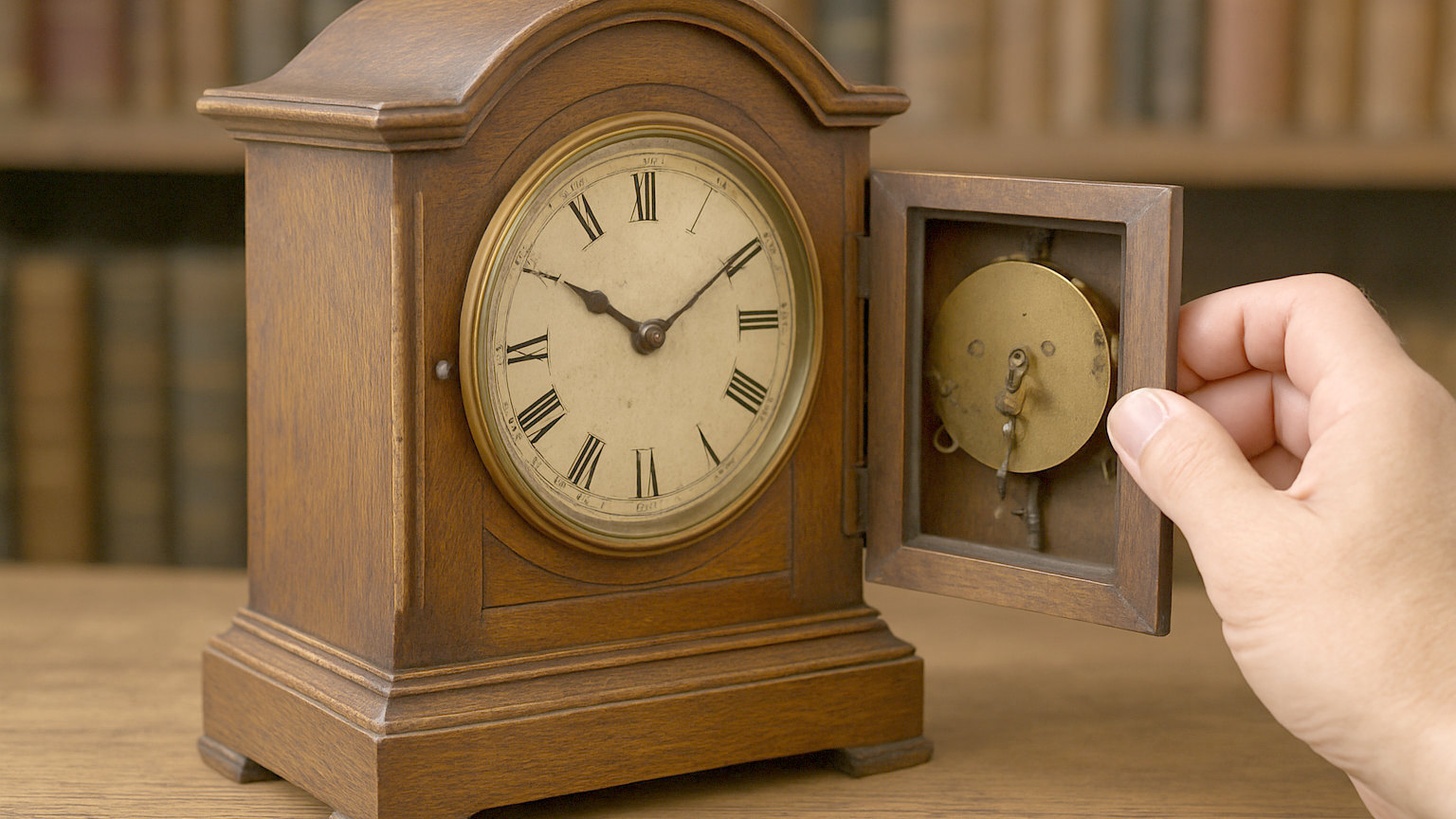
The backplate, reached by opening the door at the rear. It frequently carries a makers name, a trademark, a serial number and sometimes a country of origin, and it is far more informative than anything on the front.
Look also at the small punched marks and scratched notes left by repairers over the years. These record servicing and are genuinely useful evidence of a long working life, and occasionally they carry dates written by the workmen who did the job.
How do you tell the quality of a movement?
By the finishing. Better movements have well made plates, neatly cut wheels, jewelled bearings at key points and a generally considered appearance. Cheaper ones are rougher, with stamped rather than cut parts.
Count the winding holes on the dial. One means a timepiece with no strike. Two means it strikes as well as keeps time. Three indicates a chiming movement with an additional train, which is more complex and generally more valuable. More trains means more to go wrong and more to service, so factor that in.
What does the case tell you?
The intended market and the period style rather than the date directly. Case fashions were revived repeatedly, so a case in an earlier manner may house a much later movement.
Look at the material and how it was made. Solid timber cases with hand cut joints differ from veneered cases over a softwood carcass, which differ again from cases of slate, marble or moulded material. Check whether decorative mounts are cast and applied or moulded as part of the case, since the former indicates better quality.
What is a bracket clock?
A portable spring driven clock, usually with a carrying handle on top, designed to be moved between rooms and sometimes supplied with a matching wall bracket. The name is used loosely for a range of case forms.
Look for a handle, a back door with glass or a fretted panel to let sound out, and a movement finished on the backplate because it was meant to be seen. Engraved backplates indicate quality and earlier work, since later commercial movements were left plain.
How is the dial useful?
It carries the name most often, though that name may be the retailer rather than the maker. Dial materials also date a clock reasonably well, moving from brass with applied chapter rings through painted dials to printed ones.
Check whether the dial fills its aperture cleanly, since a gap or an enlarged opening suggests dial and case were not made for each other. Look for a repainted dial, which reduces value: repainting shows as lettering that is slightly too crisp, with spacing that does not quite sit right.
What condition issues matter?
On the movement, worn pivot holes, replaced wheels and crude repairs using unsuitable materials. Look at screw heads for burring, which indicates unskilled work inside.
On the case, veneer losses, missing mouldings, replaced feet and damage to any glazed panels. Check that the pendulum and winding key are present, since the correct key size matters and replacements must be matched. Missing or replaced hands are common and relatively easily corrected.
Is a mantel clock worth restoring?
It depends on the movement. A good quality movement that simply needs cleaning and adjustment is worth servicing, since the work is routine and the clock will then run for years.
A cheap movement with missing parts rarely justifies the cost, because hand made replacements exceed the value of the clock. Get an estimate before committing. Battery conversions destroy value entirely and should never be carried out on anything with a decent movement.