Every antique clock eventually needs attention, and the choice of who does it matters more than most owners realise. Old oil turns to varnish, pivots wear, and a movement run in that state accumulates damage steadily. Getting it serviced is routine; getting it serviced by the wrong person is expensive.
What does a service actually involve?
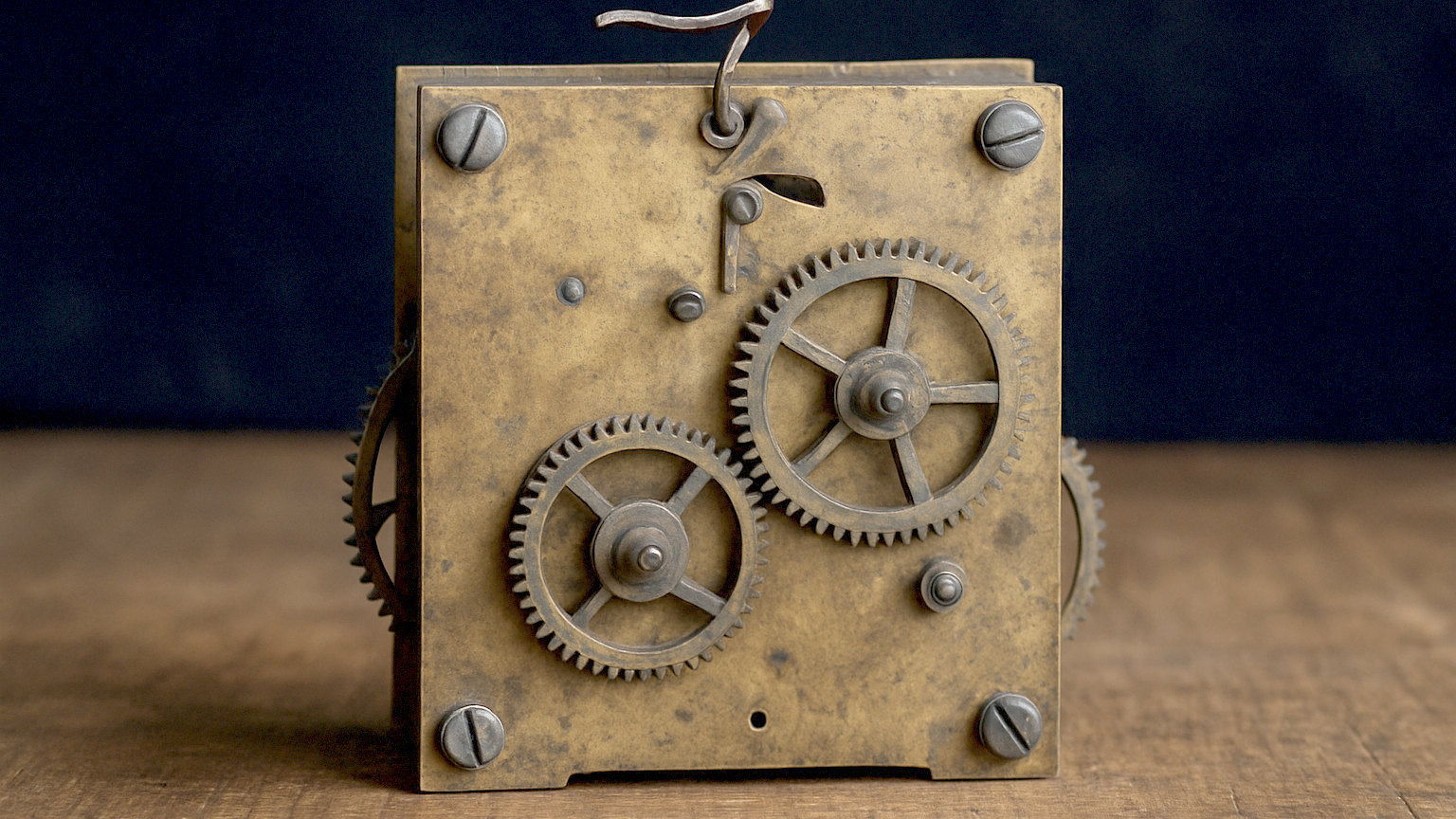
Complete dismantling of the movement, cleaning every component, inspecting for wear, correcting worn pivot holes, replacing anything beyond repair, reassembling and lubricating correctly, then regulating and testing over a period.
It is not a matter of squirting oil into a running clock, which is actively harmful. A proper service takes hours of skilled work and the clock should be run and adjusted for days afterwards before it is returned.
What is bushing?
Repairing a worn pivot hole by fitting a new bush, a small metal collar, into the plate and reaming it to fit the pivot. It is the commonest repair in clock work and entirely standard.
Pivot holes wear oval over decades of running, which throws the wheels out of alignment and eventually stops the clock. Look at the plates of an unserviced movement and you can frequently see the elongation. Bushing restores the original geometry and is a proper repair rather than a bodge.
How do you find the right person?
Through recommendation, through the professional horological bodies, and by asking who local auction houses and antique dealers use, since they have clocks serviced constantly and know who is competent.
Ask specifically whether they work on your type of movement regularly. Someone who services modern clocks may be excellent at that and unfamiliar with a verge escapement, a fusee chain or an early painted dial, each of which has its own requirements.
What should you ask before agreeing?
What the work will involve, what it will cost, how long it will take, and what happens if further problems are found once the movement is apart. Get an estimate in writing.
Ask what will be done with worn parts, and state clearly that you want original components preserved and returned rather than replaced with modern equivalents. Originality affects value, and a repairer asked to make a clock work will not necessarily prioritise it.
What should you tell them not to do?
Not to refinish the dial, not to polish the case, and not to replace anything that can be repaired. All three are frequently done as a courtesy and all three reduce value.
A repainted dial costs a clock a substantial part of its worth. A stripped and repolished case has lost two centuries of patina. Put these instructions in writing when the clock is handed over rather than assuming they are understood.
What affects the cost?
The complexity of the movement above all. A simple timepiece is a fraction of the work of a chiming movement with three trains, and complications multiply the hours involved.
Condition matters too, since a movement that has been running dry for decades needs more correction than one serviced regularly. Previous bad repairs add cost, because they usually have to be undone first. Ask for the estimate to distinguish between the service itself and any additional repair.
How often should a clock be serviced?
Every several years for a clock in regular use, and always before restarting one that has stood idle for a long period. Running a dry movement is what causes expensive wear.
A clock that has been in a loft for twenty years should be examined before it is wound at all. The service costs far less than correcting the wear that a few months of dry running will produce.
What should you avoid entirely?
Spraying penetrating oil or any household lubricant into a movement, which washes out remaining lubricant, leaves residue everywhere and turns a serviceable clock into a rebuild.
Also avoid anyone offering to service a clock in your home in an hour, and anyone who will not put an estimate in writing. Transport the clock yourself with the pendulum and weights removed, or use a specialist carrier, since most damage to clocks happens in transit rather than in use.