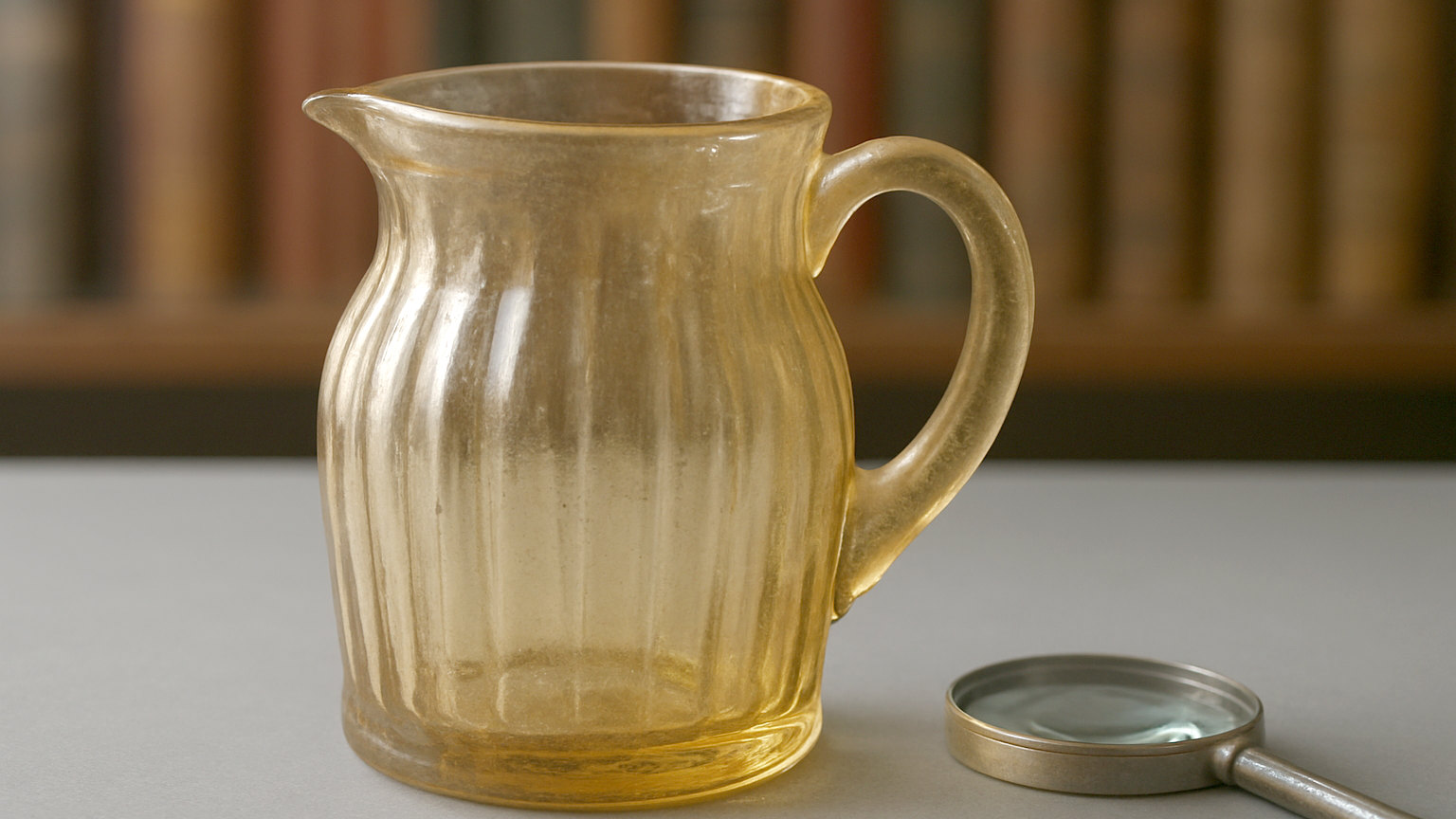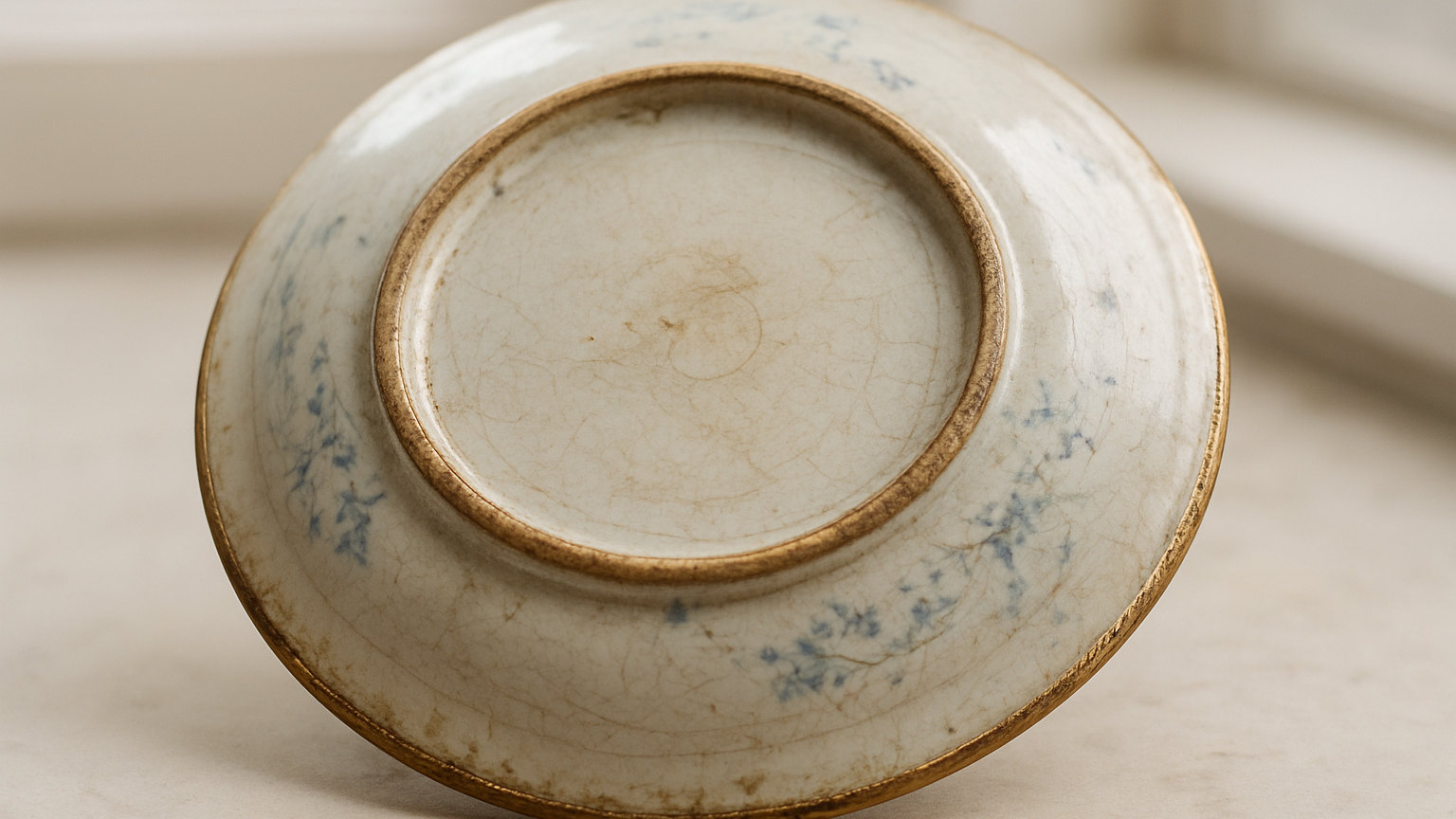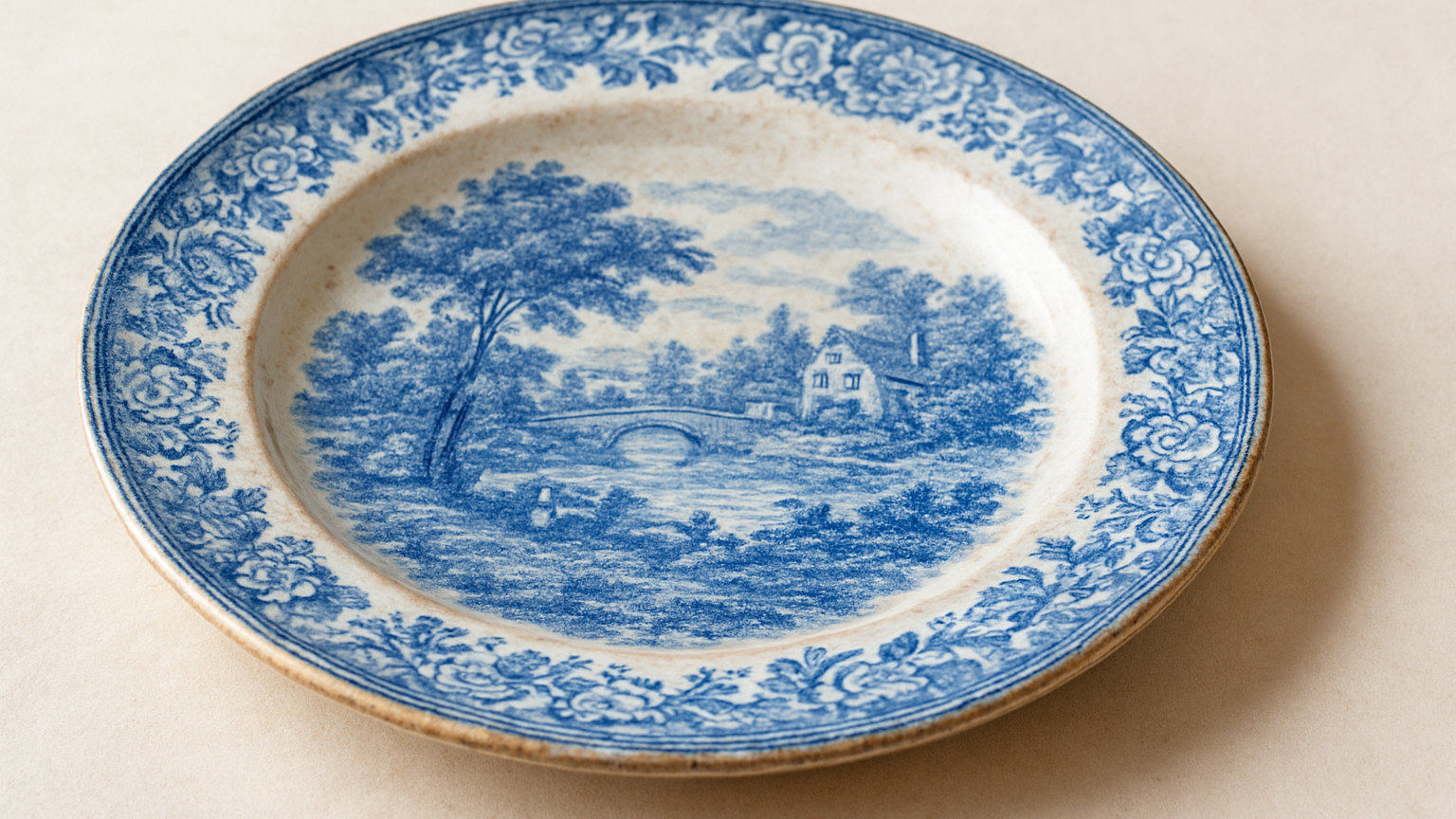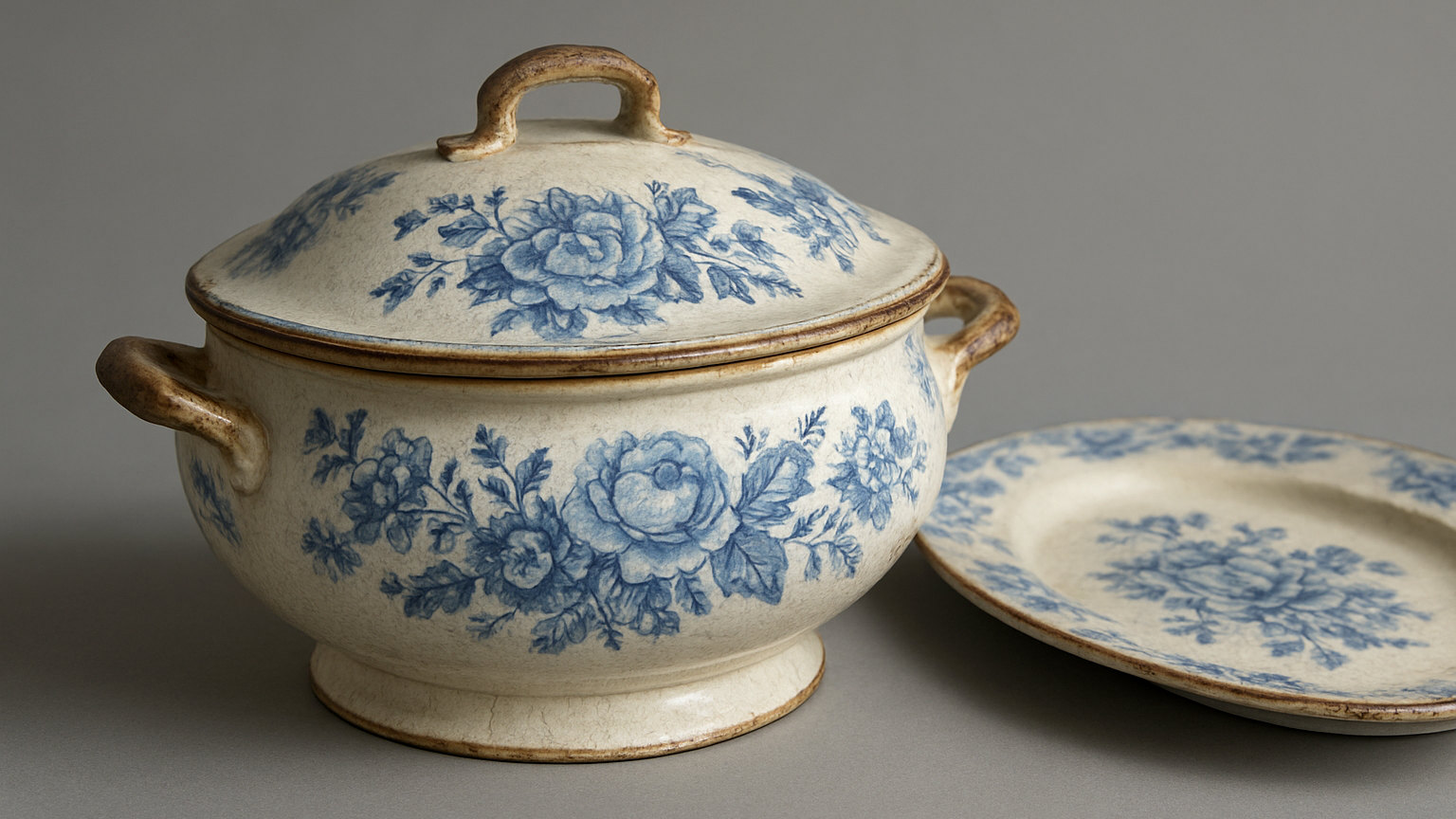
People inheriting a dinner service count the plates and assume that is where the value sits. It usually is not. There was only ever one tureen to a dozen plates, it took the hardest use, and it had a lid to lose. Serving pieces are the scarce survivors of any service and frequently worth more individually than a stack of plates.
What counts as a serving piece?
Anything used to bring food to the table rather than to eat from. Soup and sauce tureens, covered vegetable dishes, meat plates and platters, sauce boats, comports, dessert stands and any lidded dish.
The distinction matters because these are catalogued and sold separately from the eating wares. When valuing a service, list the serving pieces individually rather than lumping them in, since a specialist will price them that way.
Why are lids so important?
Because a covered dish without its cover is worth a fraction of a complete one, and matching a replacement is essentially impossible. Lids were lifted constantly, put down on hard surfaces and dropped.
Check that every lid actually belongs to its base by looking at the fit, the pattern alignment, the colour and the degree of wear. Married lids from other pieces are extremely common. Check for marks on the lid separately, since these should agree with the base.
What should you check on a tureen?
The handles, the foot and the rim where the lid seats. Handles take the full weight when carried and are the commonest breakage, so examine both where they join the body.
Check the lid rim and the corresponding rest on the body for chips, which happen every time a lid is replaced carelessly. Look at the finial on the lid, which is a projection and breaks readily. Hold the piece to a light and look for hairlines running from the handle joints.
What about meat plates?
Large oval platters, frequently graduated in a set of several sizes, and sometimes with a well and tree, meaning channels moulded into the surface to collect juices with a reservoir at one end.
A well and tree platter is worth more than a plain one. Graduated sets are worth substantially more complete than the pieces separately. These are large flat pieces and warp, so check by placing on a flat surface and looking for rocking.
How do you check for restoration?
Ultraviolet light, which shows repairs as areas fluorescing differently from the original glaze. Serving pieces are restored more often than plates because they broke more often and were worth repairing.
Check handles, finials, rims and feet especially. Follow up by running a fingernail over suspect areas, since restoration feels warmer and softer than fired glaze. Look for old rivet repairs on earlier pieces, which are honest historic repairs and reduce value but are not concealment.
Are serving pieces worth selling separately?
Sometimes, and it needs thinking about. A complete service commands a premium above the sum of its parts, so breaking it up loses that.
But where you have serving pieces and no matching plates, or a few good pieces among a broken service, selling them individually to collectors completing their own services frequently produces more than offering an incomplete group. Replacement specialists actively want exactly these pieces.
What condition problems are typical?
Staining and crazing inside tureens from years of hot food, chips to lid rims, and worn gilding on handles and finials where hands gripped.
Crazed and stained interiors reduce value and cannot be cleaned, since the staining is in the porous body beneath the glaze. Never attempt to bleach it out. Check the underside of large platters for hairlines, which are common where the piece flexed under weight.
How should they be handled?
By the body rather than by handles, particularly on anything large or already repaired. Support a tureen from underneath with both hands when moving it.
Remove the lid before lifting and carry the two separately. Store lids alongside rather than on top, so a knock cannot chip both at once, and interleave large platters with something soft rather than stacking them bare.