Transferware is the most commonly encountered antique pottery and among the most misunderstood. It was the technology that made decorated tableware affordable, it was produced in staggering quantities, and the small imperfections inherent in the process are exactly what allow you to date and assess a piece.
How does transfer printing work?
An engraved copper plate is inked, and the design is transferred onto a sheet of tissue paper. That paper is laid onto the pottery surface and rubbed down so the ink transfers, then washed away, leaving the design on the piece before glazing.
The engraving does the artistic work once, and the design can then be applied thousands of times by relatively unskilled labour. That is why printed wares cost a fraction of hand painted ones and why they reached ordinary households.
What do the joins tell you?
Look closely at where the pattern meets itself, particularly around a curved rim or the shoulder of a jug. A flat sheet of paper cannot wrap a curved surface without overlapping or leaving a gap, so the workers cut the tissue and butted the pieces together.
Those seams show as small breaks, overlaps or slight misalignments in the pattern. They are evidence of hand application and are entirely normal on genuine transferware. Perfectly continuous patterns with no join anywhere usually indicate later mechanical decoration.
What does the colour tell you?
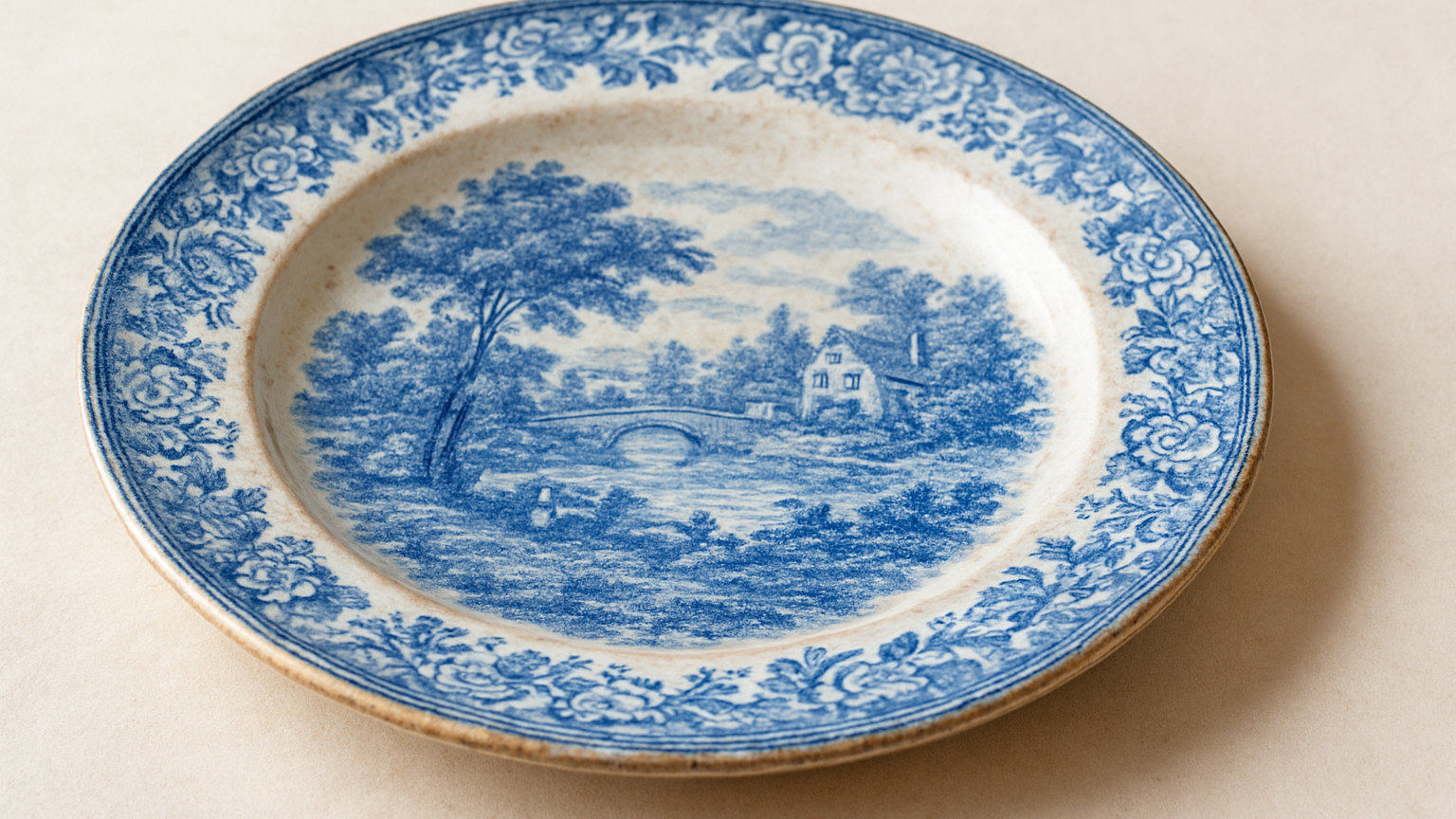
Underglaze blue was the earliest and remains the most common, because cobalt was one of very few colours that survived the high glaze firing. If a piece is printed in blue beneath the glaze, that is consistent with early production.
Other colours became possible later as chemistry improved, so printed wares in green, pink, purple, brown and black generally indicate a later date than deep blue examples. Multicoloured printing later still. Feel the surface: underglaze printing is smooth beneath the glaze, while overglaze colours sit on top and can sometimes be felt or seen to have worn.
How do you identify the pattern and maker?
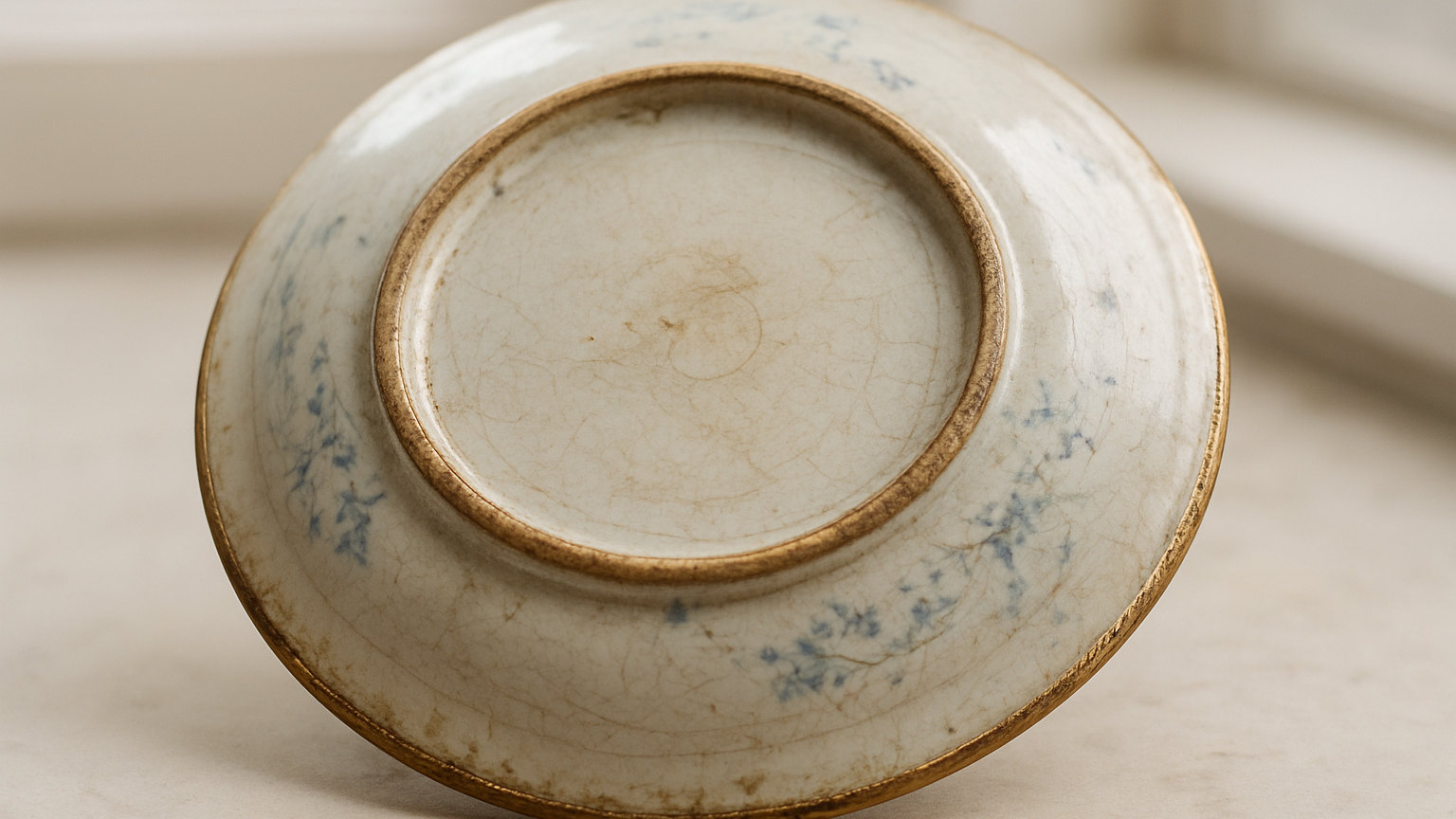
Check the base for a printed cartouche, since many makers printed the pattern name alongside their own mark. Where there is no name, a printed or impressed maker mark plus a pattern number is usually enough to trace through references.
Unmarked pieces are common, particularly earlier ones. Identify these by describing the border first, then the central scene, then the shape and rim profile. Collector societies and replacement specialists maintain large searchable image archives organised in exactly this way.
What is the diamond registration mark?
A lozenge shaped device containing letters and numbers around its edges, recording that the design was registered for legal protection. Read with the correct key it gives a precise day, month and year of registration.
Later pieces carry a registration number instead, usually preceded by letters, and those were issued in sequence so they also convert to a year. Both give an earliest possible date rather than the date of manufacture, since successful patterns stayed in production for decades afterwards.
Does damage matter much on transferware?
Less than on porcelain, because collectors accept that earthenware chips and because so much survives. A rim chip on a common pattern reduces value without destroying it.
Crazing, the fine network of cracks in the glaze, is extremely common and is generally accepted as normal ageing rather than damage, though heavy staining that has soaked through crazing into the body does reduce value. Cracks matter more than chips because they spread and threaten structure.
Which transferware is worth collecting?
Early blue printed wares from identifiable makers, unusual forms rather than plates, and scenes with documentary interest such as identifiable buildings, ships or events. Views of specific places attract collectors of those places, often paying well above the general market.
Common patterns in plate form remain very inexpensive and are an excellent way to learn, since you can handle a great deal of genuine material for very little money and train your eye on the joins, the colour and the glaze.