Formal dessert was a separate course with its own service, frequently more elaborately decorated than the dinner wares because it was on the table when the cloth came off and the room was at its most formal. The shapes are consequently unfamiliar today, and pieces are regularly sold as something else entirely.
What was in a dessert service?
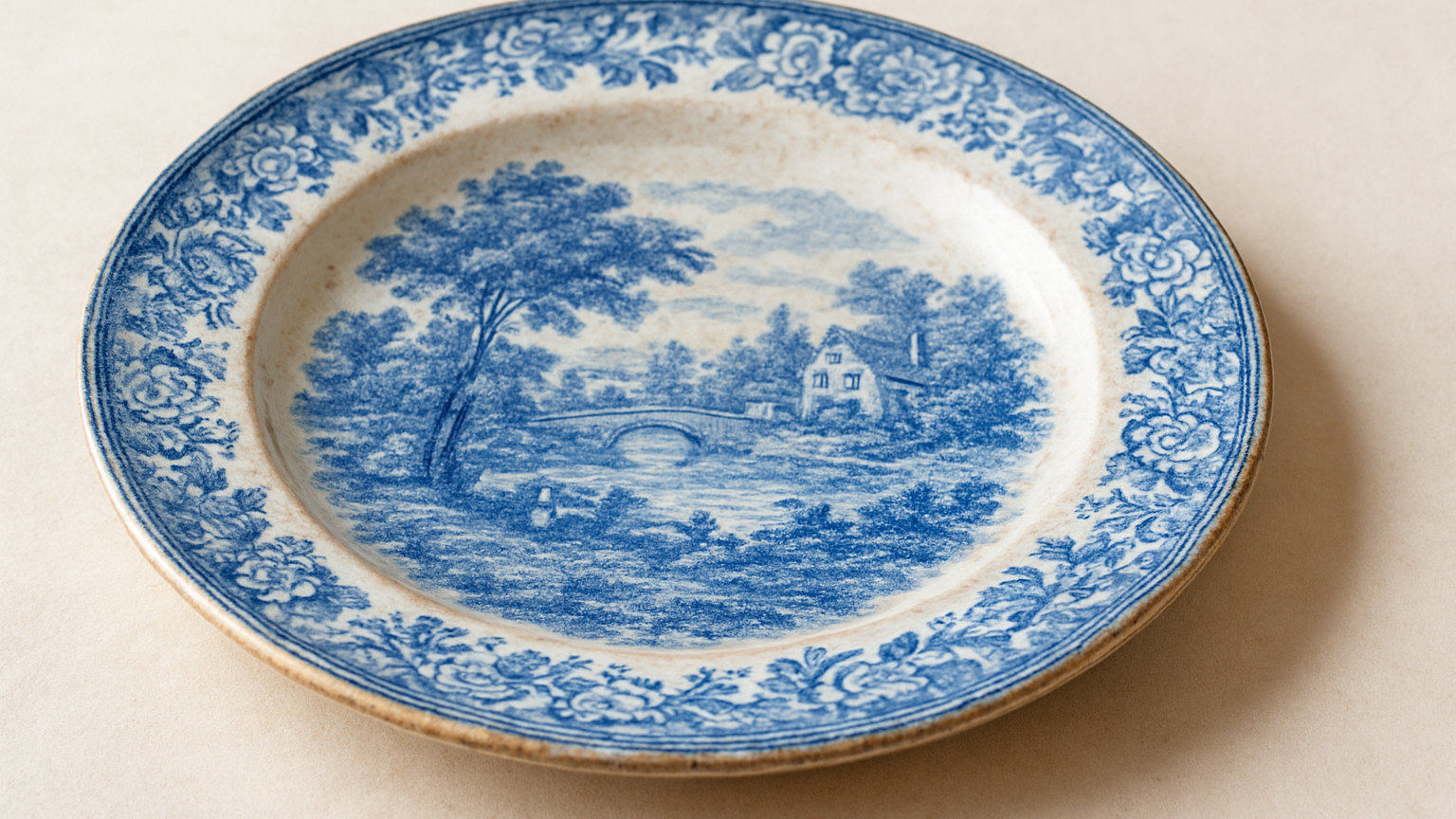
Dessert plates, usually smaller than dinner plates and more richly decorated, together with a set of raised and shaped serving dishes designed to be arranged as a centrepiece.
Those serving pieces are what make the service. A full set might include comports at two or three heights, square, oval and shell shaped dishes, and a central stand. The arrangement was as much about display as about serving.
What is a comport?
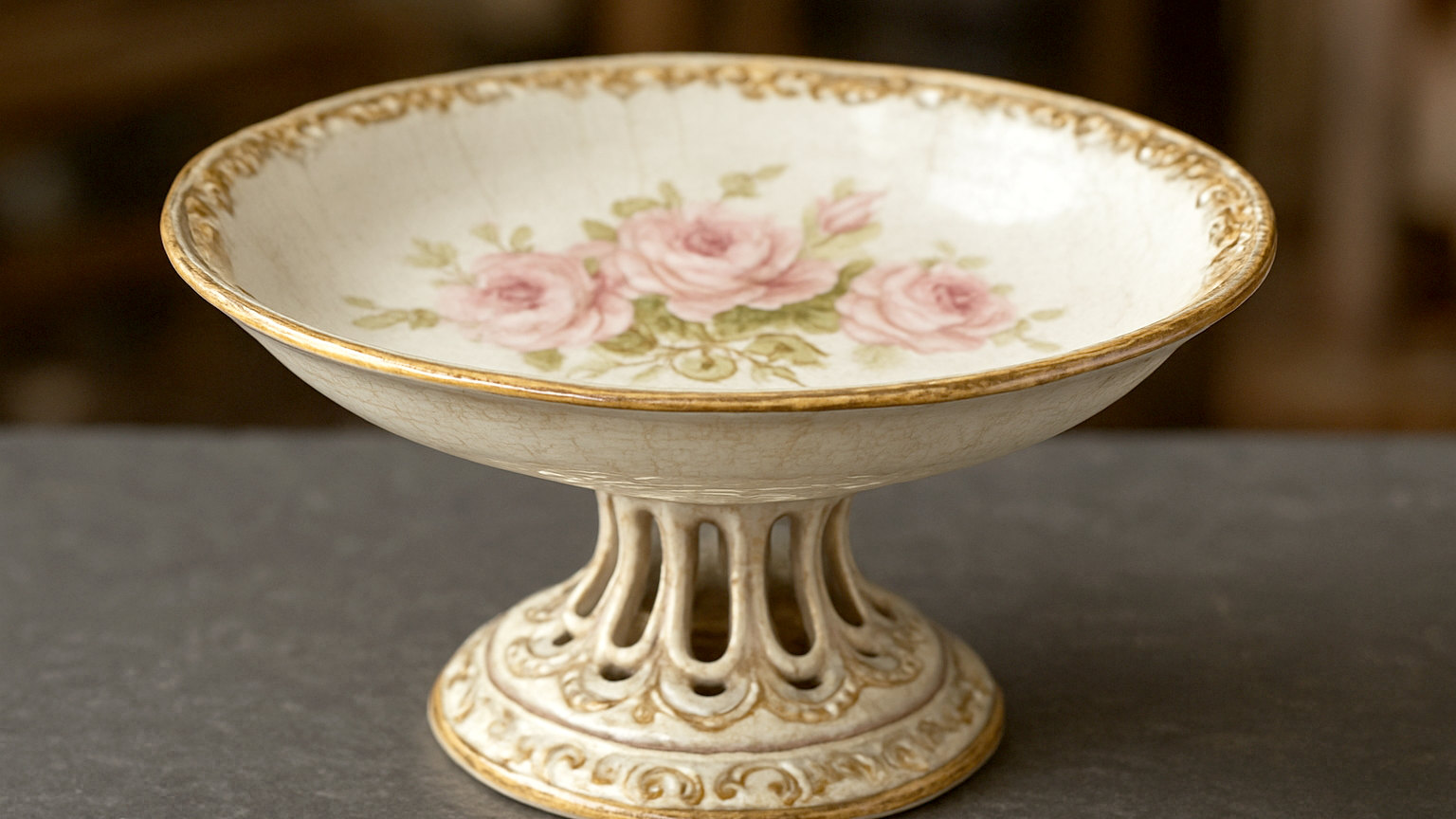
A dish raised on a stem and foot, made to lift fruit or sweetmeats above the table surface. They were produced in graduated heights so a service could be arranged with varying levels.
Comports are frequently sold individually as cake stands, which they are not quite. Check whether the piece is one of a graduated group by comparing height and diameter against any others in the same pattern. Complete graduated sets are worth substantially more than singles.
What is a tazza?
A shallow dish on a low foot, essentially a very low comport. The term is used loosely and overlaps with comport in practice, but a tazza is characteristically wide and shallow.
They appear in ceramics, glass and silver. When identifying a piece, describe the proportions rather than worrying about the terminology, since sellers use the words interchangeably and buyers search on both.
What are the shaped dishes for?
Arrangement. Dessert services included dishes in specific outlines, square, oval, kidney, shell and leaf shaped, designed to fit together around a central stand in a set pattern on the table.
Each shape was made in a defined number, so a service might have two of one form and four of another. That is why an inherited service so often looks like an odd assortment: it is a complete set of a scheme nobody uses now.
Why is decoration usually finer?
Because dessert wares were seen at the point in the meal when the table was cleared to the cloth and the service was on display rather than covered in food.
Consequently they carry the best painting, the heaviest gilding and frequently hand painted centres where the dinner service had transfers. That makes dessert pieces the most desirable part of many services and the part worth assessing separately.
How does completeness affect value?
Enormously, as with any service. A complete dessert service with all its comports and shaped dishes commands a substantial premium over the same pieces sold individually.
Serving pieces are the scarce survivors, since there were few of them and they were handled constantly. A service with all its comports intact is genuinely uncommon. Count the shapes and compare against what the pattern should include before pricing anything.
What condition problems are typical?
Damage to comport stems and feet, since these are the weak points and the pieces are top heavy. Check where the bowl meets the stem for hairlines and restoration.
Wear to gilding on rims is common, since these were washed carefully but frequently. Use ultraviolet light to check for restoration on any raised piece, and hold plates to a strong light looking for hairlines. Chips to shaped rims are frequent given the complex outlines.
Are they worth buying?
Individual pieces are affordable and decorative, and the finer painted examples are genuinely attractive objects regardless of whether you ever serve dessert formally.
Complete services are worth more but harder to place, since few households have the storage or the occasion. Buy comports for display, buy plates to use, and check any set carefully for the shaped dishes, since those are the pieces that make a service complete and the ones most often missing.