Inherited china arrives with two questions attached: what pattern is this, and is it worth anything? The answers are linked, because value in tableware depends far more on which pattern you have and how much of it survives than on the age of any individual plate.
Where do you start identifying a pattern?
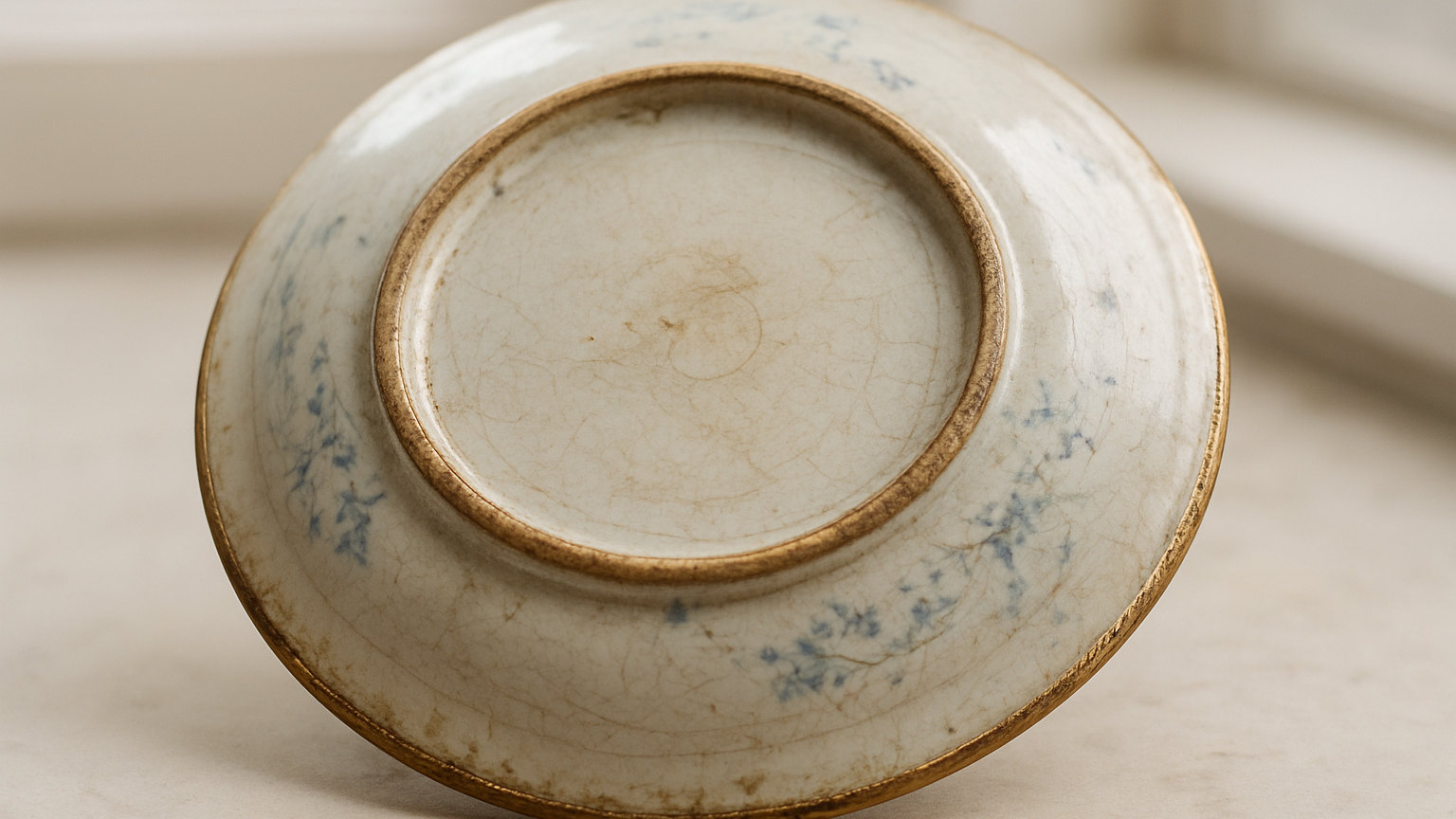
Turn a plate over. Many factories printed the pattern name on the base alongside the maker mark, which settles the question immediately. Look for a word or short phrase in a decorative cartouche, separate from the factory name.
If there is a number rather than a name, that is a pattern number, which the factory used internally. Those numbers are recorded in reference works and factory archives for the major makers, so a number plus a factory name is often enough to get a positive identification.
What if the piece is unmarked?
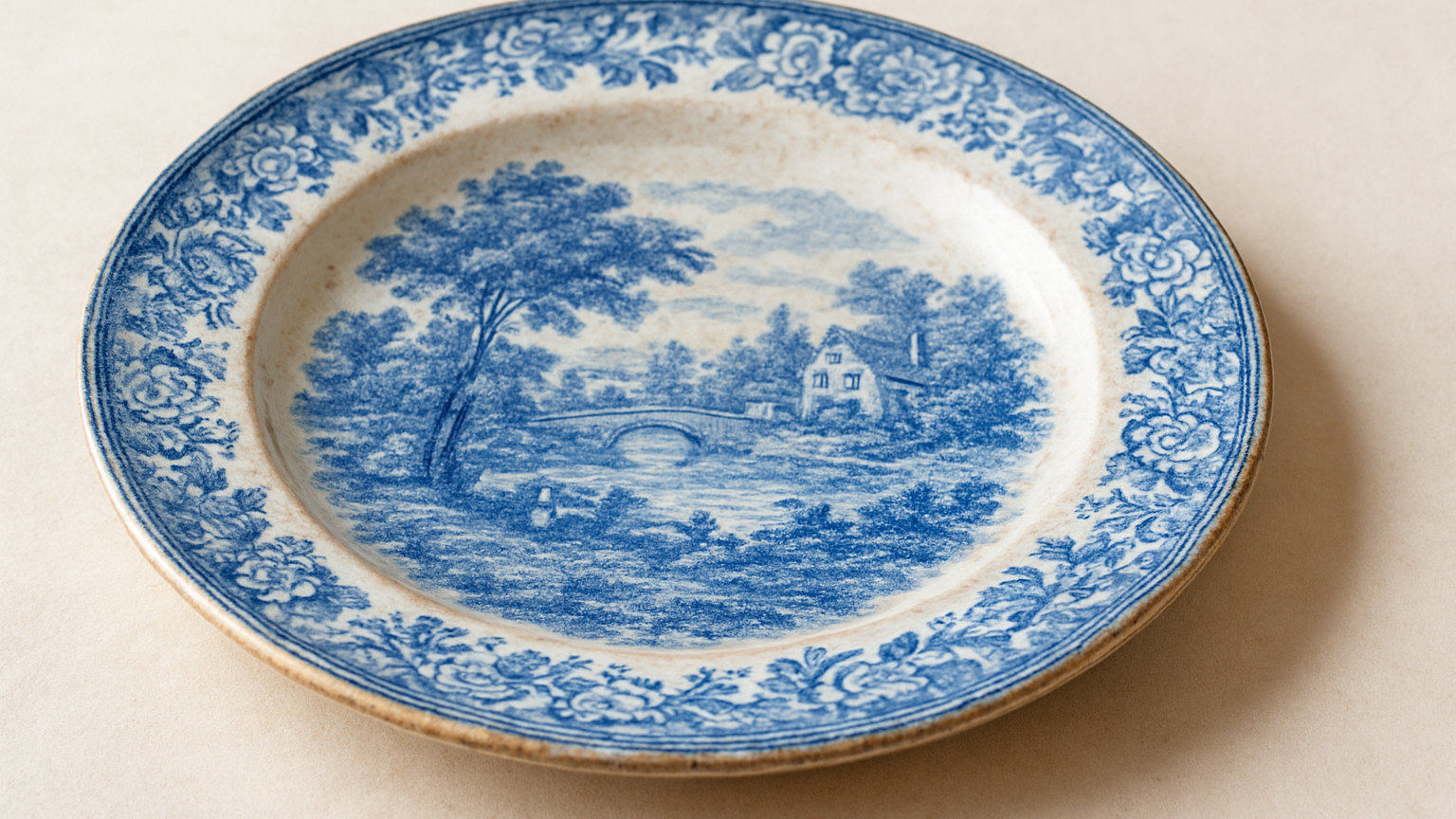
Describe it systematically rather than searching vaguely. Note the border design first, since borders are more distinctive than centres and were reused less often. Record the colours, the shape of the rim, whether it is fluted, scalloped or plain, and any gilding.
Then look at the centre motif and count repeats around the rim. Replacement china specialists maintain enormous searchable archives organised by these features, and matching services will identify a pattern from good photographs. Photograph the front flat on, the back, and a close detail of the border.
What is willow pattern and is it valuable?
Willow is a blue and white transfer design featuring a bridge, figures, a boat, a willow tree and birds, and it was produced by an enormous number of factories over a very long period. It is probably the most widely produced ceramic pattern ever made.
That ubiquity keeps ordinary examples inexpensive. Value sits in early pieces from identifiable makers, unusual forms rather than plates, and variations in the design that mark a particular factory. A common plate is worth very little; an early jug or an unusual serving piece can be worth a great deal more.
Why does completeness matter so much?
Because buyers want to lay a table. A complete service commands a premium well above the sum of its parts, while an incomplete one is worth roughly what the individual pieces fetch, which is considerably less per item.
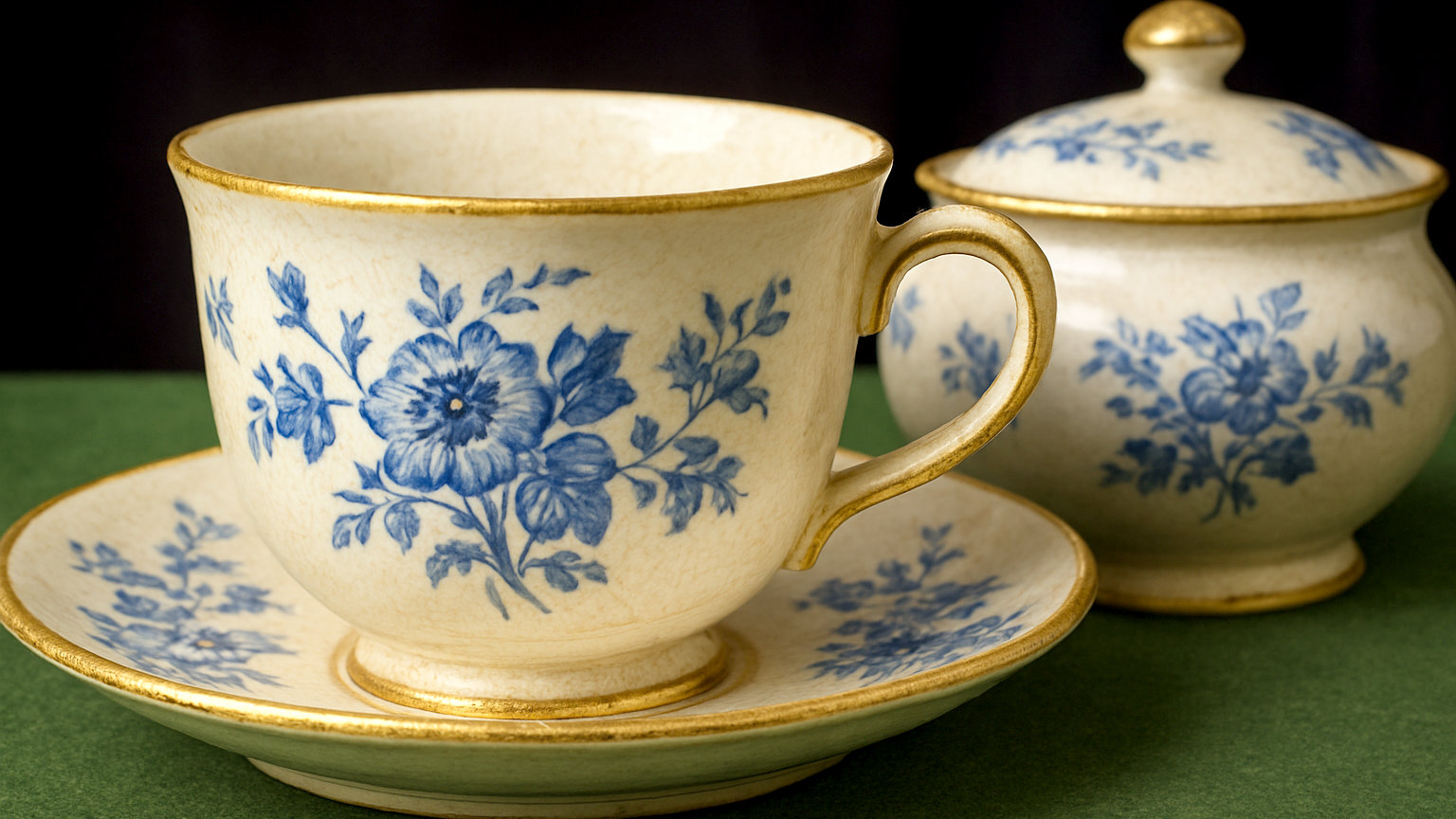
Serving pieces are the scarcest survivors, since there was only ever one tureen to a dozen plates and it saw heavy use. Tureens, sauce boats, meat plates, lidded vegetable dishes and teapots are frequently worth more individually than a stack of dinner plates, so never assume the plates are the valuable part.
What is bone china and does it matter?
Bone china is a body containing bone ash, which gives translucency combined with real strength and a warm whiteness. Most British tea and dinner services of the last two centuries are bone china rather than true porcelain, and the base usually says so.
It matters commercially because it is more chip resistant than early porcelain, which is why so much survives in usable condition. Hold a cup to a strong light and it should glow with a slightly warm tone.
How should old china be looked after?
Wash by hand in warm water with mild detergent, and never in a dishwasher. Dishwasher detergents are abrasive and alkaline, and they will strip gilding and fade overglaze enamels permanently, usually within a few cycles.
Never put antique china in a microwave, particularly anything gilded, since metal decoration will arc and damage both the piece and the appliance. Store plates with a soft interleaf between them rather than stacked bare, and hang cups on hooks rather than stacking them inside one another.
Is it worth completing a part service?
Frequently yes, because the jump in value from incomplete to complete is substantial. Replacement specialists hold stock of discontinued patterns and will search for specific pieces.
Work out the arithmetic first. If the missing pieces cost more than the increase in value, use the service and enjoy it rather than treating it as an investment. Most inherited china is worth more as something you eat from than as something you sell.