Inherited tea services arrive with pieces nobody can name, which makes it hard to know whether a set is complete. Tea drinking was a formal ritual with its own equipment, and several of those objects have no modern equivalent. Identifying them properly is the first step in valuing what you have.
What should a full service contain?
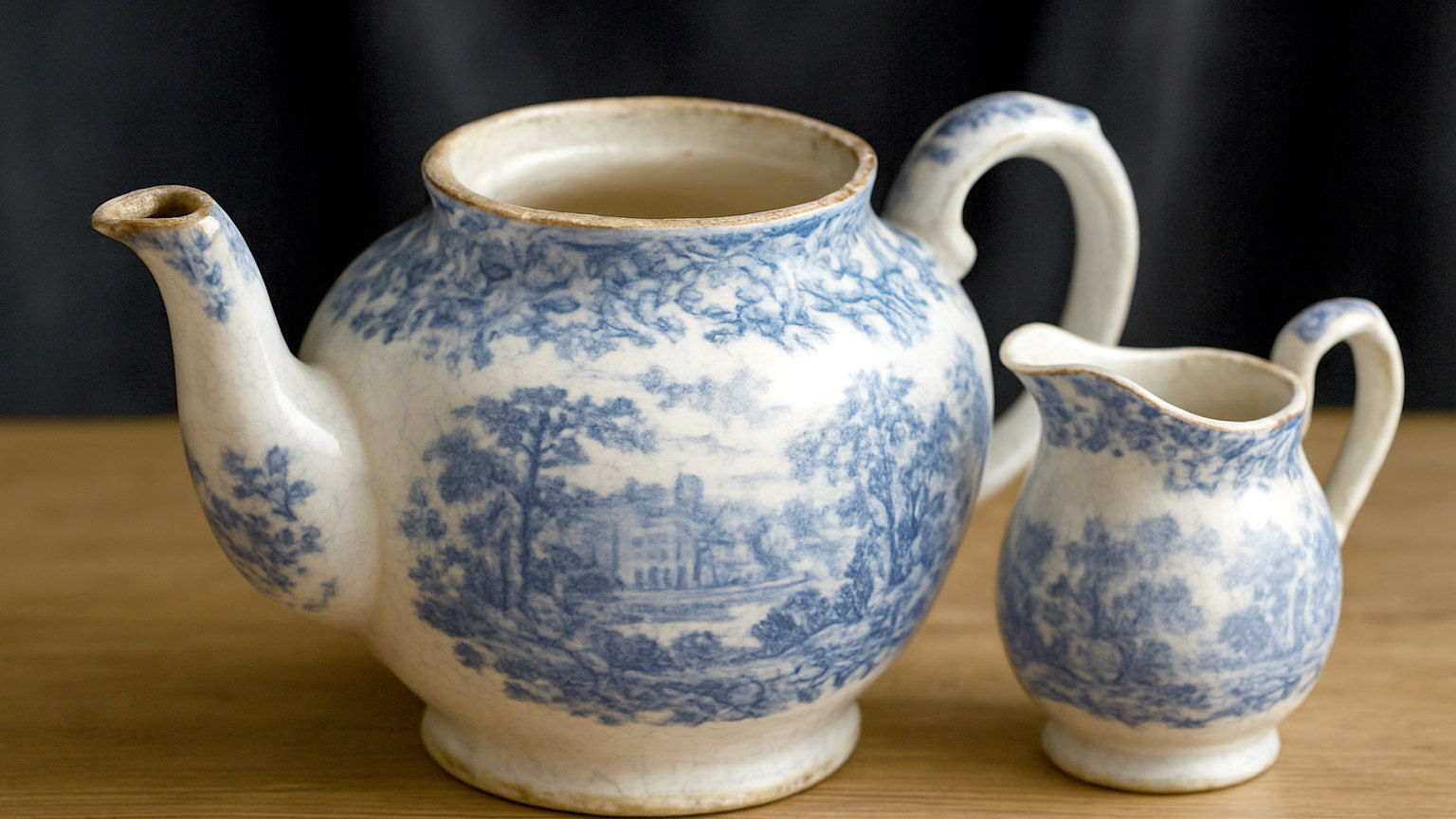
Cups and saucers in matching numbers, side plates, a teapot with its lid, a milk or cream jug, a sugar bowl, and a larger plate or cake stand for serving.
Larger services add a slop bowl, a hot water jug, and sometimes a separate coffee pot with taller narrower cups. When a service is described by a number, establish exactly which pieces are counted, since a service for six may or may not include the serving pieces.
What is a slop bowl?
An open bowl, larger than a sugar bowl, used to receive the dregs and used leaves from a cup before it was refilled. It is the piece most often unrecognised in an inherited set.
It looks like a large sugar bowl without a lid, and it is frequently sold separately as one. Its presence indicates a more complete service. Because the purpose is unfamiliar these are regularly separated from their sets, so check whether a bowl in a set is a slop bowl or a sugar bowl by comparing size against the other pieces.
How do you tell a tea cup from a coffee cup?
Shape and proportion. Tea cups are wider and shallower, designed for a drink to cool quickly. Coffee cups are taller, narrower and hold less.
Some services included both, sharing the same saucers, which is why you occasionally find two cup shapes in one pattern. A trio, meaning a cup, a saucer and a matching side plate, is the standard unit for tea and is how these are usually sold.
Why are saucers sometimes larger?
Because early tea drinking involved pouring tea into the saucer to cool it before drinking, so saucers were deeper and the cups were often handleless bowls.
Handleless tea bowls indicate early wares and are worth recognising, since they are frequently mistaken for small bowls and sold separately. If your set contains deep saucers or handleless cups, it is likely earlier than a conventional cup and saucer service.
How much does completeness affect value?
Enormously, as with any service. A complete set commands a premium well above the sum of its pieces, and the teapot is the critical component.
Teapots saw the heaviest use, took the most thermal stress and had a lid to lose, so a service with its original teapot intact is worth considerably more than one without. Check the lid marks and fit, since married lids from other pots are extremely common.
What condition problems matter?
Staining and crazing inside the teapot, chips to spouts and cup rims, and wear to gilding. Hold pieces to a strong light and look for hairline cracks appearing as dark lines.
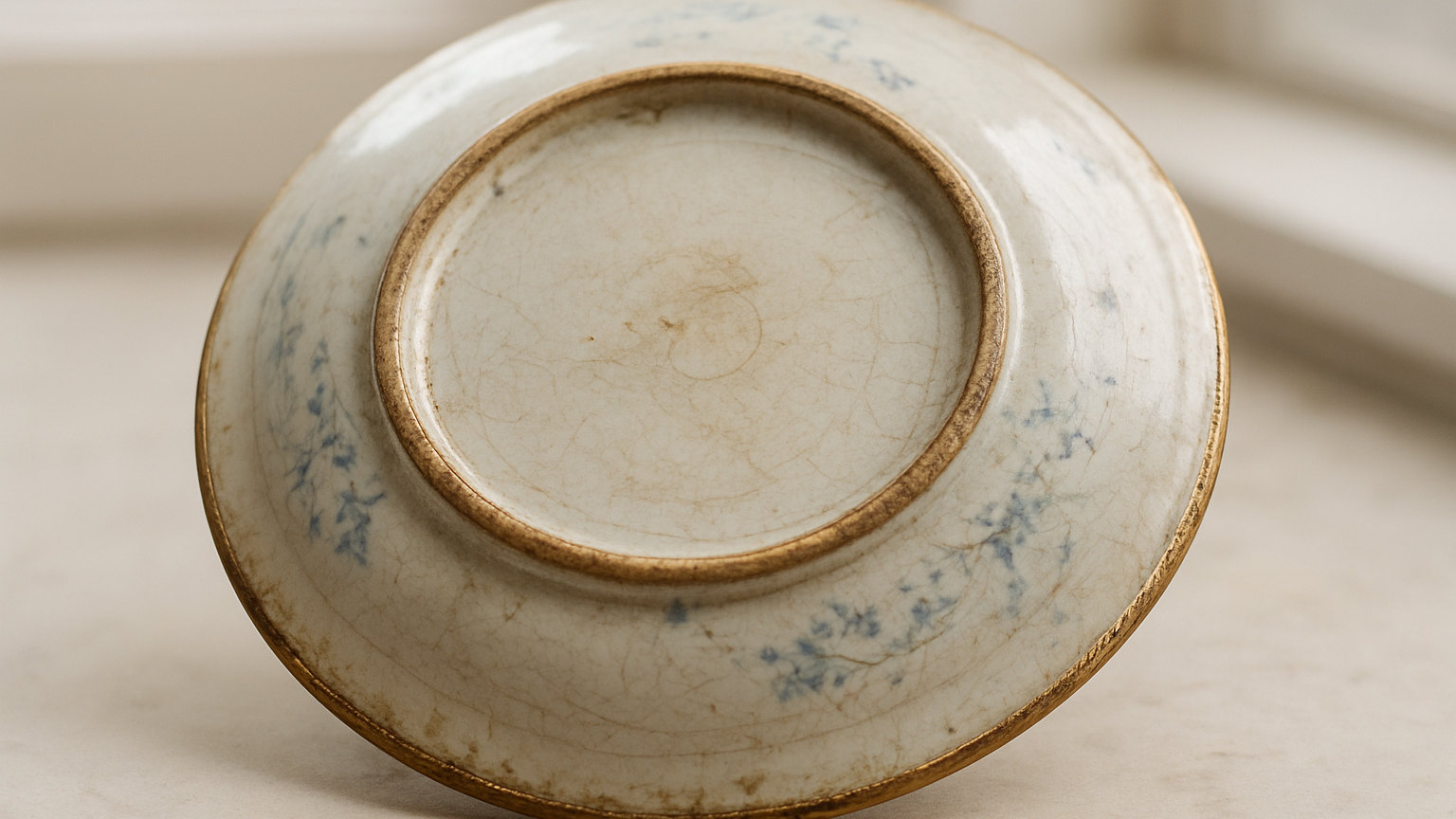
Check gilding on rims and handles, since this wears with use and washing and cannot be restored invisibly. Tap each cup rim gently: a clear note suggests soundness, a dull one suggests a crack. Count how many cups and saucers actually match, since services are frequently topped up with near misses.
Should you use it?
Yes, with care, since most inherited services are worth more as objects you enjoy than as things to sell. Wash by hand in warm water with mild detergent and dry immediately.
Never use a dishwasher, which strips gilding and fades overglaze enamels within a few cycles, and never microwave anything gilded. Do not leave tea standing in a pot, since tannin stains crazed glaze permanently. Store cups separately rather than stacked, and interleave plates with something soft.
Is it worth completing a part service?
Sometimes, since the step from incomplete to complete carries a real premium. Price the missing pieces against that increase before committing, because serving pieces cost several times what a cup does.