The instinct to make old brass gleam is strong and almost always costly. Patina on copper alloys is not dirt, it is a stable surface layer that took decades to form, and removing it takes minutes and cannot be undone. In several categories the patina is worth more than everything else about the object.
What exactly is patina?
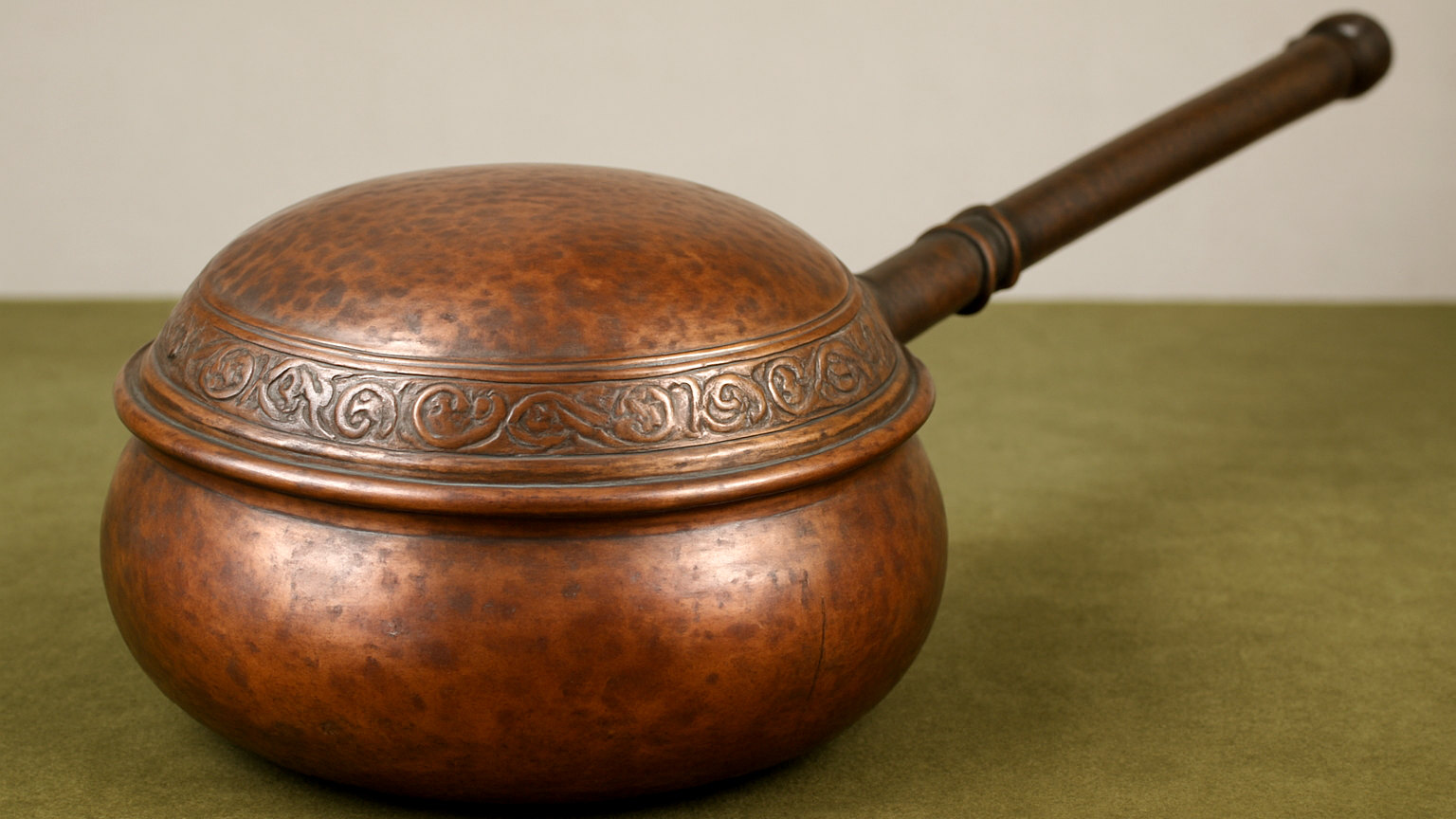
A thin layer of oxides and other compounds that forms slowly as the metal reacts with air, handling and its surroundings. On brass it deepens to a warm golden brown, and on copper it moves through brown towards deep chocolate and eventually green.
It is stable, it protects the metal beneath, and it develops unevenly in a way that records how the object was used. Areas that were handled stay brighter, recesses go darker, and that variation is exactly what a collector reads as authenticity.
Why does polishing reduce value?
Because metal polish is an abrasive. Every application removes a microscopic layer of the surface along with the patina, and repeated polishing over years visibly softens cast detail, rounds crisp edges and can erase stamped marks entirely.
The result also looks wrong. A stripped piece has a flat uniform brightness with none of the depth that develops naturally, and it begins to retone unevenly and often patchily. Buyers can see this immediately, and a heavily polished piece sells for noticeably less than an untouched one.
Are there any exceptions?
Some. Objects that were designed to be kept bright and were polished throughout their working lives, such as certain fire irons, ship fittings and pieces of domestic display brass, are expected to have a degree of shine and look odd without it.
The distinction is between maintaining an established finish and stripping an established one. If a piece is already bright and has clearly been kept that way, gentle continued care is reasonable. If it has an even brown patina, leave it alone.
How should you clean without causing harm?
Start with the least aggressive option and stop as soon as the object looks acceptable. Dust with a soft brush. Remove greasy deposits with warm water and a mild detergent, then dry thoroughly and immediately, since standing water causes new corrosion.
A light application of microcrystalline wax protects the surface without altering it and is what museums use. Avoid metal polish, avoid abrasive pads entirely, and never use lemon, vinegar or proprietary dips, which strip the surface chemically and leave metal that corrodes faster afterwards.
How do you tell hand raised work from spun?
Look inside. Hand raised copper, hammered up from a flat sheet, shows a faint pattern of overlapping hammer marks across the interior surface, irregular in spacing and depth.
Spun work, made by pressing sheet against a rotating former, shows fine concentric rings running around the piece, perfectly regular and evenly spaced. Cast pieces show a slightly grainy surface and often a seam. Hand raised work generally indicates greater age and commands a premium.
What are the common reproduction categories?
Horse brasses, warming pans, coal helmets and small decorative items were reproduced in very large numbers for the tourist and gift market, and a great deal of it is now old enough to look convincingly aged.
Reproduction horse brasses are usually cast rather than struck, with soft detail and a rough back, where genuine working brasses have a smoother back and show real wear on the strap slot. Decorative pieces imported from established brassware regions were made in quantity and are frequently sold as older than they are, so check for machine regularity in any repeating pattern.
What should you look for when buying?
Undisturbed surface, crisp detail and honest wear in the places you would expect it. Check for splits at seams, for repairs in soft solder which shows as a dull grey deposit, and for holes drilled for later conversion to lamps.
Weight and thickness matter too. Earlier work is generally heavier gauge, and a piece that feels flimsy in the hand is usually later. Handle several examples before buying, since the difference is easier to feel than to describe.