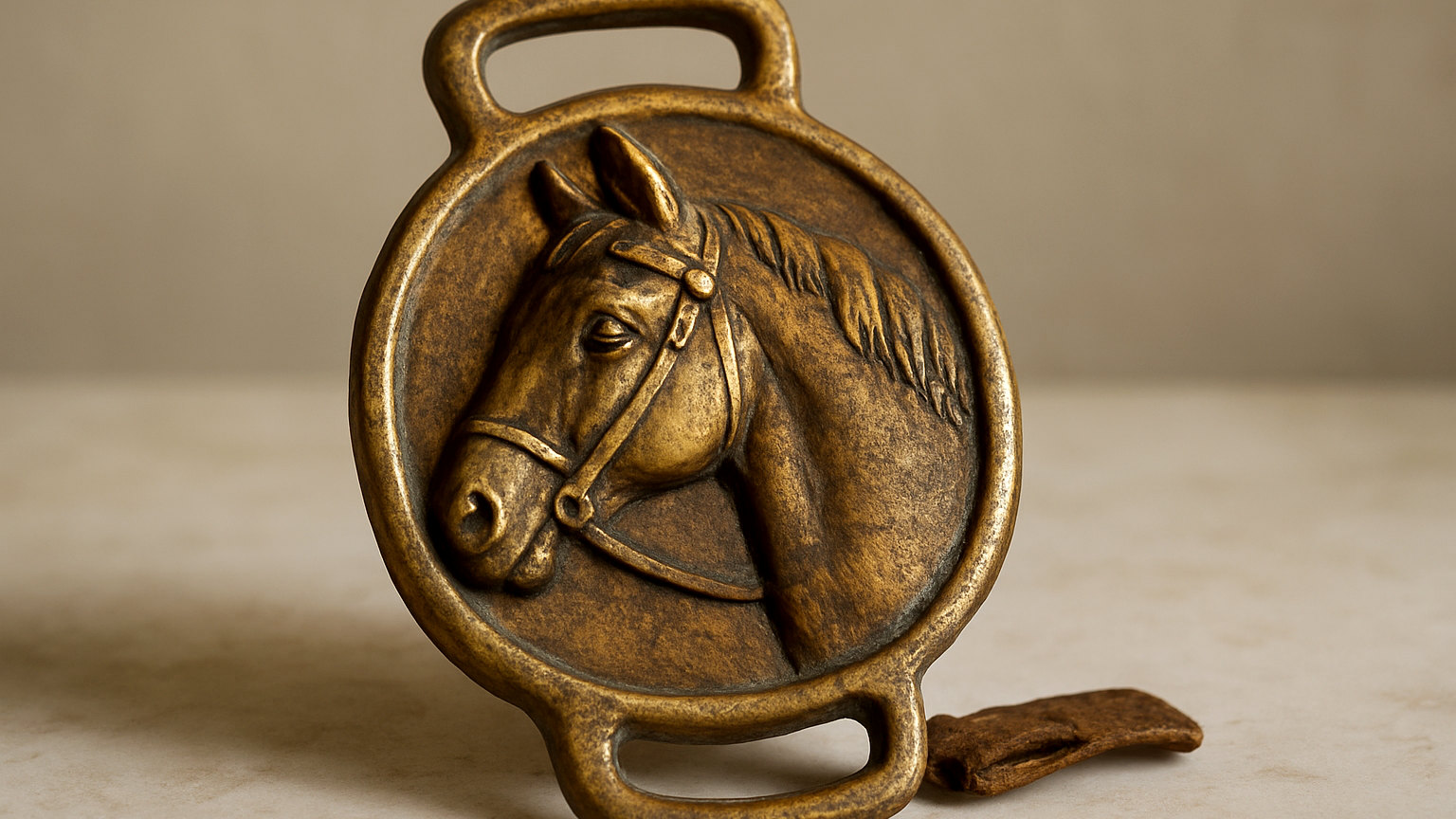
Horse brasses hang in every pub and turn up in every house clearance, which has given them a reputation as worthless. That is unfair to the genuine ones. Working brasses that actually hung on harness are collected seriously, and the difference between those and the decorative reproductions made in enormous numbers is entirely visible if you turn one over.
What were they actually for?
Decoration of working harness, hung from a leather strap called a martingale running down the horse chest, or mounted on other parts of the harness. They were a display of pride in the animal and the turnout.
They served no practical purpose beyond appearance, though various superstitious explanations are attached to them. What matters for identification is that they hung on a moving animal and were cleaned constantly, which produces very particular wear.
How were early brasses made?
Cast in sand moulds, then finished by hand. That process leaves a distinctive surface: the back is comparatively rough with a slightly grainy texture, and file marks are visible where the caster cleaned up the edges and the casting sprue.
Later working brasses were stamped from sheet, which produces a thinner brass with a smooth back that is a negative impression of the front. Stamped brasses are lighter and the detail is softer. Both are genuine, and cast examples are generally earlier and more desirable.
What does the back tell you?
Almost everything. Turn the brass over and look at the surface texture and at the hanging loop.
A working brass shows real wear on the loop where it hung and moved against the strap, frequently worn to a distinct groove or even worn through. The back also shows rubbing where it rested against leather. Reproductions have a clean unworn loop and an untouched back, because they have only ever hung on a wall.
How do you spot a reproduction?
Weight, detail and wear together. Reproductions are usually lighter, with soft indistinct casting where an original is crisp, and frequently a slightly gritty back from a modern casting process.
Look for a uniform artificial patina that rubs off on a cloth, and for wear that appears in places nothing would have touched. Many decorative brasses are cast from moulds taken off originals, so the design may be perfectly plausible while the execution is soft. Judge the object rather than the pattern.
Which designs are collected?
Those connected to a place, a trade or an organisation. Brasses carrying a town crest, a company name, a railway or brewery emblem, or a commemorative design for a specific event all attract collectors of those subjects.
Agricultural society prize brasses and those associated with named studs or estates are similarly sought. Generic designs such as stars, crescents, hearts and horse figures were made in enormous quantities both genuinely and as reproductions, so they are worth much less.
Does the strap matter?
Considerably. A martingale with its original brasses still mounted is worth substantially more than the same brasses loose, because it demonstrates that they are working pieces and shows how they were arranged.
Look at the leather for genuine age, wear at the buckle holes and consistent darkening. Check whether the brasses show wear corresponding to their positions on the strap. Complete original sets on original leather are genuinely scarce and command a real premium.
How should they be cleaned?
Sparingly, which surprises people given that working brasses were polished constantly in service. That historic polishing is part of their character, but continuing it now removes metal and softens the detail you need for identification.
Dust with a soft brush and remove greasy deposits with warm water and mild detergent, then dry thoroughly. Avoid abrasive metal polish, which rounds crisp casting edges. If a brass is already bright and has clearly been maintained that way for years, gentle continued care is reasonable. A brass carrying an even brown patina should be left entirely alone, because that surface is evidence of age and takes decades to form.