Three yellow and brown metals turn up constantly in antiques, they look broadly similar under a patina, and they differ enormously in value. Brass and bronze are both copper alloys with real substance. Spelter is a zinc alloy that was made specifically to imitate bronze cheaply, and telling it apart is one of the more financially useful skills in metalware.
What are the three metals?
Brass is copper alloyed with zinc, giving a yellow metal that is easy to cast, turn and polish. Bronze is copper alloyed with tin, producing a denser, harder metal with a warmer brown tone.
Spelter is essentially zinc with small additions, and it was used from the nineteenth century onwards to cast decorative figures, clock cases and lamp bases at a fraction of the cost of bronze. It was usually finished with a bronze coloured coating, which is exactly the point.
What is the quickest test for spelter?
Find an inconspicuous spot underneath the object and scratch lightly with a pin or a knife point. Bronze and brass reveal a warm yellow or golden metal beneath any patina. Spelter reveals a dull silvery grey, because underneath the finish it is zinc.
Choose somewhere that will never be seen, such as the underside of a base or the inside of a hollow figure. The scratch needs to be tiny. This single test settles the question on most decorative figures in seconds.
Does weight help?
Considerably. Bronze is markedly denser than spelter, so a bronze figure feels heavy for its size in a way that surprises people picking one up for the first time.
A spelter figure of similar dimensions feels noticeably light. If you can compare two objects of similar size, the difference is obvious. Bronze is also usually cast more thickly, so a hollow figure with very thin walls is more likely to be spelter.
What about sound?
Tap the piece gently with a fingernail. Bronze gives a clear resonant note that carries briefly. Brass rings too, slightly brighter. Spelter gives a dull flat sound with no resonance at all.
This works well on hollow figures and on anything with a thin section. It works less well on solid heavy castings, where all three sound fairly dead, so treat it as supporting evidence rather than proof.
How do the surfaces differ with age?
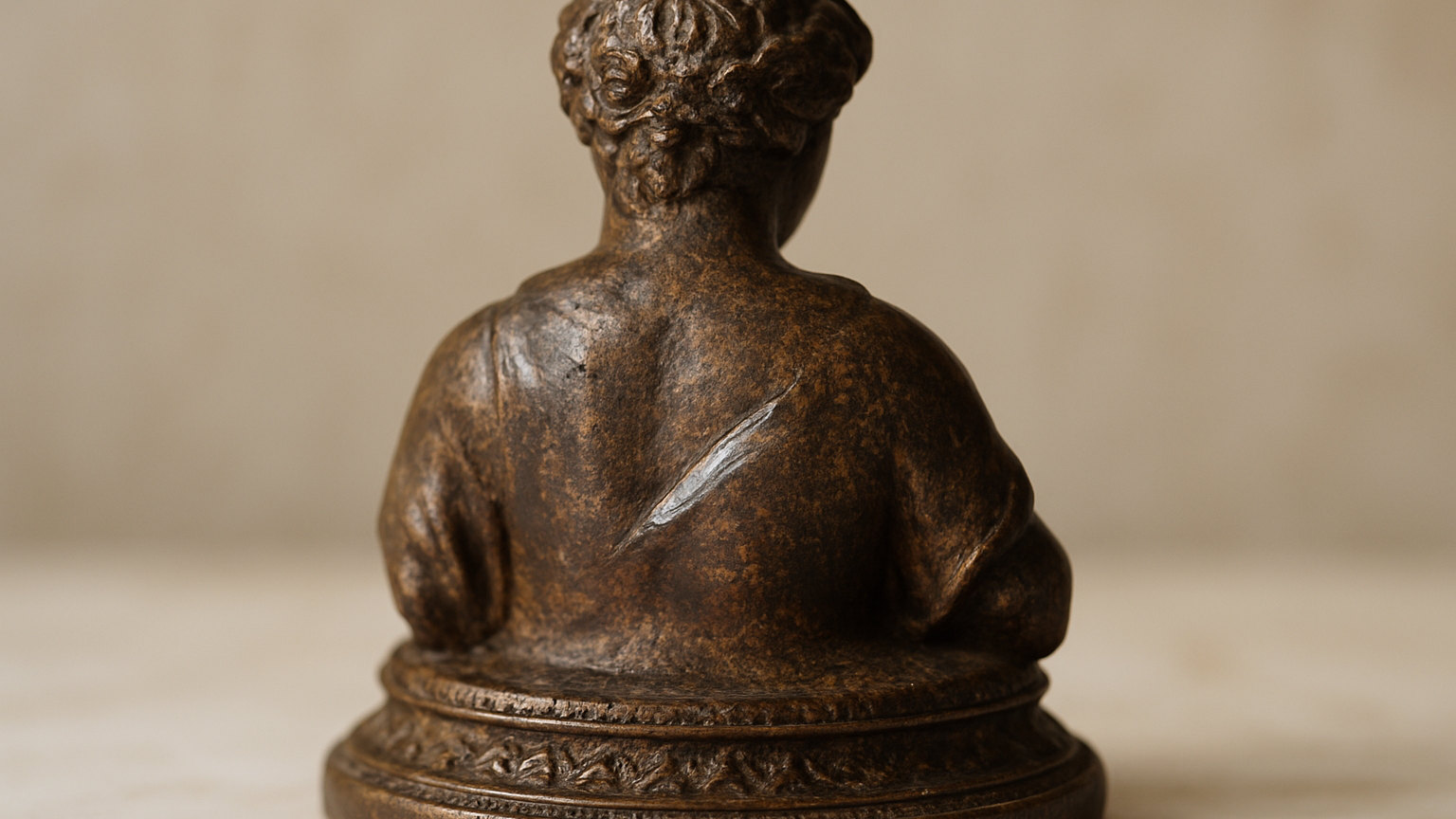
Bronze develops a genuine patina over decades, moving through browns towards deep chocolate and eventually a green that grows from within the metal. It varies across the surface, staying brighter where handled and darker in recesses.
Spelter cannot do this, because zinc does not patinate the same way. Its finish is a coating applied at manufacture, so when it wears it flakes or rubs off in patches revealing grey metal underneath, rather than thinning gradually. Look at the high points and edges for that flaking.
Why does the distinction matter so much?
Because the value gap is enormous. A quality bronze figure by a known sculptor can be worth a great deal, while a spelter version of a similar subject is a decorative object worth a small fraction of it.
Spelter was frequently used for figures imitating popular bronze subjects, sometimes with a signature cast in, which catches people out regularly. A signature proves nothing about the metal, since it was cast from a mould taken off the original. Always check the metal before considering the signature.
How should each be cared for?
Bronze should be left alone. Its patina is the value, and polishing it off is the fastest way to destroy a good piece. Dust with a soft brush and apply microcrystalline wax if protection is needed.
Spelter is fragile and brittle, and it breaks rather than bends. Repairs are difficult because it does not solder easily and reacts badly to heat. Handle spelter figures by the base rather than by projecting limbs, which snap. Never attempt to polish a spelter finish, since it will come away and cannot be replaced.