Antique copper pans are among the most useful antiques anyone can own, because good ones outperform most modern cookware and were built to last generations. They also carry a genuine safety consideration that decorative brass and copper do not, since these were made to hold food and the interior surface matters.
Why were copper pans tinned inside?
Because copper reacts with acidic foods, and cooking anything acidic in bare copper transfers copper into the food in quantities that are genuinely harmful.
The solution was a lining of tin, applied to the interior and forming a barrier between the copper and the contents. That lining is consumable: it wears with use and eventually exposes the copper beneath. A pan with worn tinning should not be cooked in until it has been retinned.
How do you check the lining?
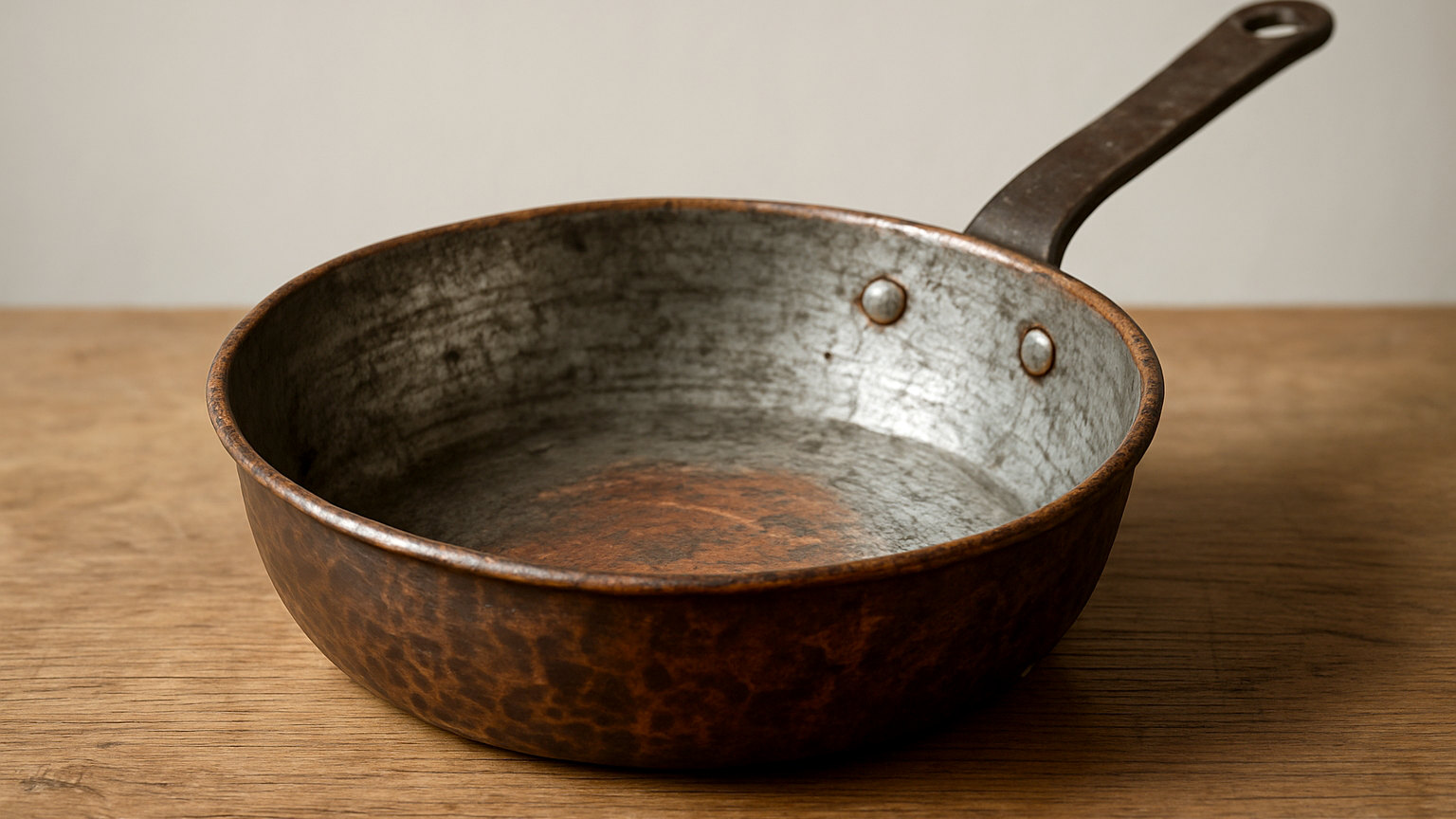
Look inside under a good light. Sound tinning is a dull silvery grey covering the whole interior evenly. Where it has worn through, warm pink copper shows clearly against it.
Small spots of exposed copper are common on a working pan and mean it is due for retinning. Large exposed areas, particularly on the base where heat and utensils concentrate, mean it should be treated as decorative until relined. Retinning is a specialist service and is well worth doing on a good pan.
How do you date a copper pan?
By construction. Early pans were made from sheet copper hammered to shape and seamed, and the seams are frequently dovetailed, showing as a row of interlocking triangular joints along the side or where the base meets the wall.
Those dovetails were hammered together and brazed, and they are a strong indicator of hand production. Later pans were spun or pressed from a single sheet with no seam at all. Look inside and out at the join between base and side, since that is where the evidence sits.
What do the handles tell you?
A good deal. Early handles are iron, hand forged, and attached with copper rivets that were hammered over. The rivets show clearly inside the pan as flattened domes.
Brass handles generally indicate later production, and cast handles later still. Count the rivets and look at whether they are irregular, which indicates hand work. A handle attached with modern bolts or welded on has been replaced, which is common on a working pan and should be reflected in the price.
How much does weight matter?
Enormously, both for cooking and for dating. Good antique pans are made from thick gauge copper, which is what gives the even heat distribution that makes copper worth using.
Thin lightweight pans are usually later, decorative or intended for display rather than serious cooking. Feel the rim thickness and heft the pan. A heavy pan with a thick base is a working tool; a light one with a thin base will scorch and is worth considerably less.
Are there marks to look for?
Frequently. Copper pans were often stamped with a maker name, a size number, or the name of the household or institution they belonged to. Look on the handle, the rim and the base.
Institutional marks from large houses, hospitals, colleges and ships add real interest and value, since they document where a pan worked. Size numbers correspond to diameter and help assemble a graduated set, which is worth more than the same pans sold individually.
How should copper pans be cleaned?
Exterior and interior differently. The outside can be polished if you want it bright, though many collectors prefer the patina and it sells for more untouched. Never use abrasives on the tinned interior, since that removes lining.
Wash by hand, dry immediately and thoroughly, and never put a copper pan in a dishwasher, which will strip tinning and stain the exterior badly. Store them hanging where possible, or with soft separators between stacked pans so the tinning inside is not scratched by the base of the pan above it.