Buying silver rewards asking directly, because reputable dealers disclose readily and the things worth knowing are rarely visible in a photograph. A short list of questions asked before paying covers almost every problem that arises in this category.
Are all the parts original to each other?
The first question on anything with a lid, a handle, a nozzle or a detachable component. Marriages are extremely common, since lids were lost constantly and replacements fitted from elsewhere.
Ask directly and then check yourself: read the marks on every component and see whether the maker and the date letter agree. A lid with different marks from its body reduces value considerably and should be reflected in the price.
Has anything been repaired?
Ask about repairs specifically rather than about condition generally. Repairs in soft solder show as dull grey deposits, and they are frequently in places a photograph will not show.
Check handle joints, spout bases, feet and hinges yourself under a good light. Breathe on suspect areas and watch how the condensation clears, since solder and silver behave differently and a repair line frequently appears.
Has any engraving been removed?
A question worth asking every time on salvers, trays and bowls. Erasing a crest was routine when a piece changed hands, and it leaves the metal thinner and slightly dished.
Hold the piece at a shallow angle to a light and look across the surface for a faint ghost of the original engraving. Erasure reduces value and it also thins the piece at exactly the point that matters, so it is both a value and a condition issue.
Is it loaded or solid?
Essential on candlesticks and small pieces, since a loaded item is thin silver over a filled base and cannot be valued by weight.
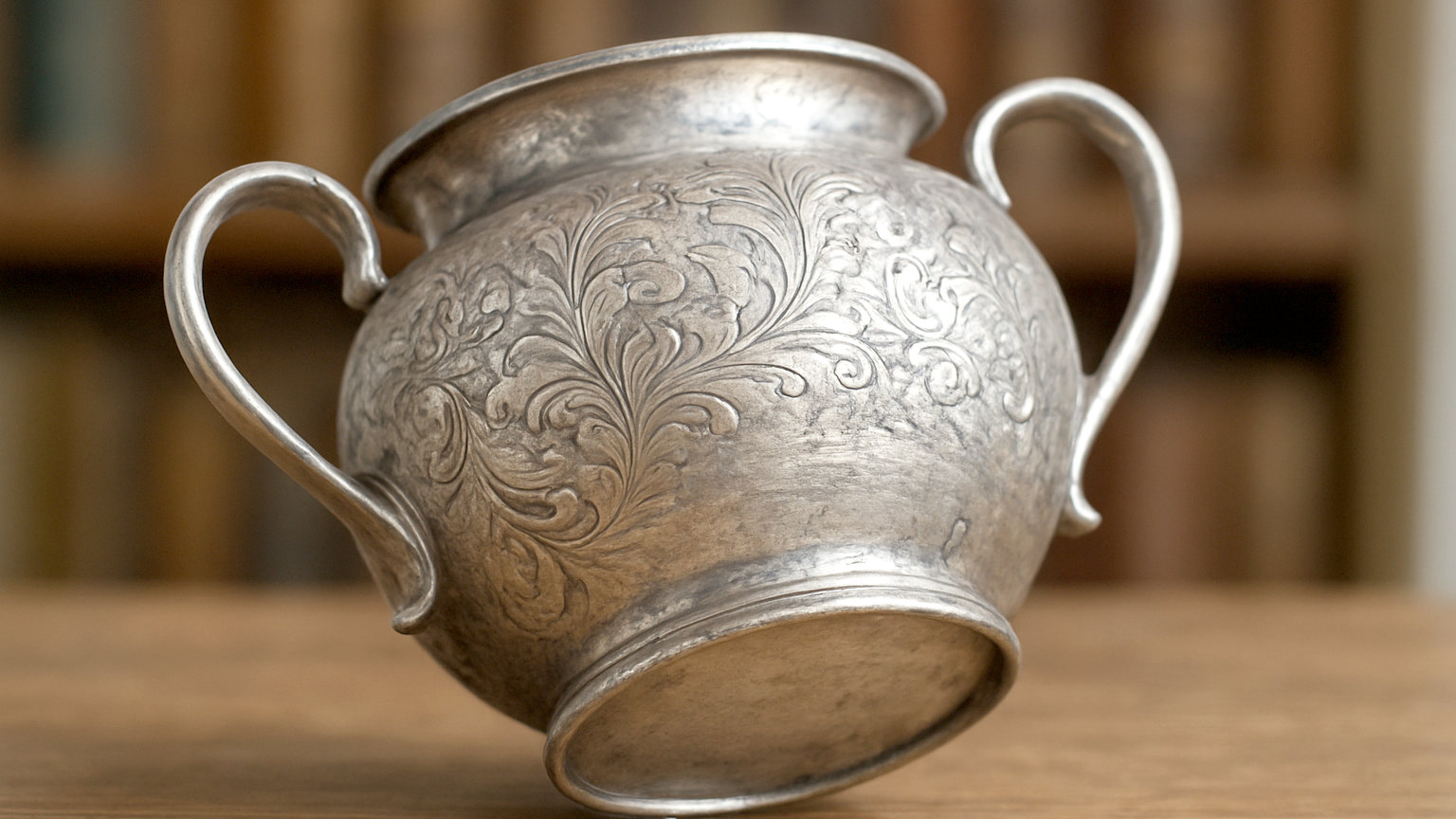
Turn it over: a base covering of baize or thin metal indicates loading. This changes how the piece should be priced, how it should be cleaned, and whether it can ever be immersed in water, so establish it before buying rather than afterwards.
Has it been over polished?
Compare the crispness of the hallmarks against the crispness of any decoration. Both wear at similar rates, so soft marks alongside soft ornament indicate generations of enthusiastic cleaning.
Check for thinning by pressing very gently on the base and feeling for flex, and hold the piece to a strong light looking for translucency or pinholes. A thin piece cannot safely be used and is difficult to repair.
What should you ask about the marks?
Which office, which year, and who the sponsor was. A dealer who knows their stock will answer immediately, and the answer tells you whether they have actually read the marks.
Check them yourself as well. Look for a fine rectangular outline around the punch group, which indicates a transposed mark panel, and confirm the form and decoration of the object are consistent with the date the marks give.
What should be on the receipt?
A description of the item, the marks, the date, the maker where known, any restoration, and the price. Ask for all of it in writing rather than accepting a bare total.
That description is your protection, and a confident dealer provides it without hesitation. Reluctance to put a date or an attribution in writing tells you something useful about how firmly it is held.
What should make you walk away?
Vagueness about condition, unwillingness to let you handle the piece properly, and pressure to decide quickly. None of those are characteristic of a dealer confident in their stock.
Also be cautious where marks are unusually crisp on a heavily worn piece, where a lid fits loosely, and where a price seems markedly below the category. Silver is well documented and predictable, and a bargain in it usually has an explanation.
Should you handle it before buying?
Always, and a dealer confident in their stock will encourage it. Weight, balance and surface tell you things no photograph conveys.
Feel the gauge of the metal, check the piece sits flat, and look inside with a torch. Buying silver from images alone is possible and considerably riskier, and it should be reflected in what you are prepared to pay.