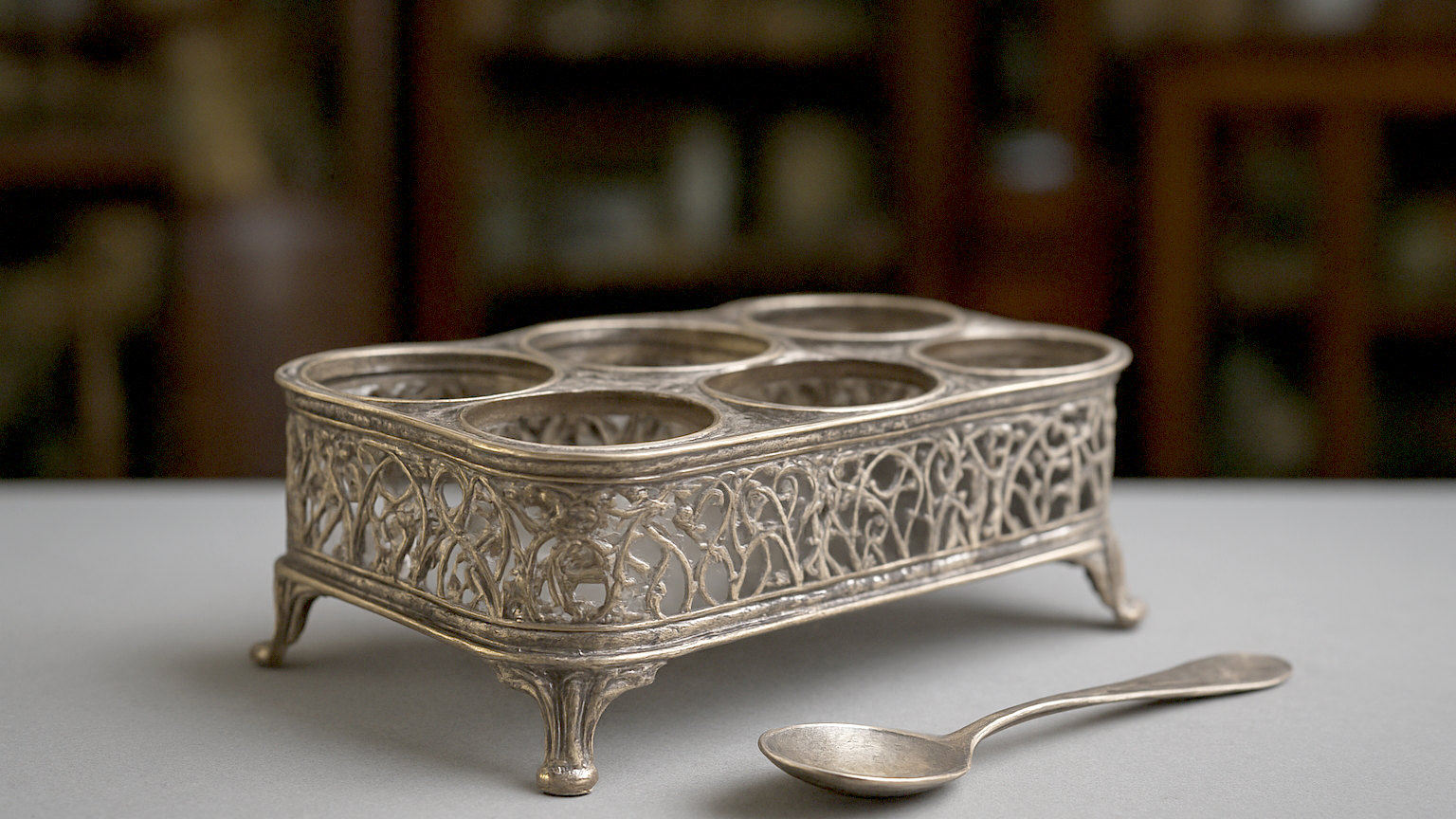
A cruet is a stand holding the condiments for the table, and almost every surviving example is missing something. The components are small, several are glass, and they were separated from their stands constantly over a century of use. Knowing what should be there is the difference between buying a complete set and buying most of one.
What should a full set contain?
Typically a stand with a handle, holding salt cellars, a mustard pot with a hinged lid, and a pepper caster with a pierced top. Larger sets add bottles for oil and vinegar with stoppers.
Each open salt should have a glass liner and a small spoon. The mustard should have a liner and a spoon as well. Count these separately, because the stand and the main vessels frequently survive while the small components do not.
Why do the liners matter so much?
Because salt and mustard corrode silver aggressively, and the liner exists to keep them apart. Without it the piece cannot be used, and the silver beneath will pit if it ever was.
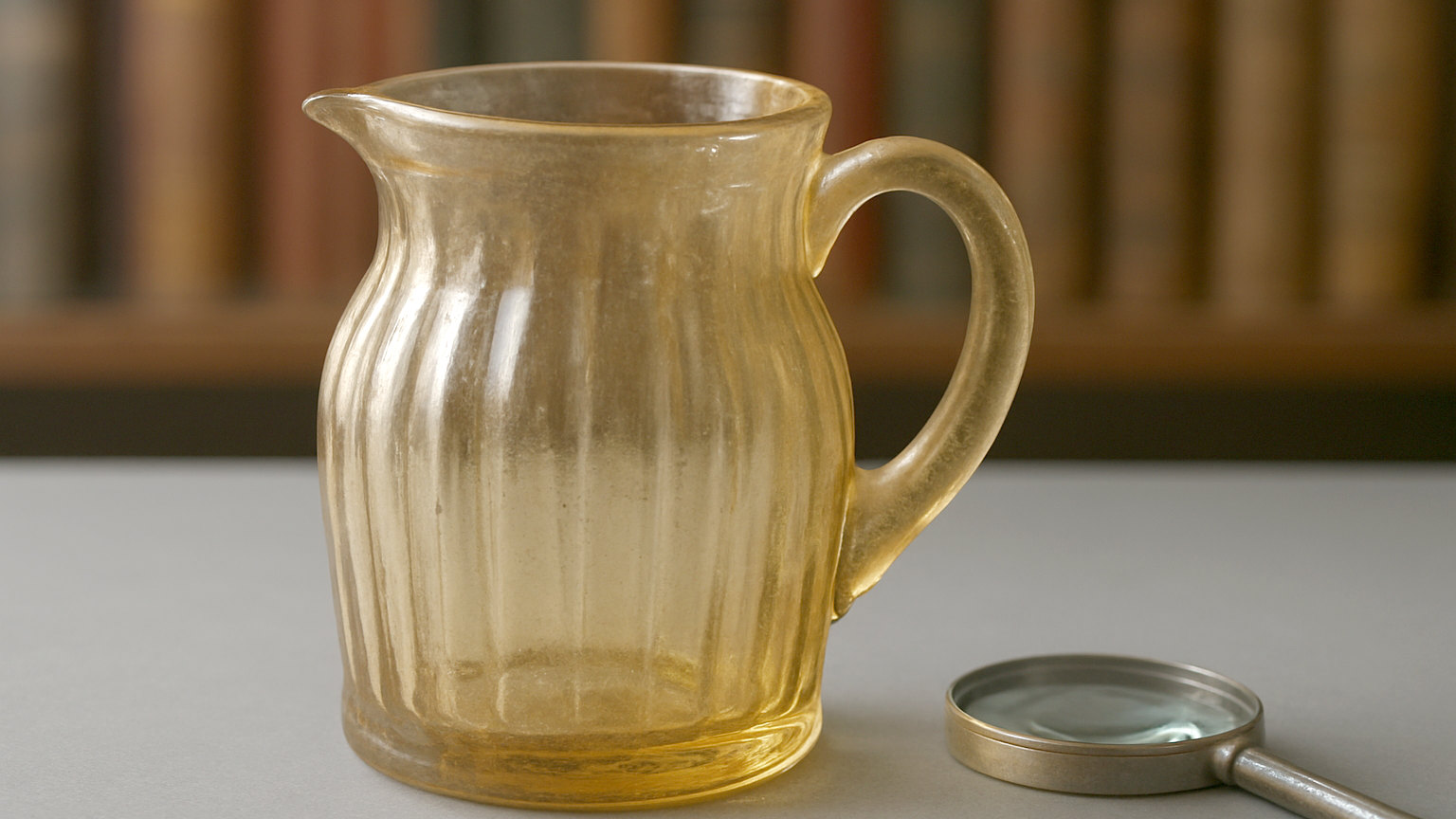
Pierced silver salts were designed around a coloured glass liner showing through the openwork, so a pierced salt without its liner looks wrong as well as being unusable. Liners are usually blue, sometimes clear or cranberry, and matching an original for colour and profile is difficult.
What is a pepper caster?
A closed vessel with a pierced top through which pepper is shaken, rather than an open dish. The piercing pattern varies and is part of the decoration.
Check the top is original to the body by looking at whether the marks agree and whether the fit is precise. Caster tops are frequently married from other pieces. Check the piercing for splits between the holes, since the thin bridges of metal break and are difficult to repair invisibly.
What should you check on the mustard pot?
The hinge and the interior. Hinges take constant use and are the commonest failure, so open and close the lid several times and feel whether the action is firm or loose.
Look inside for gilding, which was applied because mustard is acidic. Where the gilding has worn through, silver shows and corrosion begins underneath. Check for pitting in the base and for a liner, since a mustard pot without one has usually seen its contents directly.
How do you tell whether the pieces belong?
By reading the marks on every component, not just the stand. An original set should share a maker mark and assay office with identical or very close date letters.
Different makers or dates separated by years indicate an assembled set, which is common and worth considerably less. Compare the decoration, the profile of the feet and the pattern of any engraving across all the pieces, and check that the vessels actually sit properly in the stand rather than approximately.
Are the small spoons original?
Rarely, and they are the components most often replaced. Salt and mustard spoons are tiny, they were dropped and lost constantly, and matching replacements were bought without much thought.
Check whether the spoons match each other and the set in pattern and marks. A set with original matching spoons is worth noticeably more. Look at the bowls for corrosion, since these sat in salt directly and are frequently pitted or worn thin.
Is a cruet worth buying incomplete?
It depends what is missing and what it costs to replace. Liners and spoons can usually be sourced, though matching them well takes time and a good match adds real value.
A missing vessel is more serious, since the stand will look wrong and finding a correct replacement is unlikely. Price an incomplete set as parts rather than as a set, and do the arithmetic on completion before committing. Never leave salt or mustard standing in any silver vessel, since that is how the damage began in the first place.
How should a cruet be cleaned?
Gently and around any piercing rather than across it, since the thin bridges of metal between holes bend under pressure from a cloth. Remove liners first and wash them separately.