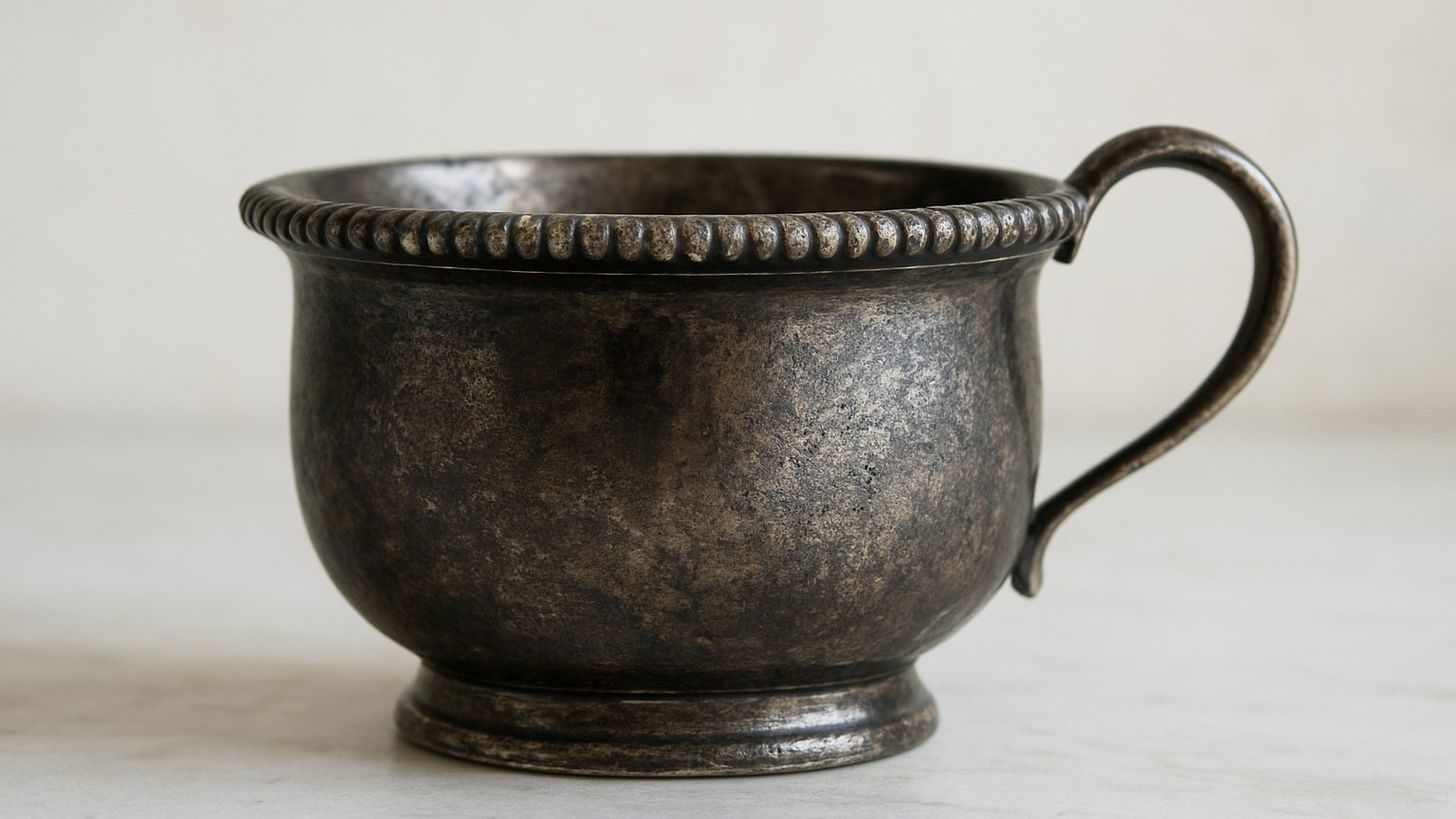
Silver looks after itself remarkably well provided it is kept away from a short list of materials that attack it. Tarnish, which is what everybody worries about, is a harmless surface reaction. The genuine threats are chemical and physical, and both are simple to avoid once you know what they are.
Is tarnish actually damaging?
No. Tarnish is silver sulphide forming where silver reacts with sulphur compounds in the air, and it affects appearance only. Left alone it stabilises and does no harm to the metal beneath.
What does cause harm is the polishing done to remove it. Every polish takes a microscopic layer of metal, and repeated over generations that softens hallmarks, wears away engraving and thins the piece. Polishing rarely is the single most useful habit.
Which materials should silver avoid?
Rubber above everything, since it contains sulphur and will etch a permanent black line into silver within weeks. A rubber band left on a spoon does visible damage very quickly.
Wool, felt, newspaper and many adhesives are also sulphur sources. So are some paints and some manufactured boards used in cabinets. Check what a display case is lined with before putting silver in it, since the lining is in contact for years.
What should you store silver in?
Tarnish resistant cloth bags or acid free tissue, in a dry place with stable temperature. Specialist silver cloth contains particles that absorb sulphur compounds before they reach the metal.
Wrap pieces individually rather than together, since silver scratches silver. Do not use household cling film or plastic bags, which trap moisture against the surface and can cause worse problems than tarnish.
How should flatware be kept?
In a canteen lined with tarnish resistant baize, or individually wrapped, with pieces separated so they cannot rub. Original fitted canteens are ideal and are worth keeping even when battered.
Check what an old canteen is lined with, since some period linings contain sulphur and will tarnish the contents steadily. Where a lining is suspect, interleave pieces with acid free tissue rather than relying on it.
What about humidity?
Stable and dry is what matters. Damp accelerates tarnishing considerably and promotes corrosion where any base metal is present, such as in loaded bases and on plated items.
Silica gel in a display case or a drawer helps in damp conditions, provided it is replaced or dried periodically. Avoid storing silver in lofts, garages, basements and against exterior walls where condensation forms.
How should it be displayed?
In a closed case rather than open shelving, since a case slows air exchange and dramatically reduces tarnishing. Line it with an inert material rather than felt or baize of unknown composition.
Support top heavy pieces so they cannot topple, and keep items far enough apart that they do not touch. Direct sunlight is not a problem for the metal but will affect any organic handles, so avoid it anyway.
How should it be handled?
With clean dry hands or cotton gloves, particularly on anything with a polished surface. Skin oils and salts leave fingerprints that etch into silver over time and eventually become permanent.
Support pieces from underneath rather than lifting by handles, spouts or swing handles, since those are the parts that fail. Never lift a jug by the handle if the joints are at all suspect, and never pick up a basket by its handle if the pivots are worn.
What about pieces in regular use?
Regular gentle use actually keeps silver in good condition, since handling and washing prevent tarnish building. Silver in a drawer tarnishes more than silver on a table.
Wash by hand promptly after use, dry thoroughly, and never leave salt, egg, mustard or acidic food standing on it, since all of those pit the surface permanently. Never use a dishwasher, which dulls the surface and loosens applied parts.
Does anything help slow tarnishing?
Anti tarnish strips placed in a case or drawer absorb sulphur compounds and are genuinely effective, provided they are replaced when exhausted.
Reducing air exchange helps most of all, which is why a closed case outperforms open shelving by a wide margin, and why wrapped storage outperforms both.