Studio pottery is one of the strongest risers in the ceramics market, and it works by entirely different rules from factory production. There is no company backstamp, no pattern number and no registration mark. What there is instead is a small impressed seal, sometimes two, and learning to find and read them is the whole exercise.
What makes pottery studio rather than factory?
That it was made by an individual potter or a small workshop, with the same person responsible for the design, the throwing and frequently the glazing and firing.
That is the opposite of factory production, where those tasks were divided between specialists. The result is that each piece is slightly different, the potter personality is visible in the work, and the market values individual makers the way it values artists rather than manufacturers.
Where are the marks?
Impressed into the clay, usually near the foot on the side of the pot or on the base itself. They are small, often only a few millimetres across, and easily missed.
Look under raking light and run a fingertip around the lower body and the base. There may be two marks: one for the potter and one for the workshop, since potters working in an established pottery frequently stamped both. Recording both is essential, because the combination identifies who made it and where.
What do the seals look like?
Personal devices rather than names. Most are initials, a monogram, or a simple symbol, impressed with a small stamp made by the potter.
They are rarely legible as words, which is why people miss them or dismiss them as blemishes. Published references illustrate seals for the recognised potters, and collector societies maintain comprehensive listings. Photograph the seal under raking light and compare against illustrations rather than trying to read it as text.
How do you recognise the work itself?
By evidence of hand throwing. Look inside a bowl or a jug for throwing rings, the faint spiral ridges left by the potter fingers as the clay rose on the wheel.
Check whether the form is slightly asymmetric, which is normal and desirable rather than a fault. Look at the foot, which on studio work is usually turned by hand and shows tool marks. Glazes are frequently thick, variable and deliberately allowed to run and pool.
What bodies and glazes are used?
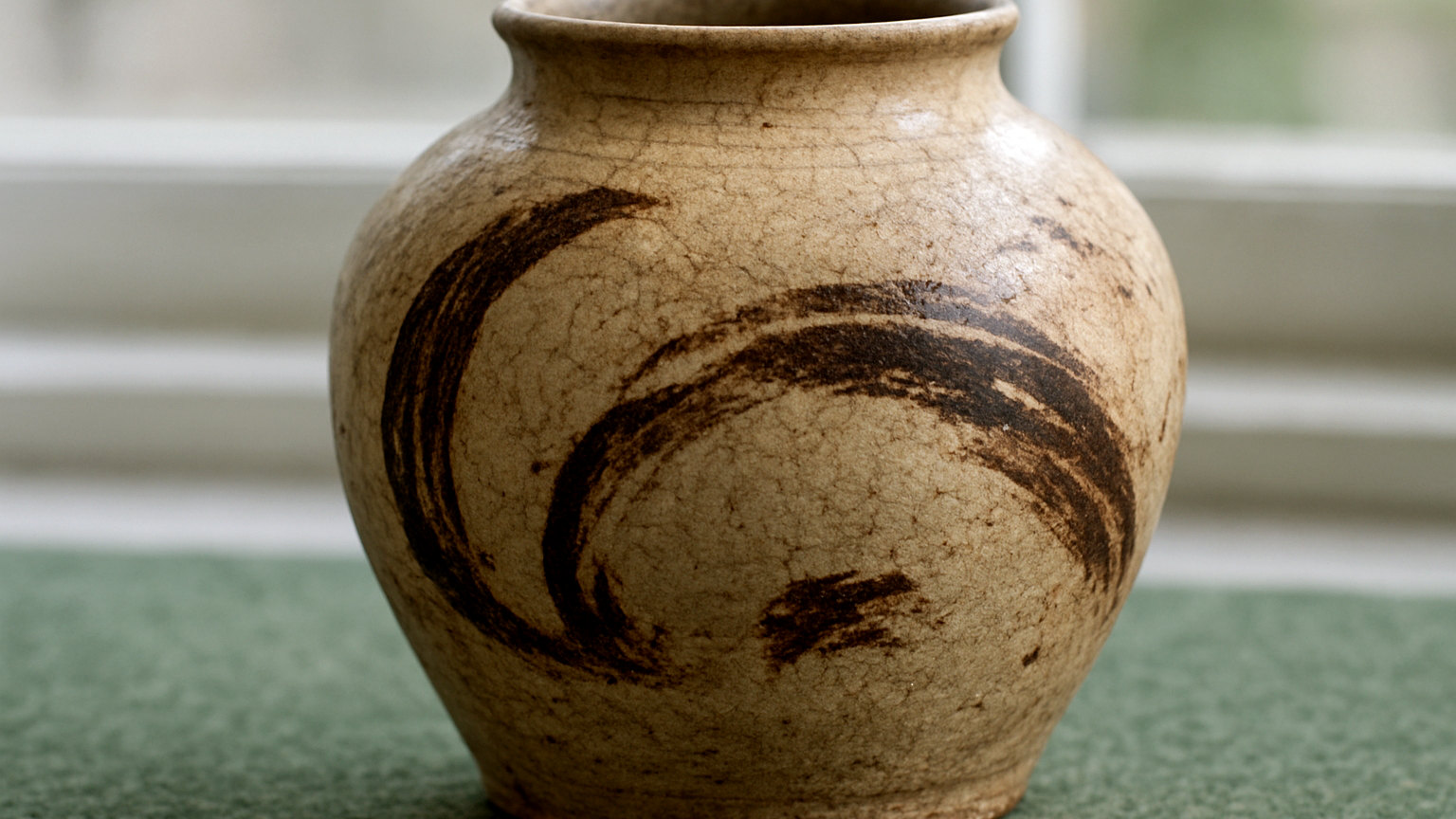
Stoneware predominantly, fired high so the body vitrifies, along with porcelain and earthenware. Bodies are frequently left partly unglazed so the clay itself is visible.
Glazes draw on a tradition of ash, tenmoku, celadon and salt glazing, and their variability is the point rather than a defect. Two pots from the same firing can differ noticeably, and collectors value the ones where the glaze behaved most interestingly.
What drives the value?
Who made it, above everything. The market follows individual potters closely, and work by recognised names sells for a substantial multiple of comparable work by unknown hands.
Beyond that, quality within a potter output matters: an exceptional glaze result or a particularly resolved form is worth more than a routine piece by the same maker. Size, condition and whether a piece is exhibition quality all count. Early work by a potter who later became celebrated frequently attracts particular interest.
What condition problems matter?
Chips, cracks and grinding to the foot rim. Studio pottery is functional ware and was frequently used, so wear is normal, but damage reduces value as it does anywhere.
Check the rim and the foot carefully, and look inside for cracks and staining. Firing faults such as slight warping, glaze crawling and iron spotting are original characteristics rather than damage, and distinguishing them from later damage takes a little practice but is worth learning.
How should it be looked after?
Most of it can be used, which is what it was made for, though check whether a glaze is food safe if a piece is early or experimental. Wash by hand rather than in a dishwasher.
Avoid sudden temperature changes, since thermal shock cracks stoneware. Do not put studio pottery in a microwave if it has any metallic glaze component. Handle by the body rather than by handles or rims, and never store pots stacked inside one another.