Lustreware has a surface unlike anything else in ceramics: a genuine metallic sheen produced by firing a thin film of metal onto the glaze. It was made in enormous quantities, it is immediately recognisable, and it has one significant vulnerability that determines how every piece should be handled.
How was lustre made?
By applying a preparation containing metal compounds over the fired glaze, then firing again at a low temperature in a reducing atmosphere, which deposits an extremely thin metallic film on the surface.
The film is measured in fractions of a millimetre and sits on top of the glaze rather than within it. That is why lustre wears through with handling and washing, and why worn lustre cannot be restored without refiring the whole piece.
What colours were produced?
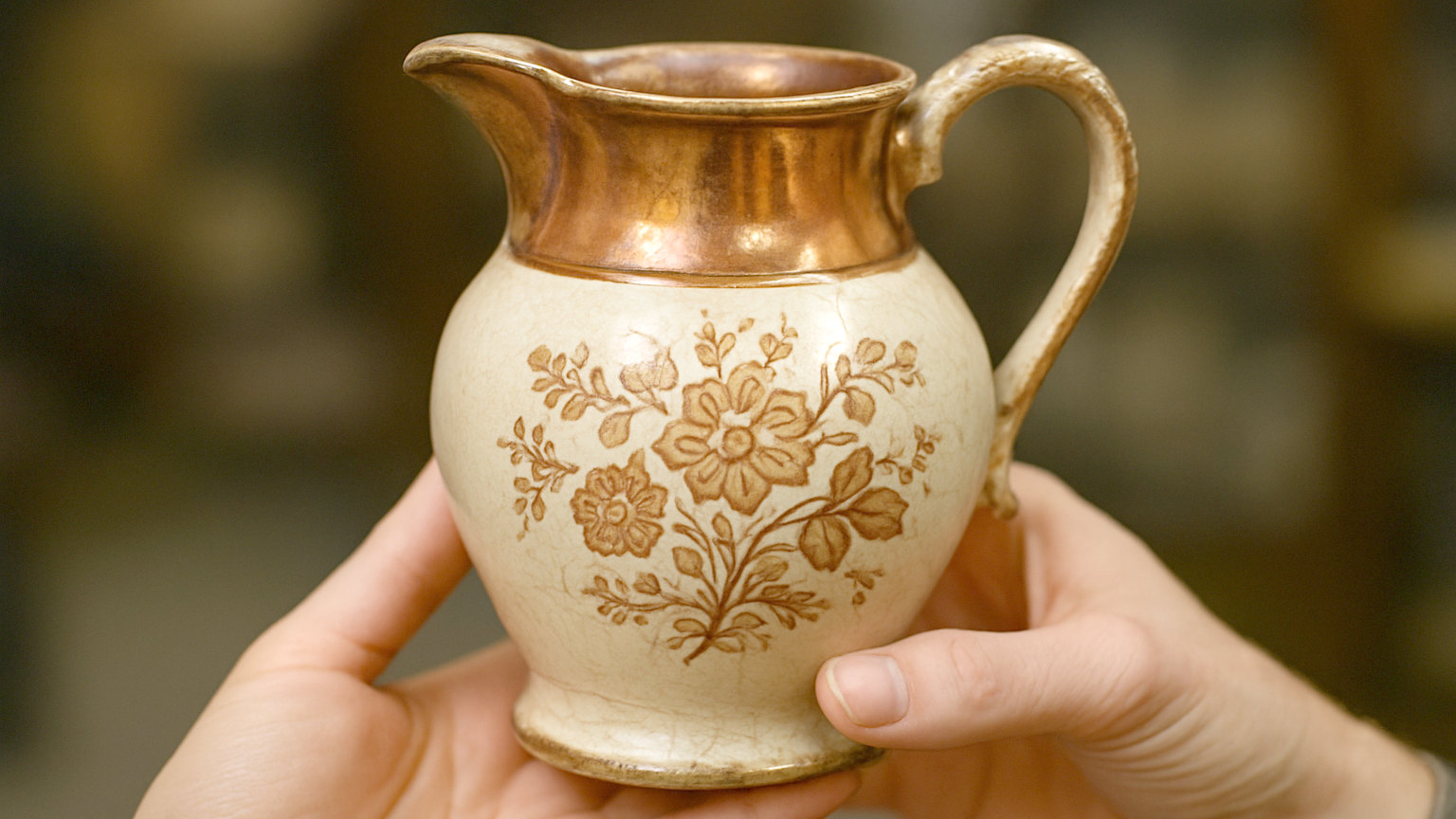
Copper lustre gives a warm reddish gold, the commonest by a wide margin. Silver lustre, made from platinum rather than silver so it does not tarnish, gives a bright metallic grey.
Gold produces pink and purple lustre, ranging from a soft rose to a deep mottled purple. Some pieces combine two or more. The colour indicates which metal was used and therefore something about the cost and intention of the piece.
What is resist lustre?
A technique where a pattern is painted onto the piece in a resist medium before the lustre is applied, so the lustre does not adhere there. When the resist is removed, the design shows as the plain white or coloured body against a metallic ground.
It produces a distinctive negative effect and required real skill. Resist decorated pieces are generally more desirable than all over lustre, since the technique is more demanding and the results more decorative.
What is splash or mottled lustre?
Lustre applied unevenly, sometimes with oil dropped onto the surface, producing a marbled or splashed effect. Pink and purple lustre in particular was frequently treated this way.
The effect is deliberate rather than a fault. Look at whether the mottling is coherent and attractive, since quality varied enormously. Some pieces combine a mottled ground with a printed or painted panel, which is a recognised and collected combination.
What forms turn up?
Jugs above all, then mugs, bowls, plaques, teapots and tea wares. Commemorative pieces bearing verses, mottoes and portraits are common and collected.
Plaques with printed religious or moral verses framed in lustre are characteristic and were made in large numbers. Anything commemorating a datable event is worth researching, since it anchors the piece in time and adds interest.
How do you check condition?
By looking at the lustre itself under a good light, since wear is the main issue. Rims, handles, spouts and any raised area lose lustre first, showing as dull patches where the white body or plain glaze shows through.
Turn the piece slowly and look across the surface rather than straight at it. Extensive wear substantially reduces value, and there is no remedy. Check also for chips and hairlines by holding the piece to a light, and use ultraviolet to reveal restoration.
How should lustreware be cleaned?
With the greatest possible restraint. Dust with a soft dry cloth, and if washing is genuinely necessary use lukewarm water and the mildest detergent, with a very soft cloth and no pressure at all.
Never use abrasives, never scrub, and never put lustreware in a dishwasher, where it will lose its metallic surface within a cycle or two. Do not use lustre pieces for hot liquids or food, and do not microwave anything with a metallic surface.
Is it worth collecting?
Ordinary copper lustre jugs survive in quantity and are very affordable, which makes them a sensible entry point. Silver resist pieces, fine pink lustre and anything commemorative do considerably better.
Condition of the lustre is the single biggest factor in value, ahead of form and even of maker, since a worn piece cannot be improved. Buy examples with bright unworn surfaces and handle them as little as possible thereafter.