Ironstone turns up constantly in inherited dinner services and is widely misunderstood, largely because the marks on it were written by marketing departments. It is neither china nor porcelain despite what many backstamps imply, and knowing what it actually is prevents both disappointment and the opposite mistake of undervaluing a good service.
What is ironstone?
A dense, hard, opaque earthenware, developed as a durable and inexpensive alternative to porcelain for everyday tableware. It is heavier and stronger than ordinary earthenware and considerably tougher than early porcelain.
The name suggests iron in the body, and various recipes were claimed by different makers, but the essential point is that it is a refined earthenware rather than a porcelain. It was made in enormous quantities because it did the job well and survived hard domestic use.
How do you recognise it?
By weight and by opacity. Hold a piece to a strong light: ironstone is completely opaque and does not glow, which immediately separates it from porcelain and bone china.
It feels noticeably heavy for its size, and it is thickly potted compared with china. Tap the rim and you get a duller note than porcelain gives. A chip reveals a dense body that is usually greyish or off white rather than the pure white of porcelain.
What do the marks say?
Frequently more than the body justifies. Backstamps commonly combine words suggesting stone, china and various claims of durability, and many use royal or armorial devices to suggest quality.
Treat this wording as trade description rather than as a statement of material. What is useful is the factory name alongside it, and any pattern name or registration mark, both of which help date the piece. Read the words for evidence rather than for what they assert.
What patterns turn up?
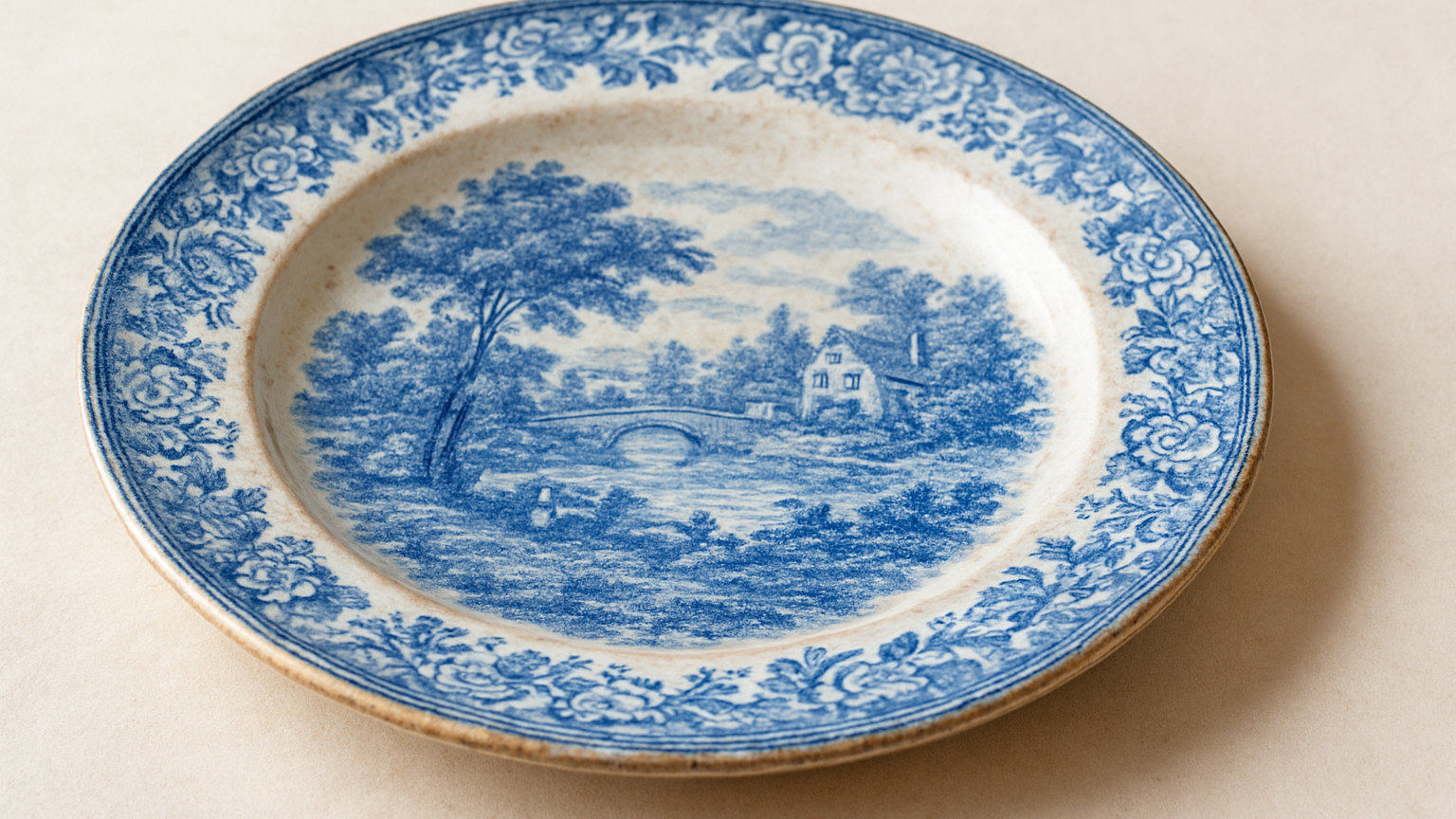
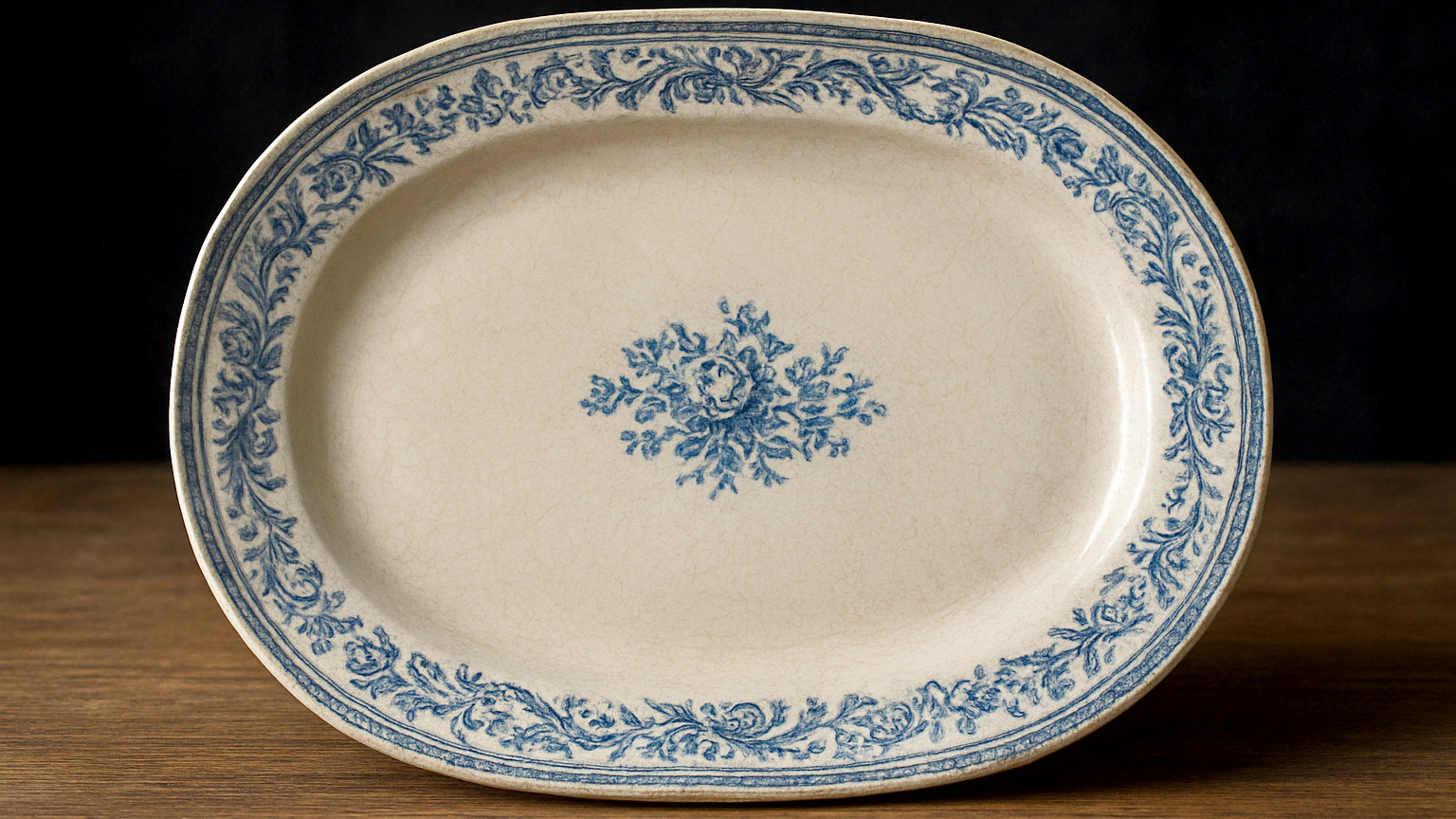
Transfer printed designs above all, frequently in blue, and often in styles drawing on oriental sources with dense all over patterning. Coloured and hand finished versions of the same patterns are common.
Large dinner services were the main product, so plates, meat dishes, tureens and vegetable dishes are what survive. Serving pieces are scarcer than plates and worth more individually, which is worth knowing before a service is broken up.
How does it compare with other bodies?
It sits between ordinary earthenware and porcelain. Earthenware is softer, more porous and chips readily. Porcelain and bone china are translucent. Stoneware is vitrified and non porous but usually coarser in appearance.
Ironstone is opaque like earthenware but far denser and stronger, which is exactly why it succeeded commercially. Learning to place a body in this sequence by weight, opacity and the appearance of a chip is more useful than memorising any individual factory.
What condition problems are common?
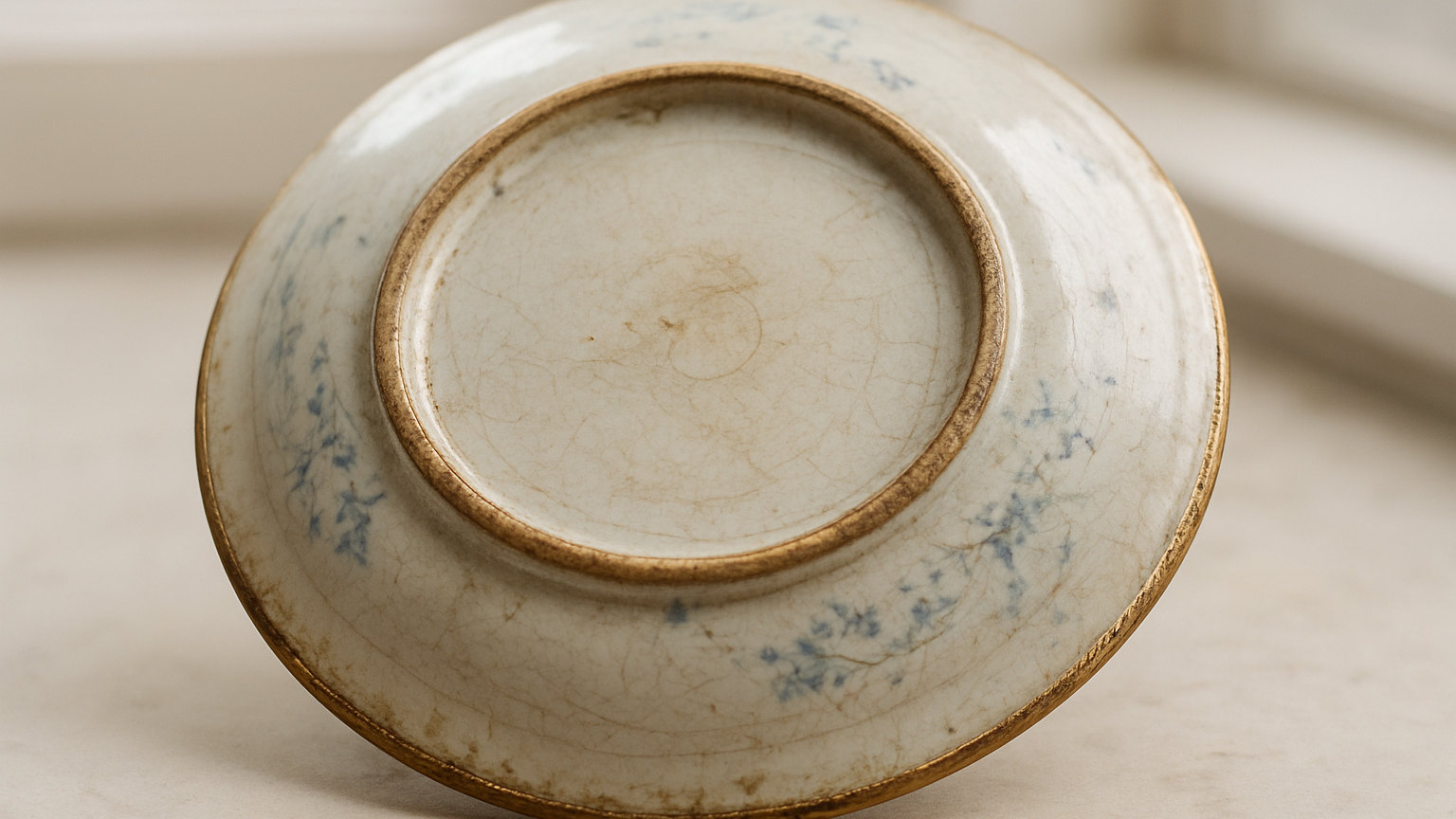
Crazing and staining above all. The glaze crazes with age and the body beneath is porous enough to absorb tea, coffee and food through those cracks, producing brown staining that will not wash out.
Do not attempt to bleach it, since bleach soaks into the body, is extremely difficult to remove and continues affecting the piece afterwards. Check rims and foot rims for chips, which are common on heavily used services, and look for old rivet repairs, which were normal before modern adhesives.
Is it worth anything?
Ordinary services are worth relatively little because production was enormous and survival is good, and they are usually more enjoyable used than sold.
Value concentrates in early pieces from identifiable makers, in unusual forms rather than plates, in complete services with their serving pieces, and in patterns that collectors follow. Large meat dishes and tureens are frequently the pieces worth having assessed separately.
Can it be used?
Yes, and it was made for exactly that. It is tough, it survives daily use well, and most inherited services are worth more as things you eat from than as things you sell.
Wash by hand rather than in a dishwasher, since detergent will dull the glaze and fade any overglaze decoration. Avoid crazed and stained pieces for hot liquids, since the body absorbs through the cracks.
How do you identify the pattern?
Check the base first, since many makers printed the pattern name alongside the factory mark in a decorative cartouche.
Where there is only a number, that is a pattern reference and needs the factory identified first. Replacement china specialists maintain searchable archives and will identify a pattern from good photographs of the front, the back and a close detail of the border.