Creamware is one of the genuinely important ceramic bodies, because it put light, durable, decorated tableware into ordinary households at a price they could afford. It is also easy to identify once you know the single test that separates it from the body that succeeded it.
What is creamware?
A refined earthenware with a pale cream coloured body, covered in a clear lead glaze which gives the whole piece a warm ivory tone.
It was lighter and thinner than earlier earthenware, strong enough for daily use, and cheap enough to sell in quantity. That combination made it enormously successful and it became the standard tableware of its era across a wide market.
How do you recognise it?
By the overall colour, which is a soft warm cream rather than white. Hold a piece against something genuinely white and the difference is immediately obvious.
It is opaque, so it will not glow when held to a light, which separates it from porcelain and bone china. A chip reveals a fine cream coloured body, considerably more refined than coarse earthenware but clearly not the dense white of porcelain.
How do you tell it from pearlware?
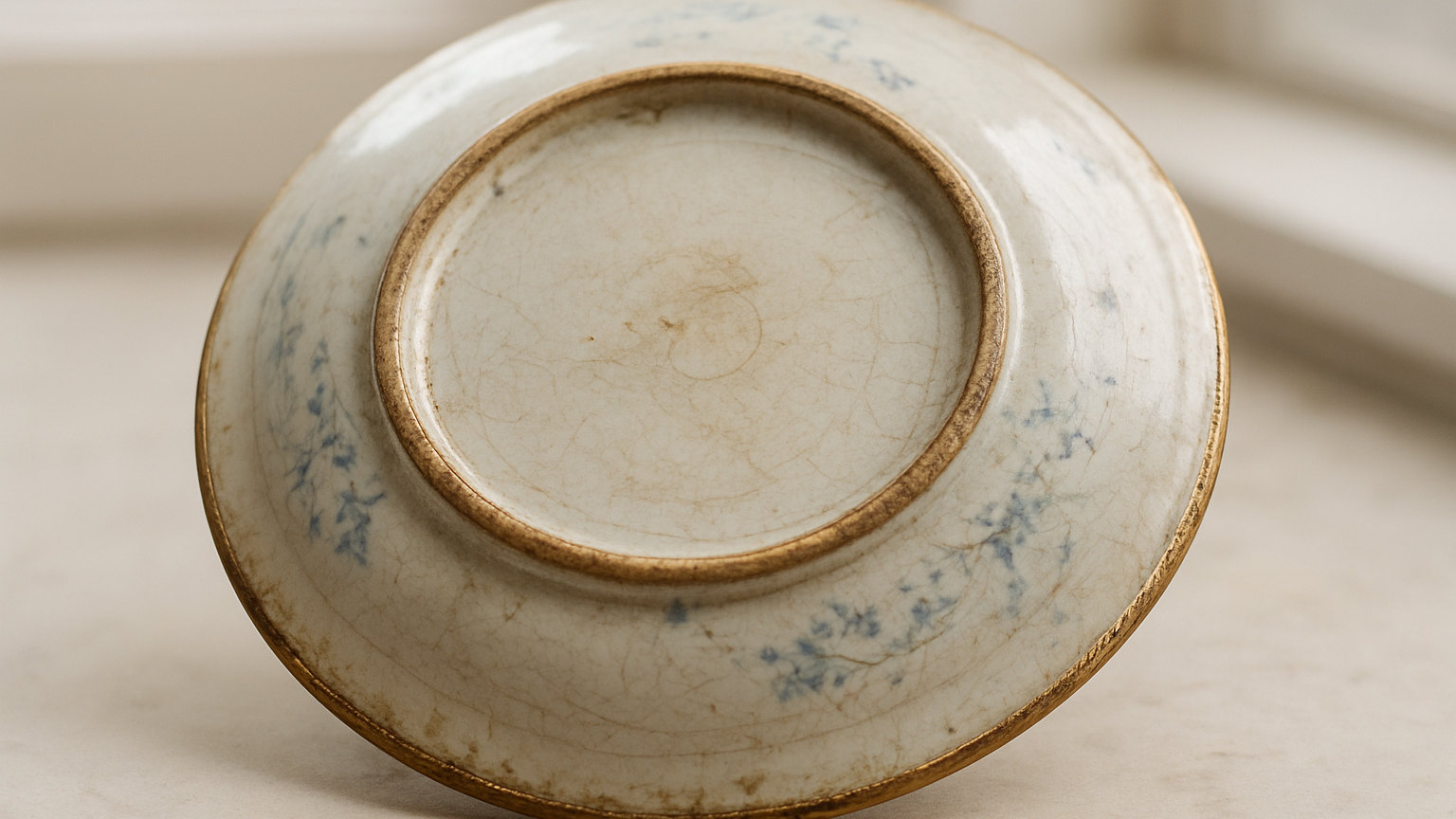
Look into the foot rim, which is the whole test. Pearlware was developed from creamware by adding a small amount of cobalt to the glaze to counteract the yellowish tinge and make it appear whiter.
Where that glaze pools thickly, in the foot rim, around handle joints and in any recess, the cobalt shows as a distinct pale blue. Creamware pools warm and yellowish in the same places. Turn the piece over and look into the foot under good light and the answer is unmistakable.
What forms turn up?
Tableware above all: plates, dishes, tureens, sauce boats, teapots and coffee pots. Also decorative pieces, baskets with pierced sides, and moulded wares with relief patterns.
Pierced work is characteristic and demonstrates the strength of the body, since a coarser earthenware could not have supported that treatment. Check pierced pieces for broken bridges between the holes, which are the vulnerable points.
How was it decorated?
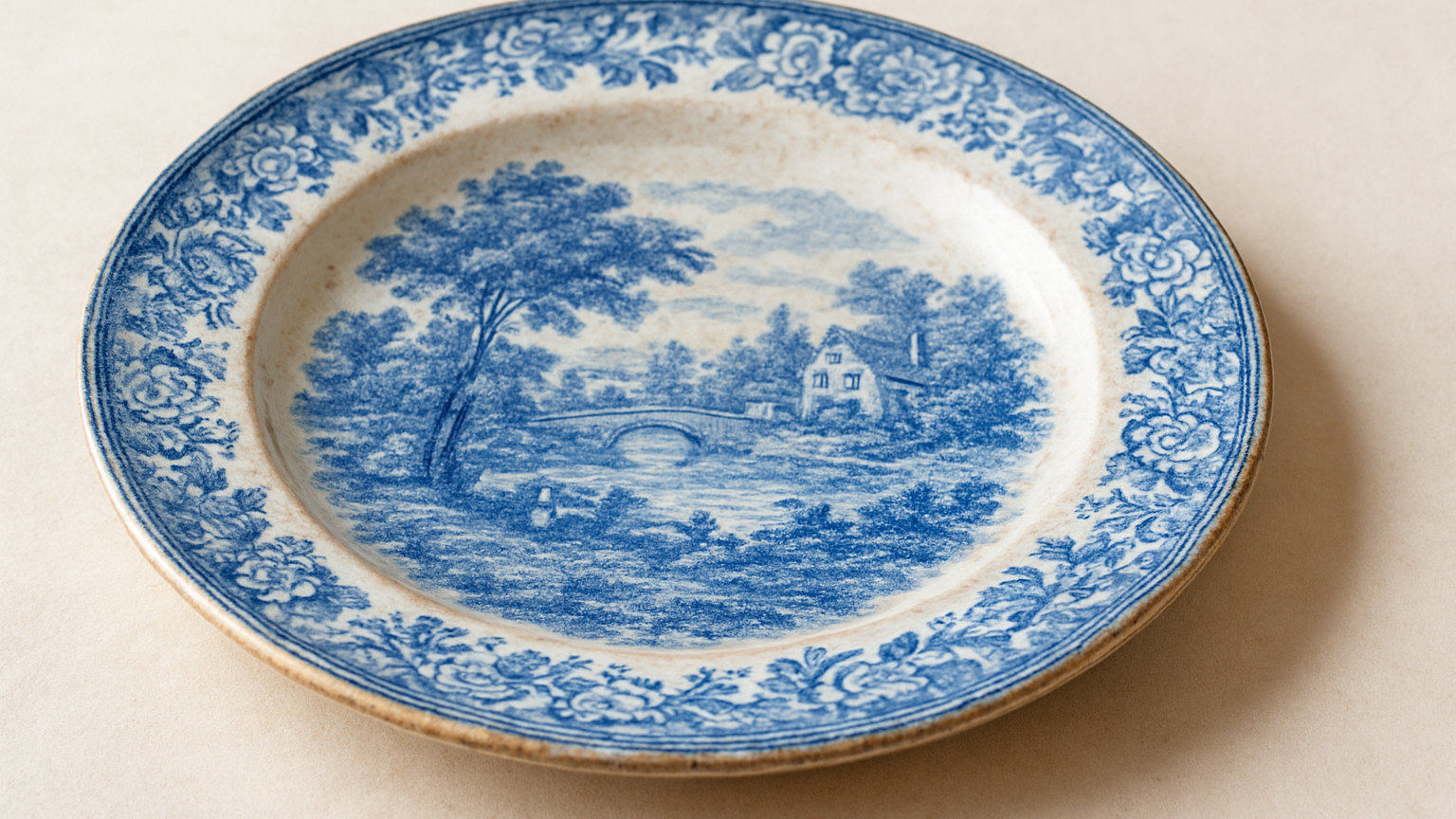
Frequently not at all, since the colour and form were the appeal, and plain creamware sold in enormous quantities. Where decorated, transfer printing and hand painted enamels were both used.
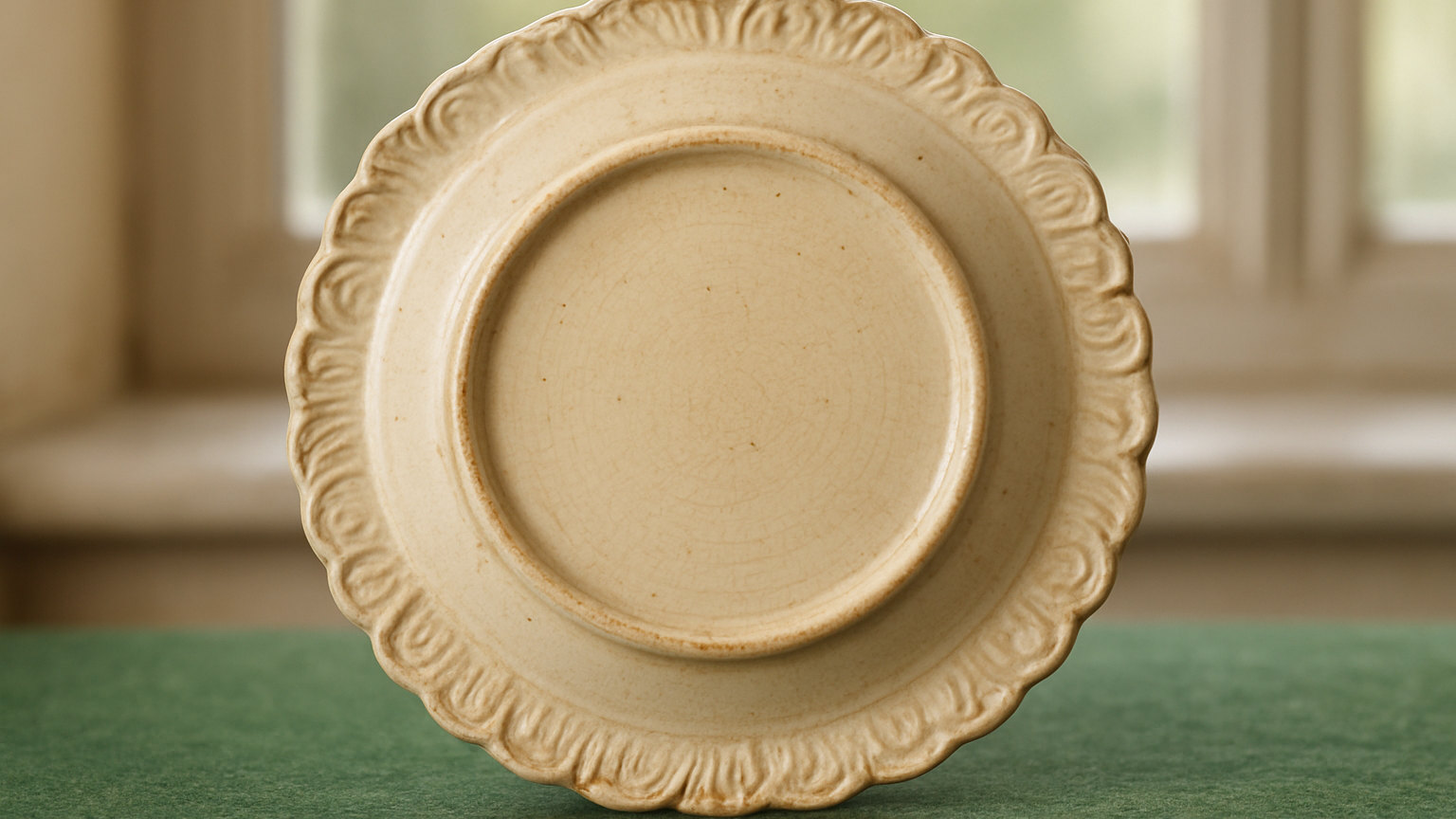
Moulded decoration formed as part of the body is common, with basketwork, feather edges and shell patterns around rims. That moulded edge treatment is a good identification feature, since it appears repeatedly across the tradition.
Is it marked?
Sometimes impressed with a maker name, though a great deal is entirely unmarked. Look on the base for an impressed mark under raking light, since these fill with glaze and read poorly.
Where no mark exists, identify by body, glaze, potting thickness and the profile of the foot rim. Unmarked creamware is normal and says nothing about quality, since the small potteries producing it had no commercial reason to mark.
What condition problems are typical?
Crazing and staining, since the body beneath is porous and the glaze crazes with age. Brown staining from tea and food soaks through the cracks into the body permanently.
Chips are common on rims and pierced sections. Never attempt to bleach out staining, since bleach soaks into the body and continues affecting the piece afterwards. Check for restoration under ultraviolet light on anything of value.
Is it worth collecting?
Early pieces from identified potteries and anything with fine piercing or unusual form attract serious interest. Plain later tableware is affordable and plentiful.
That affordability makes it excellent teaching material, since you can handle a great deal of genuine period earthenware cheaply and learn to read bodies and glazes by direct comparison. Do not use crazed and stained examples for food, given the lead glaze.
Why did it matter commercially?
Because it undercut porcelain decisively. A household that could not afford porcelain could afford a full creamware service, and the body was light and strong enough to compete on quality rather than only on price.
That success reshaped the whole pottery industry and drove the development of the bodies that followed it, which is why creamware turns up in such quantity and why understanding it explains so much of what came next.