Pottery figures made for the mantelpiece are among the most recognisable of all English ceramics and among the most reproduced. They were cheap, cheerful and produced in enormous numbers, and copies have been made continuously ever since. The back and the base settle almost every question.
What is a flatback?
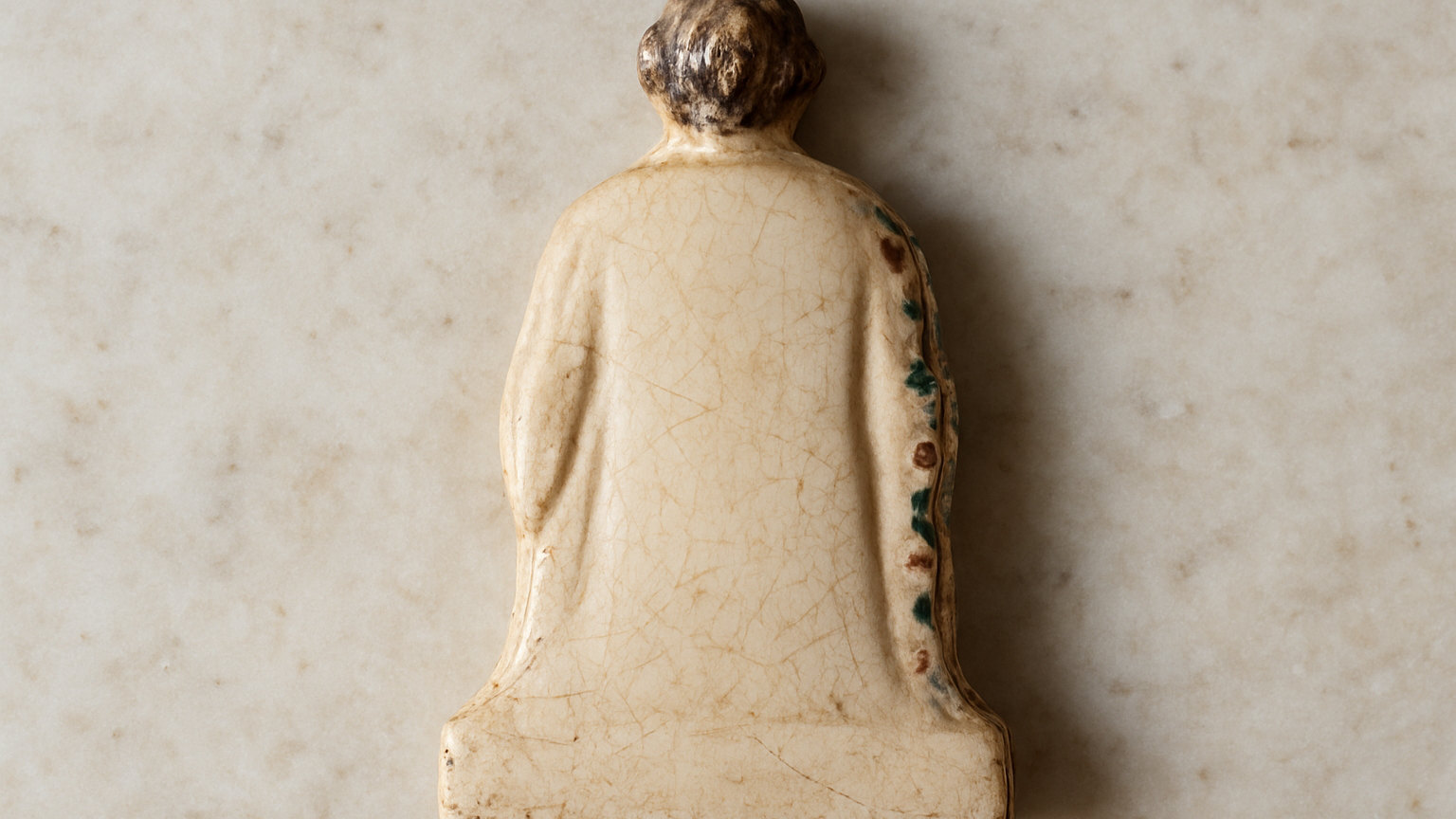
A figure modelled in the round at the front and left flat and largely undecorated at the back, since it was made to stand against a wall or a mirror on a mantelpiece.
That flat back is the defining feature and the first thing to check. It should be genuinely plain, frequently with just a wash of colour or none at all, and it should show a vent hole into the hollow interior.
What does the base tell you?
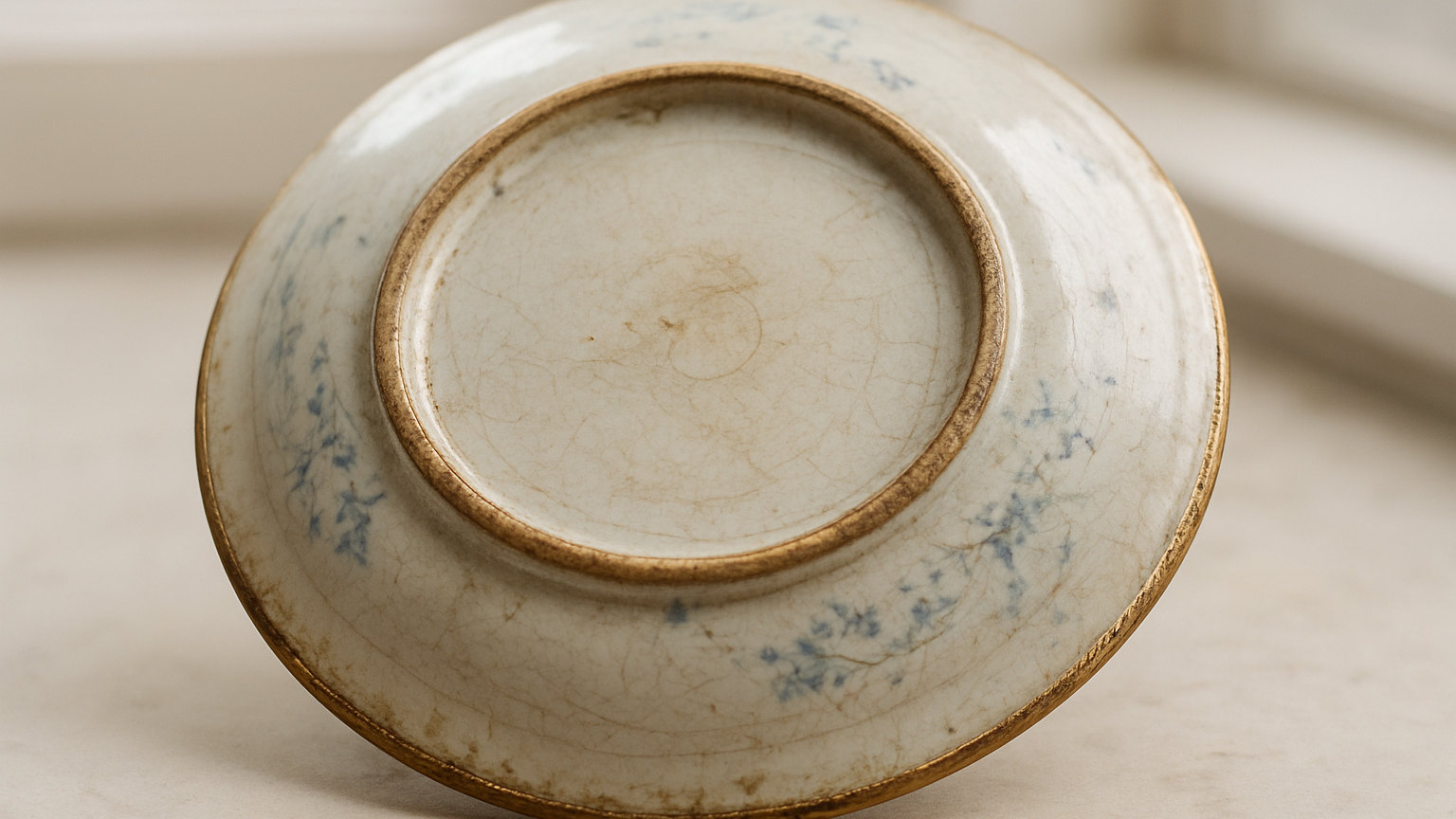
How the piece was made and whether it has genuine age. Look for an opening into the hollow body, which is a firing vent, and at the colour and texture of any unglazed clay.
Genuine wear on the base is irregular and concentrated where the figure actually rested, with fine scratches running in varied directions. Uniform scuffing across the whole underside, or scuffing in one direction, indicates artificial ageing.
How do you read the mould seams?
By finding them. Figures were press moulded in two or more parts and assembled, leaving seams down the sides which should have been cleaned up by hand before firing.
Look for slight irregularity where the parts joined, and for the hand finishing that tidied it. Modern reproductions frequently show sharper, more mechanical seams, or none at all where a different casting method was used.
What do the colours indicate?
The period and the production method. Earlier figures use underglaze colours, particularly cobalt blue, applied before glazing so the colour sits beneath a glassy layer and cannot wear.
Later and cheaper production uses overglaze enamels applied on top, which wear and can be scratched. Run a fingertip over the decoration: colour you can feel standing proud is overglaze. Sparse decoration with large areas left white is characteristic of the later flatback tradition.
What subjects turn up?
Royalty, politicians, preachers, actors, criminals and notable events, alongside generic shepherds, animals and cottages. They functioned as popular prints in three dimensions.
Identifiable subjects are worth researching, since a figure of a named person connected to a datable event anchors the piece in time and adds interest. Some subjects are far scarcer than others, and reference works catalogue them systematically.
How do you spot a reproduction?
By weight, body and glaze together. Reproductions are frequently lighter, with a whiter more refined body than genuine earthenware and a glaze that sits evenly rather than pooling.
Check for artificial crazing, which tends to be uniform and evenly darkened where genuine crazing is fine, irregular and stained unevenly. Look at the modelling quality, since moulds taken off originals produce softer detail with each generation.
Are they marked?
Very rarely, which is normal rather than suspicious. The great majority of genuine flatback figures carry no mark at all, since they were cheap wares from small potteries with no reason to mark.
A mark on a figure of this type is therefore worth examining rather than trusting. Later reproductions sometimes carry marks intended to reassure, and a confident backstamp on an otherwise unconvincing figure is a warning rather than a comfort.
What condition issues matter?
Damage to projecting elements, since these break first. Check hands, arms, hats, animal ears and tails, and any applied flowers or foliage.
Use ultraviolet light in a darkened room, which reveals restoration as patches fluorescing differently from the glaze. Restoration is extremely common on these and frequently invisible in daylight, so the check is worth making every time.
Are they worth collecting?
Early well modelled figures with underglaze decoration and identifiable subjects attract real money. Later generic figures were made in vast numbers and are worth considerably less.
Condition matters greatly because damage shows on a decorated surface. Buy on modelling quality and subject rather than on size, and be sceptical of anything early looking priced as though it were, since this is one of the most copied fields in pottery.