Figural jugs modelled as people are among the most recognisable of all English pottery, and among the most reproduced. The form has been made continuously for well over two centuries by countless potteries, which means the subject tells you almost nothing and the quality of the modelling and the character of the body tell you almost everything.
What is a toby jug?
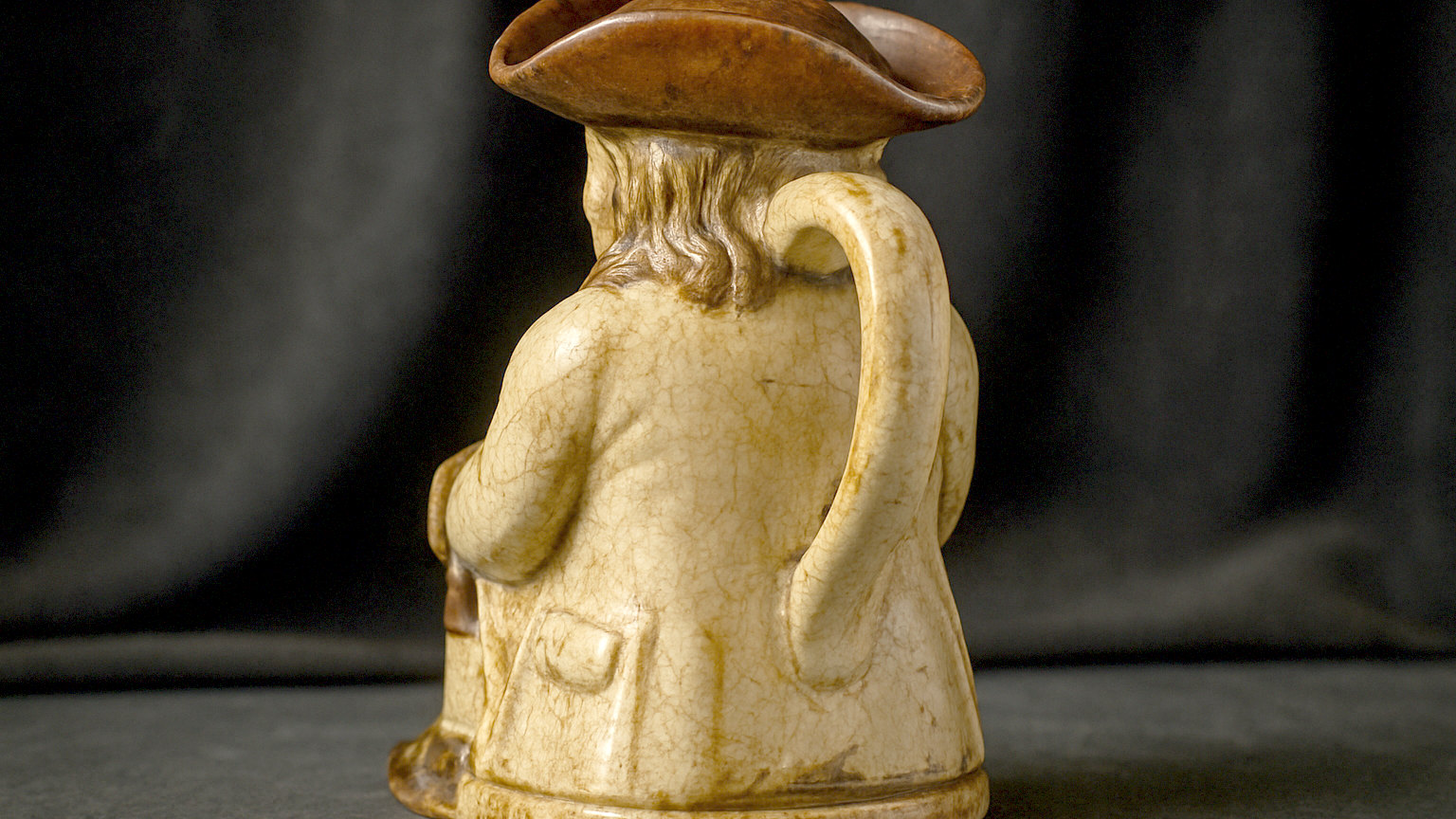
A jug modelled as a full seated figure, traditionally a stout man holding a jug and a glass, with a tricorn hat forming the pouring lip. The whole body is the vessel.
Character jugs are different: they depict only the head and shoulders, with the handle usually formed as something relating to the subject. Both forms have been produced continuously, so the type indicates the tradition rather than the date.
How do you date one?
By the body and glaze rather than the subject. Early examples are earthenware with a coloured lead glaze, and the colours run and pool during firing exactly as they do on other lead glazed wares.
Later production uses enamel colours applied over the glaze, which stay where they were put and have hard edges. That single difference separates the early tradition from later work more reliably than anything else about the object.
What does the base tell you?
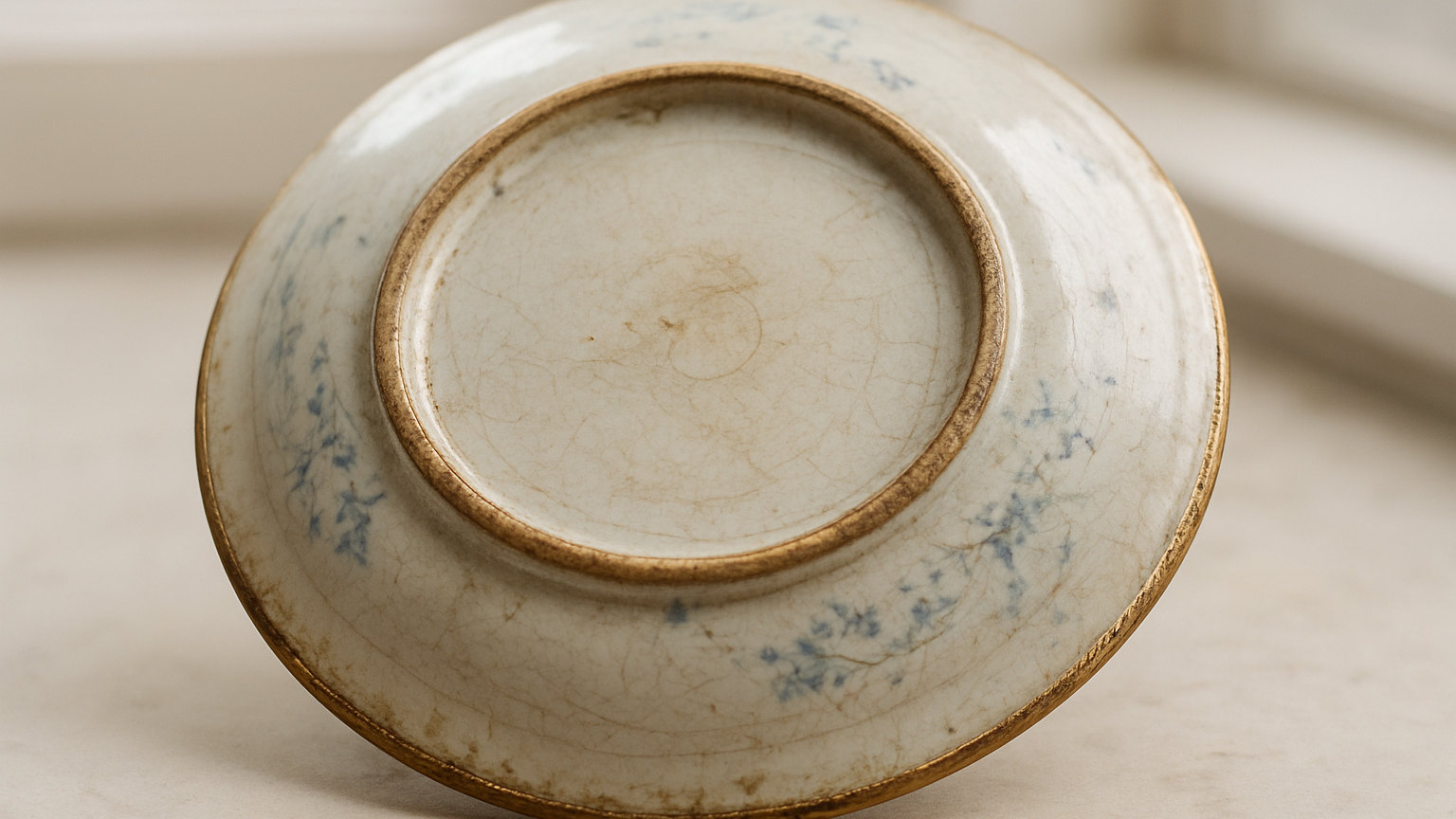
A great deal. Look at the colour and texture of any unglazed clay, at the shape of the foot, and at whether there is a hole through into the hollow interior.
Early examples frequently have a rough unglazed base showing a buff or cream earthenware body. Later factory production has a neater finished base, frequently with a printed mark, a shape number and sometimes a registration device. Genuine wear should be irregular and concentrated where the piece actually rested.
How do you judge the modelling?
By whether the face has character. The whole point of these jugs is the figure, and the difference between a good one and a poor one is entirely in how well it was modelled and how crisply the mould has reproduced it.
Moulds wore with use, so later castings from an old mould are softer in detail. Compare the definition of the eyes, the hands and the folds of clothing. A sharply modelled example with real expression is worth considerably more than a blurred one of the same subject.
What are the common variants?
Numerous, and they matter. Beyond the standard seated figure, the tradition includes many named characters, each with recognisable attributes, along with sailors, tradesmen and topical figures.
Some variants are considerably scarcer than others. Reference works illustrate the recognised types, and identifying which one you have determines the price. Where a jug depicts an identifiable person or a datable event, that adds interest and helps with dating.
How do you spot a reproduction?
By weight, by the body and by the wrong kind of wear. Reproductions are frequently lighter, with a whiter more refined body than early earthenware, and glaze that sits evenly rather than pooling.
Check the base for artificial staining applied to suggest age, which sits on the surface rather than in it. Look for crazing, which on a genuine old piece is fine and irregular and stained unevenly, while artificially induced crazing tends to be uniform and evenly darkened.
What condition issues matter?
Damage to the hat brim, which forms the pouring lip and chips constantly, and to the handle where it joins the body. Check both under a strong light.
Use ultraviolet light to reveal restoration, which is extremely common on these since the projections break so readily. Check any separately modelled element such as a pipe, a glass or a hand, since these are the first casualties and the most frequently replaced.
Are they worth collecting?
Early lead glazed examples in good condition attract serious money and always have. Later factory character jugs were made in enormous numbers and are worth considerably less, though scarce variants and withdrawn models do well.
Buy on modelling quality and condition rather than on subject, and be cautious of any early looking example priced as though it were, since this is one of the most reproduced fields in pottery and confident attribution needs handling rather than photographs.