Pottery behaves quite differently from porcelain and needs handling accordingly. The body is porous, the glaze is softer, and once the glaze crazes the whole piece becomes absorbent. Understanding that explains every sensible precaution and most of the mistakes people make.
Why does porosity matter?
Because a porous body absorbs whatever reaches it and does not release it. Once glaze crazes, liquid passes through the cracks into the body, and the resulting staining is permanent.
That is why inherited pottery is so frequently brown inside and why nothing removes it. It is also why prolonged soaking is harmful: water entering the body brings dissolved salts with it, and those can migrate back to the surface as the piece dries.
How should pottery be washed?
Quickly and by hand, in warm rather than hot water with a mild detergent, then dried immediately and thoroughly. Do not leave anything soaking.
Line the sink with a rubber mat or a folded towel, wash one piece at a time, and never use a dishwasher, where detergent and heat will damage glaze and any decoration. Support large pieces from underneath rather than gripping the rim.
Can staining be removed?
Not safely. Bleach and hydrogen peroxide both soak into the body, are extremely difficult to remove afterwards, and continue affecting the piece for years, sometimes causing salts to appear on the surface.
Accept the staining as part of the object history. A conservator can occasionally reduce it on an important piece using controlled methods, but for ordinary wares the honest answer is to leave it and use the piece for display rather than liquids.
How should pieces be displayed?
Somewhere stable, away from edges and vibration, and out of direct sunlight which fades some glazes and colours. Most damage happens through knocks rather than through any inherent fragility.
Use museum wax or a discreet stand for anything top heavy. Do not display pottery above a radiator or a fireplace, since heat dries a porous body and can cause crazing to open further.
What about plate hangers?
Use one sized correctly for the piece, and check the tension periodically since spring hangers relax over time and then release. Never force a hanger onto a plate that is too large for it.
For heavy chargers and dishes, use a stand rather than a wire hanger, since a hanger concentrates the entire weight onto two points on a brittle rim. Adhesive disc hangers should be avoided entirely, since removing them takes glaze with them.
How should it be stored?
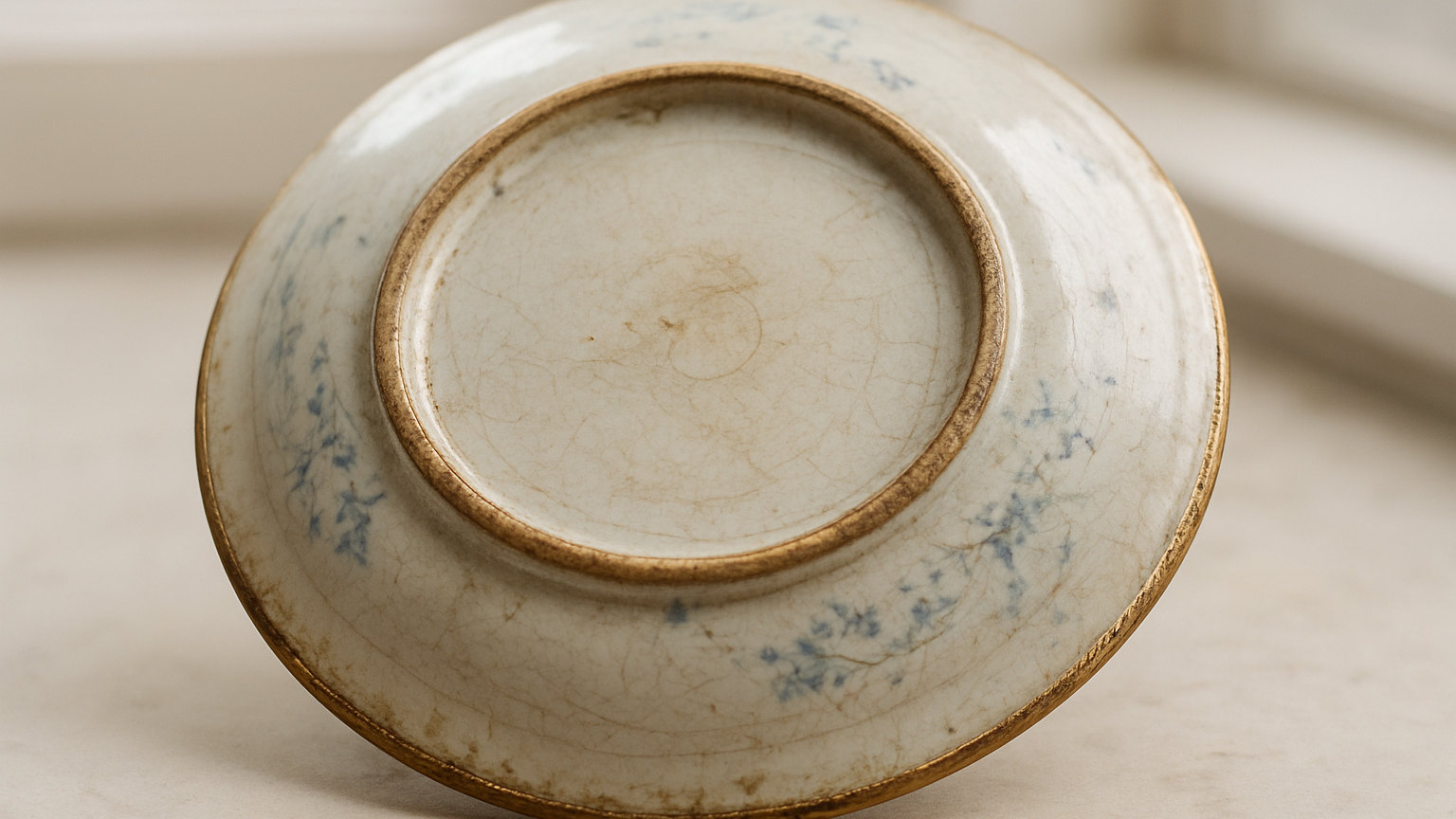
Plates flat with a soft interleaf between each one rather than stacked bare, since stacking grinds the unglazed foot rim of one against the glazed face of the next.
Store hollow wares separately rather than nested, and keep lids alongside their bases rather than on top so a knock cannot chip both. Avoid lofts and garages entirely, since temperature swings and damp affect porous bodies badly.
Is antique pottery safe to use?
It depends on the piece. Lead glazes were used for centuries, and where a glaze is crazed or damaged, lead can leach into acidic food and drink.
Treat early wares, brightly glazed pieces of uncertain origin, majolica, slipware and anything crazed as decorative rather than functional. Later factory made tableware in sound condition is generally fine for occasional use, washed by hand.
What should never be done?
Microwaving, oven use, dishwashing and soaking. Thermal shock cracks old bodies readily and none of these processes are survivable by a porous glazed earthenware.
Do not attempt repairs with household adhesives, which discolour, fail and complicate any future conservation. Do not scrub decoration, particularly anything overglaze, since it sits on the surface and comes off.
What should you do with a damaged piece?
Keep every fragment, however small, and store them together with the piece in a labelled bag. A conservator can achieve far more with all the pieces than with most of them.
Do not attempt to glue anything yourself before taking advice, since removing a bad repair is frequently harder than making a good one. Photograph the damage as it occurred, which helps a conservator understand what happened.