Not all porcelain is the same material. European factories spent decades trying to reproduce a body they could not analyse, and the substitutes they developed have quite different physical properties from the real thing. Those differences are detectable by hand and by eye, and they matter, because early soft paste from the pioneering factories is among the most valuable ceramic material there is.
What is the difference in the recipe?
Hard paste, the original formula, combines china clay with a fusible mineral and is fired at very high temperature until the body partly vitrifies and turns glassy throughout.
Soft paste substitutes other ingredients, commonly ground glass, soapstone or bone ash, to achieve translucency at lower firing temperatures. The result looks similar and behaves quite differently, because the body never fully vitrifies in the same way.
How does soft paste feel?
Warmer and softer to the touch. Hard paste feels cold and glassy, like a cool stone, while soft paste has a slightly warmer, more yielding quality that is genuinely detectable once you have handled both.
The surface is also softer in the literal sense. Soft paste scratches more easily, and the glaze can be marked by a steel point where hard paste resists it. Never test this on a piece you value, but the difference explains why soft paste survives with more surface wear.
What does a chip reveal?
The relationship between glaze and body. On hard paste the glaze fuses so completely with the body during firing that a chip shows no clear boundary between them, and the fracture looks like a single material.
On soft paste the glaze sits more distinctly on the surface, so a chip frequently shows a visible line where glaze meets body, almost like a coating over a different material underneath. The body itself may appear slightly more granular and less glassy than hard paste.
Why do firing faults indicate authenticity?
Because soft paste was difficult to fire successfully. Bodies slumped, warped, cracked and discoloured in the kiln at rates that would be unacceptable in any modern production.
So genuine early soft paste frequently shows slight warping, firing cracks, black specks in the body, and glaze that has pooled unevenly or crawled away from an edge. These are evidence of period manufacture rather than defects, and a piece that is flawlessly regular is more likely to be later or a reproduction than an early original.
What does the glaze look like?
Thicker and more variable. Soft paste glaze tends to pool visibly in recesses, around foot rims, at handle joints and inside the base, sometimes with a slightly greenish or bluish tinge where it is deepest.
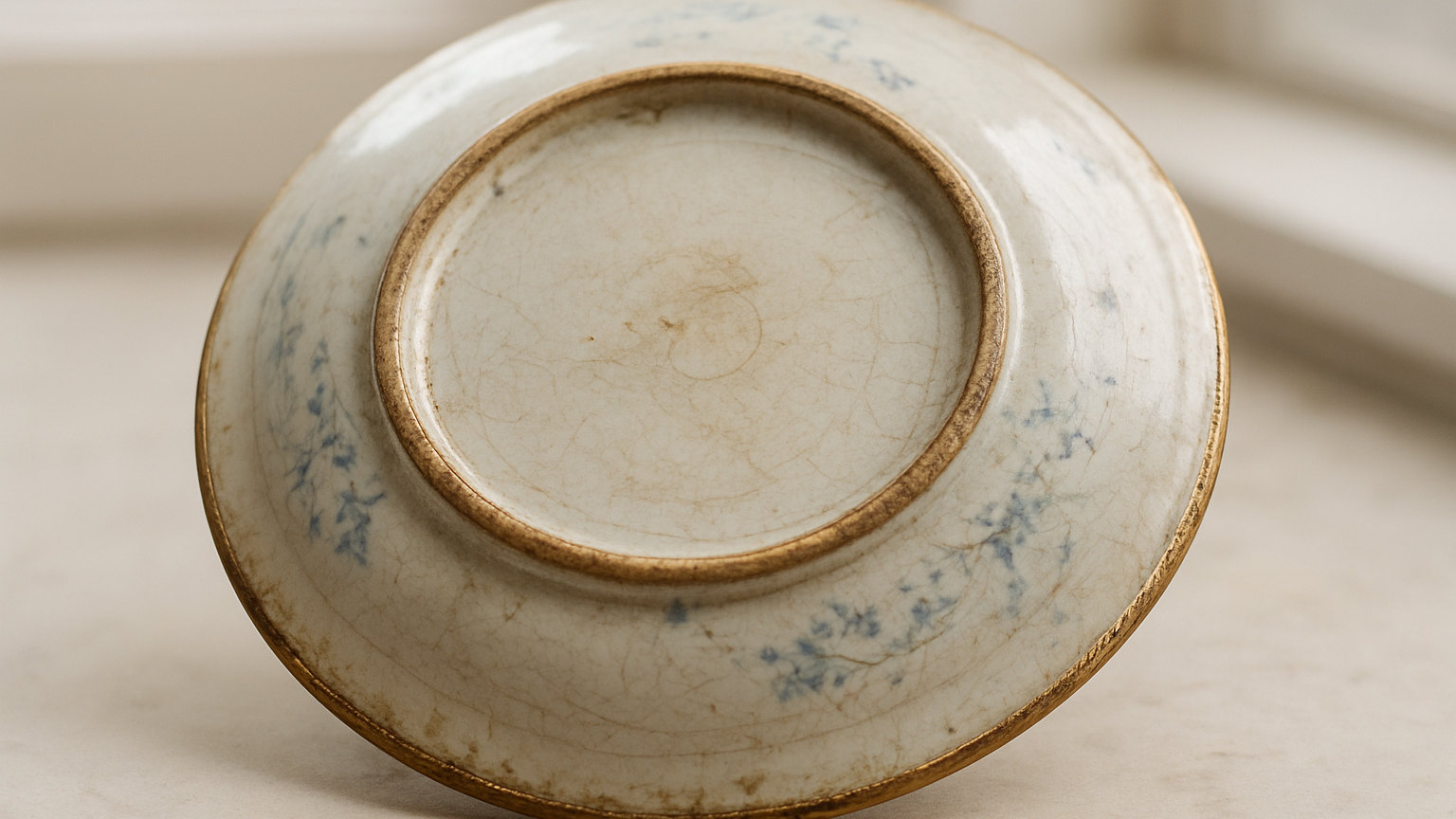
Turn a piece over and look into the foot rim under good light. That pooling is one of the more reliable indicators. On some soft paste the glaze has a soft, almost buttery appearance quite unlike the hard glassy surface of true porcelain.
How do you test for translucency?
Hold the thinnest available section against a strong light. Both types are translucent, which is what separates porcelain from pottery, but the colour of the transmitted light differs.
Soft paste frequently glows with a warmer, sometimes slightly greenish or yellowish tone, while hard paste tends to a colder white. Use daylight rather than a torch, choose an undecorated area since painting and gilding block light, and compare against a known example if you have one.
Why does the distinction matter commercially?
Because it identifies which factories are possible. Certain celebrated factories worked exclusively in one body or the other, and establishing which you have narrows the field of candidates immediately.
Early soft paste from the pioneering European and English factories attracts serious money, and correctly identifying an unmarked piece can transform what it is worth. Where the sums are significant, have the piece examined by a ceramics specialist rather than relying on your own judgement, since body identification is done by handling, weighing and looking through a piece in good light, none of which a photograph reproduces.