Most British tea and dinner services of the last two centuries are bone china rather than true porcelain, and the two are frequently confused because both glow when held to the light. The difference lies in the recipe, and it explains why bone china survives in enormous quantities while early porcelain does not.
What is in the recipe?
China clay and china stone, as in porcelain, with the addition of bone ash, which is calcined animal bone ground to a fine powder. That third ingredient is what gives the body its character.
Bone ash lowers the firing temperature needed and produces a body that is translucent, very white and considerably tougher than early porcelain. It was developed as an English solution to the difficulty of reproducing the original hard paste formula, and it turned out to be better suited to everyday use than the thing it was imitating.
How do you recognise it?
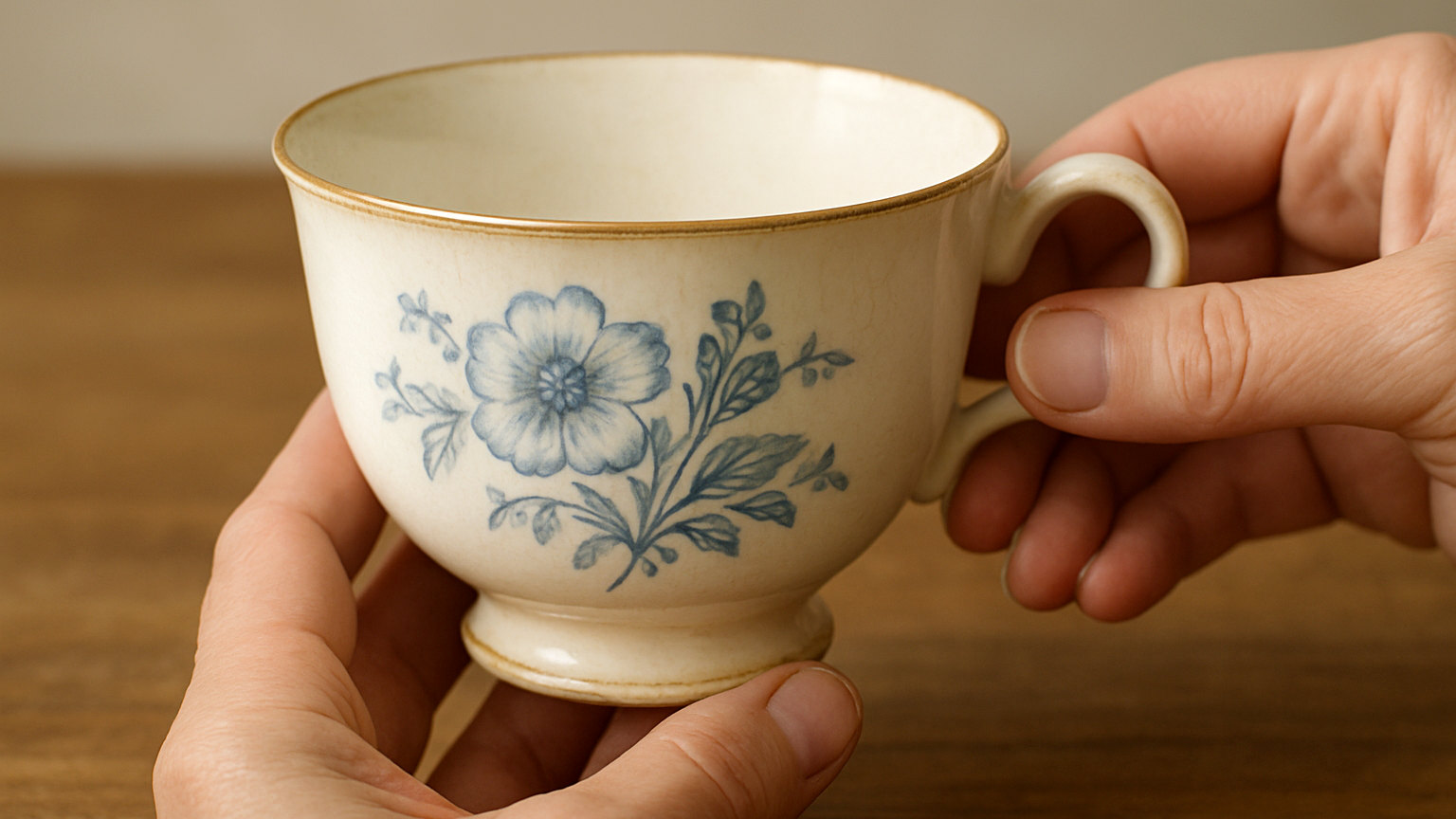
By holding it to a strong light. Bone china is translucent, so a thin section glows, and the transmitted light typically has a warmer, slightly creamy tone rather than the cold blue white of hard paste porcelain.
Use an undecorated area, since gilding and painting block light. Compare against another piece if you can, because the difference in warmth is easier to judge by comparison than in isolation. The body is also very white in reflected light, whiter than most earthenware.
What does it sound and feel like?
Bone china rings clearly when tapped gently on the rim, with a note that sustains briefly. Earthenware gives a duller thud. A cracked piece will thud regardless, so use the test as confirmation rather than proof.
It is also noticeably light for its apparent strength, because pieces could be potted thinly. Run a finger over a chip if there is one: bone china shows a dense white body throughout with a fine grain, quite unlike the coarser coloured body of pottery.
Why is it so much tougher?
The bone ash produces a body with greater mechanical strength, so it resists chipping far better than early soft paste porcelain and can be made thinner without becoming fragile.
That practical advantage is why it became the standard for tableware in daily use. Services survive in large numbers precisely because they were strong enough to be washed and stacked for generations, which is not true of the earlier bodies it replaced.
Does the base tell you?
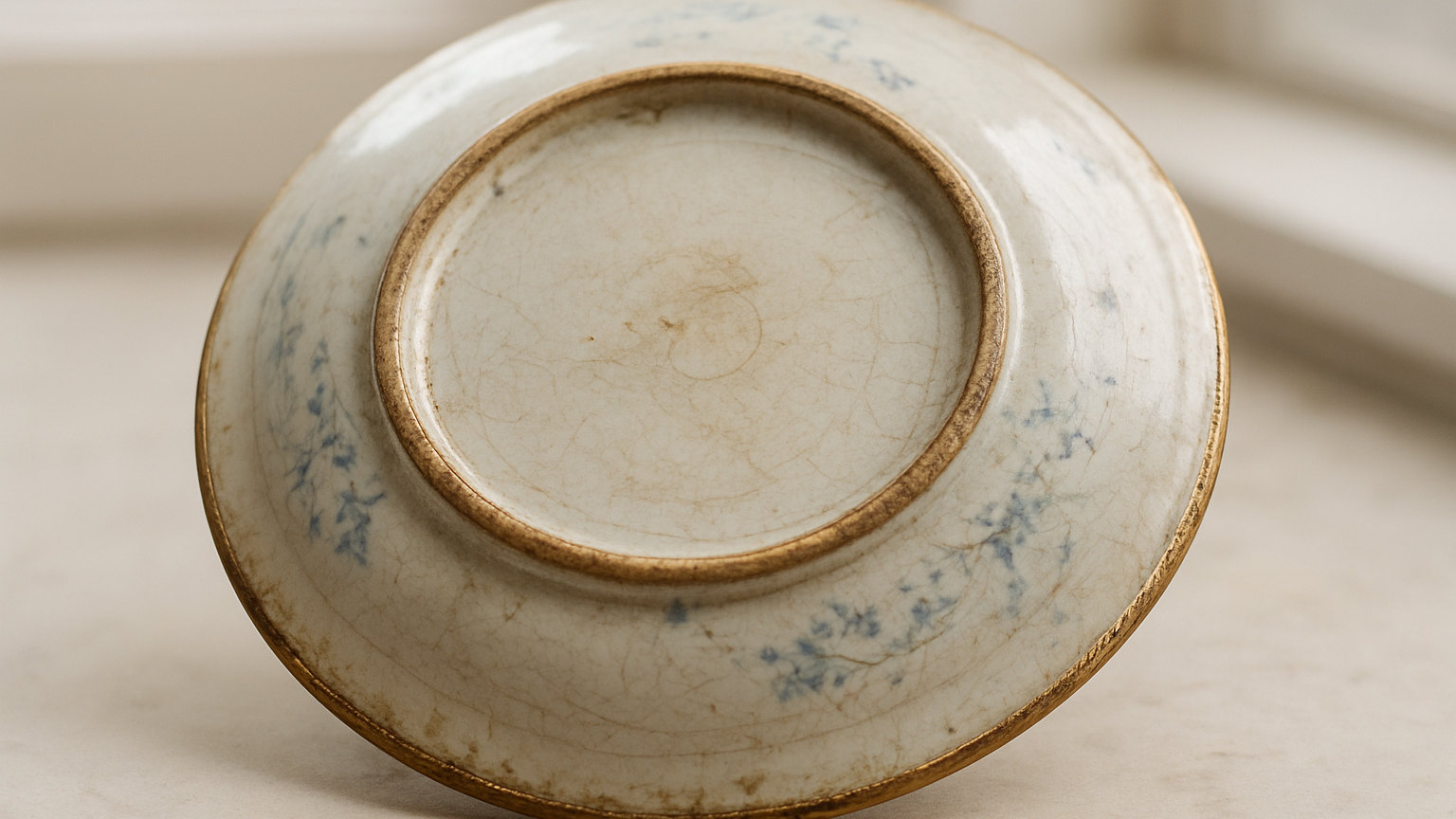
Frequently yes. Many manufacturers printed the words identifying the body directly on the backstamp, alongside the factory name and pattern name, because it was a selling point.
Where the base states it plainly, the question is settled. Where it does not, the light test is reliable. Note that a mark naming a country of origin generally indicates later production, since that requirement arrived with modern import rules, which helps date a piece as well as identify the body.
Is bone china valuable?
It depends entirely on maker, pattern, age and completeness rather than on the material. Vast quantities were produced, so ordinary services are worth relatively little and are often more enjoyable used than sold.
Value concentrates in early pieces from the pioneering factories, in unusual or sought after patterns, in complete services with their serving pieces, and in anything with fine hand painted decoration. Serving pieces and teapots are scarcer than plates and frequently worth more individually.
How should it be looked after?
Hand washing only, in warm rather than hot water with mild detergent. Never use a dishwasher, since the detergent is alkaline and abrasive and will strip gilding and fade overglaze enamels within a few cycles.
Never microwave gilded pieces, since metal decoration arcs and burns off. Store plates flat with a soft interleaf of felt or paper between each one, since stacking them bare grinds the footrim of one against the glazed face of the next. Hang or stand cups separately rather than stacking them inside one another, which chips rims and can jam them together tightly enough that separating them breaks both.