White porcelain with no painted decoration is judged on three things only: the body, the glaze and the modelling. There is no pattern to identify, no palette to compare and no gilding to assess. That makes it simultaneously the purest test of quality in ceramics and the hardest thing to attribute confidently.
What is blanc de chine?
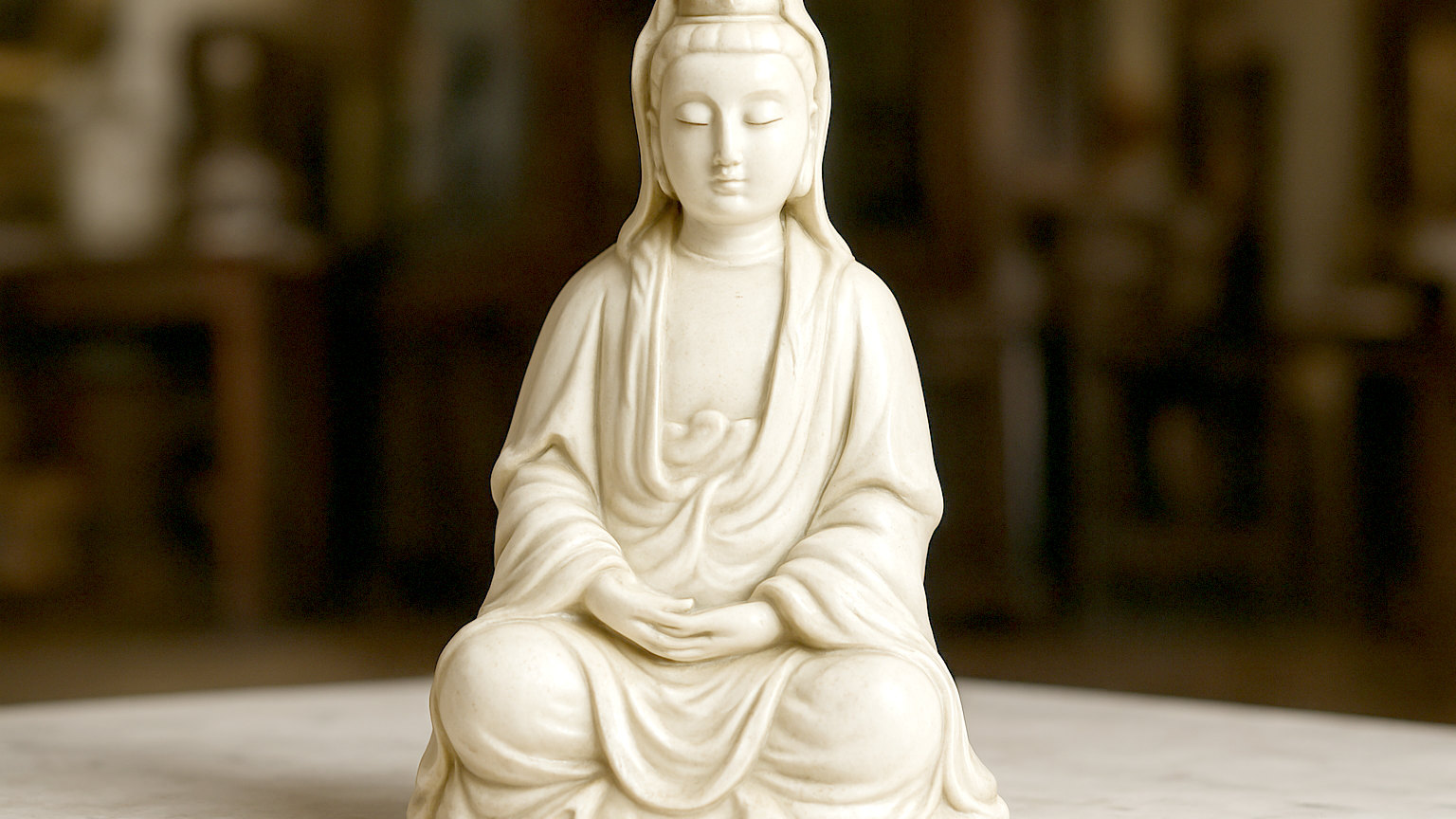
A white porcelain, undecorated, with a distinctive warm ivory glaze that fuses so completely with the body that the two appear to be a single material.
The glaze is thick, soft in appearance and slightly milky rather than glassy, and it pools attractively in the folds of modelled figures. That combination of a warm tone and a thick unified glaze is the defining characteristic.
How do you judge the glaze?
By colour and by how it sits. Good examples have a warm creamy or slightly pinkish white rather than a cold blue white, and the glaze appears to be part of the body rather than a coating on it.
Look at where the glaze pools in recesses and around modelled detail, which is where its quality shows most. Later and poorer wares have a thinner, colder, more obviously separate glaze layer.
What is biscuit porcelain?
Porcelain fired without glaze, leaving a matt surface. It was used for figures where a marble like appearance was wanted, and parian is a later development of the same idea.
Biscuit is porous and stains readily, since there is no glaze to protect it. Distinguishing biscuit from glazed white ware is simply a matter of surface: one is matt and slightly grainy, the other smooth and reflective.
How do you assess the modelling?
Very carefully, since with no decoration the modelling is the whole object. Look at hands, faces, drapery folds and any small attribute held or worn by a figure.
Fine work has crisp detail, confident modelling and undercutting where the sculptor worked behind a projecting element. Poor work is flat and blurred. Moulds wore with use, so later castings from an old mould show progressively softer detail.
What should you check on the base?
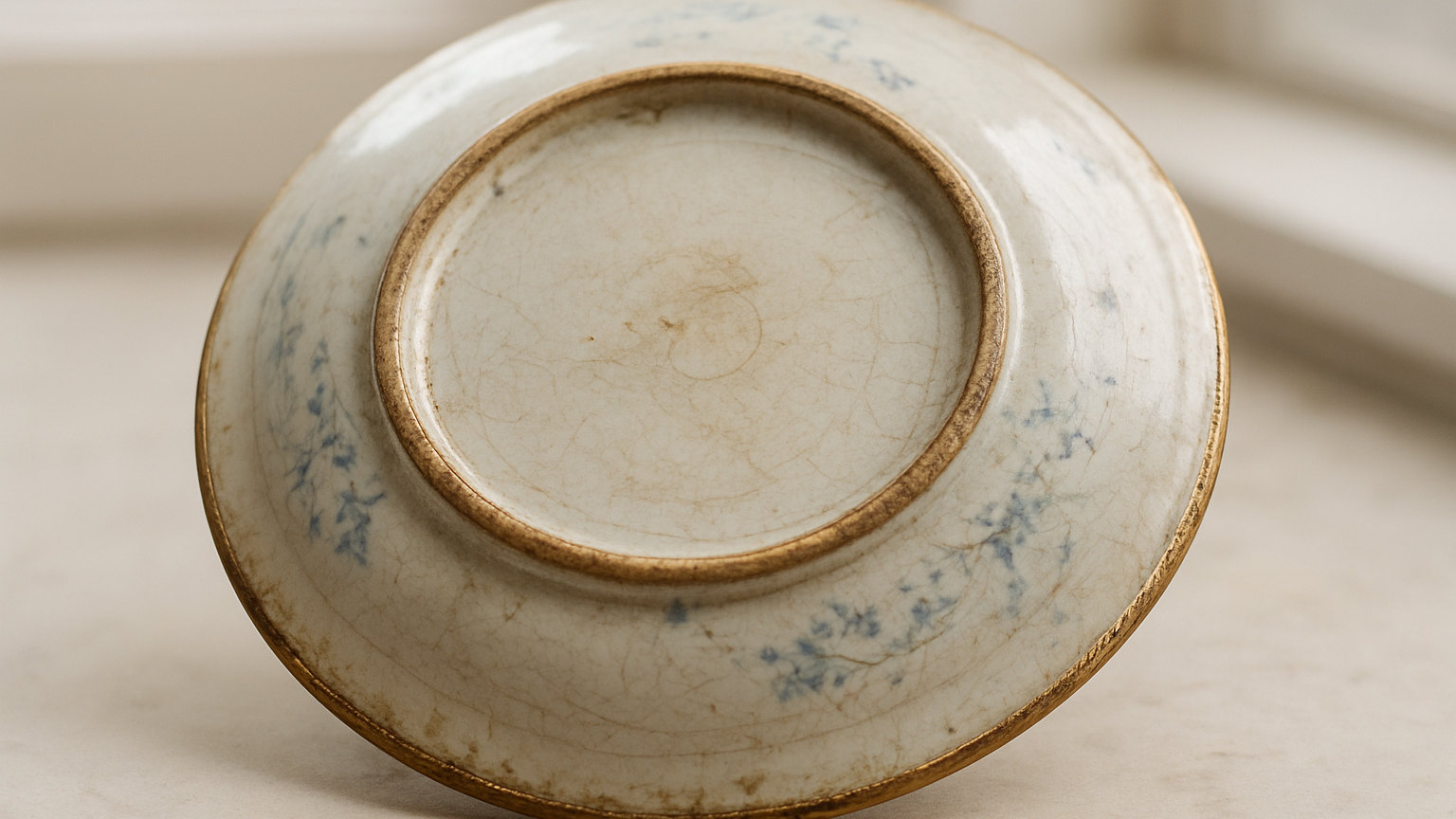
The foot rim, any firing vent, and the colour and texture of unglazed clay where it shows. That exposed body tells you what the piece is actually made of.
Look for kiln support marks and for genuine wear, irregular and concentrated where the piece rested. Some examples carry an impressed or moulded mark, though a great many are unmarked and that is entirely normal.
How do you spot a later copy?
By the glaze first. Later reproductions frequently have a whiter, colder, thinner glaze that sits visibly on the surface rather than merging with it.
Then by the modelling, which is softer since moulds were taken from originals. Check the weight, which is frequently lighter, and look for a body that is too refined and uniformly white. Firing faults and slight irregularities are evidence of authenticity rather than defects.
What subjects turn up?
Figures above all, including deities, sages and animals, alongside vessels such as libation cups, brush pots, incense burners and vases. Later European white wares cover quite different subjects.
Identifying the subject matters for both attribution and value, since some figures were produced in far greater numbers than others. Reference works and museum collections illustrate the recognised types systematically.
What condition issues matter?
Damage to projections, since figures break at fingers, held attributes and any extended element. Check every projection individually rather than glancing at the whole.
Use ultraviolet light, which is particularly valuable here, since restoration on a plain white surface can be genuinely invisible in daylight. Firing cracks are frequently original and tolerated; later breaks are not, and telling them apart takes a good light.
How should white wares be handled?
By the body rather than by any projection, and washed only when necessary in warm water with mild detergent. Dry immediately.
Unglazed biscuit and parian should not be washed at all beyond dusting, since the porous surface absorbs dirt and water tide marks are worse than the original grime. Keep white wares away from smoke and cooking, which discolours them permanently.