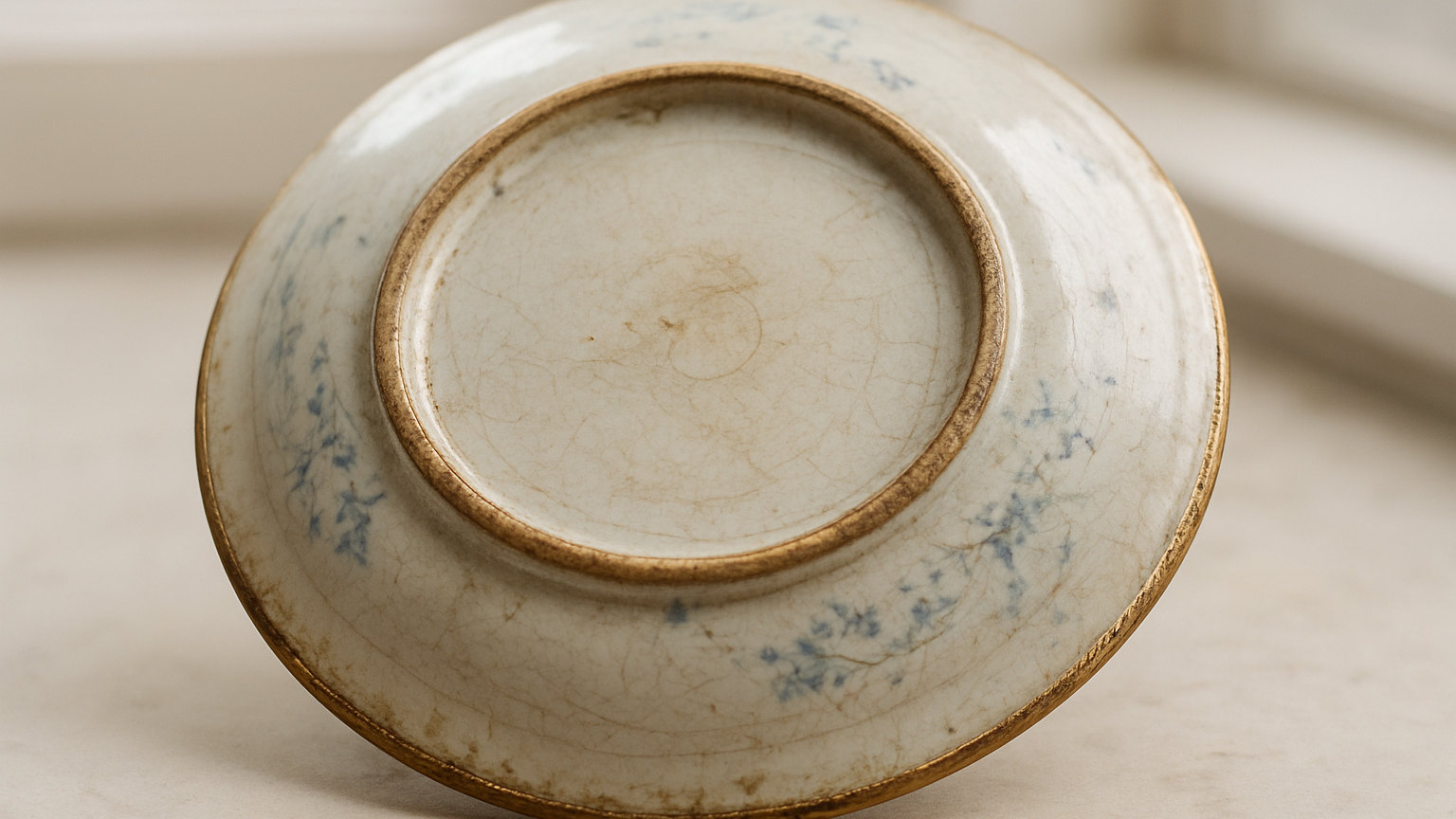
A small number of porcelain marks became so associated with quality that factories across Europe imitated them openly, and later reproductions imitated them dishonestly. If you find one of these on a base, the probability that it is genuine is considerably lower than the probability that it is not, which reverses the usual logic of mark identification.
Why were certain marks copied so widely?
Because they functioned as a guarantee of quality and commanded a premium. A factory that could persuade buyers its wares resembled the celebrated makers had an obvious commercial incentive to adopt a similar device.
Much of this was legal at the time or at least unpoliceable across borders, and a good deal of it was not intended to deceive an expert so much as to borrow prestige. Later, once these wares became collectable, outright copying of marks began in earnest.
Which marks are copied most?
Crossed swords in underglaze blue is the most imitated ceramic mark in existence, used by the celebrated German factory and copied by an enormous number of others with small variations. Crowned devices, anchors, shields and monograms of famous factories follow closely behind.
Any mark that is simple, symmetrical and instantly recognisable was a candidate. The simpler the device, the easier it was to reproduce convincingly with a brush, which is exactly why the most famous marks are the least reliable.
How do the copies differ?
In execution rather than in design. Genuine marks were applied by trained decorators who painted the same device thousands of times, so the line weight is confident and consistent and the proportions are correct.
Copies frequently show hesitant lines, uneven thickness, wobbling where the brush changed direction, and proportions that are subtly wrong. Compare against a reliable reference image at the same scale. Small differences in the angle between strokes, or in the length of one element relative to another, are the usual tells.
Why should you never judge by the mark alone?
Because the mark is the easiest part of a piece to imitate and the body is the hardest. A convincing mark on an unconvincing body tells you the mark is wrong, not that the body is right.
Assess the paste, the glaze, the potting thickness, the quality of the painting and the style of the form first, and treat the mark as confirmation rather than as evidence. Where the mark claims one factory and everything else says otherwise, believe everything else.
What does a cancelled mark mean?
Some factories scored one or more lines through the mark on pieces sold as seconds because of firing faults, or on undecorated blanks sold out of the factory to be painted elsewhere.
A cancelled mark is genuine and tells you something real about how the piece left the factory. Where a piece carries a cancelled factory mark and elaborate decoration, the decoration was very likely added by an outside painter, which affects both attribution and value.
What other mark problems are common?
Later decorated blanks, where a genuine undecorated piece from a good factory was painted much later to increase its value. The mark is authentic and the decoration is not, and this is difficult to detect without knowing the factory palette.
Added marks, painted onto genuinely old but unmarked wares, are another. These sit on top of the glaze where the factory printed or painted under it, so look at whether the mark is beneath the glaze surface or on it. A mark you can feel with a fingernail on a piece that should be underglaze marked is a warning.
How should you research a suspicious mark?
Find every version that factory used and the years each was in service, then check whether your mark corresponds to a documented variant rather than merely resembling one. Museum databases are the most reliable source because their examples were examined in person.
Where the value depends on the attribution, pay for a specialist opinion before buying. A ceramics specialist will assess body, glaze, potting and painting together in a way no photograph allows, and the fee is small against the difference in price these marks create.