Vases are among the most collected porcelain and among the most frequently damaged, converted and married. Three specific faults account for most of the disappointment: a drilled base, a restored rim, and a cover that belongs to something else. All three are checkable in under a minute.
Why does drilling matter so much?
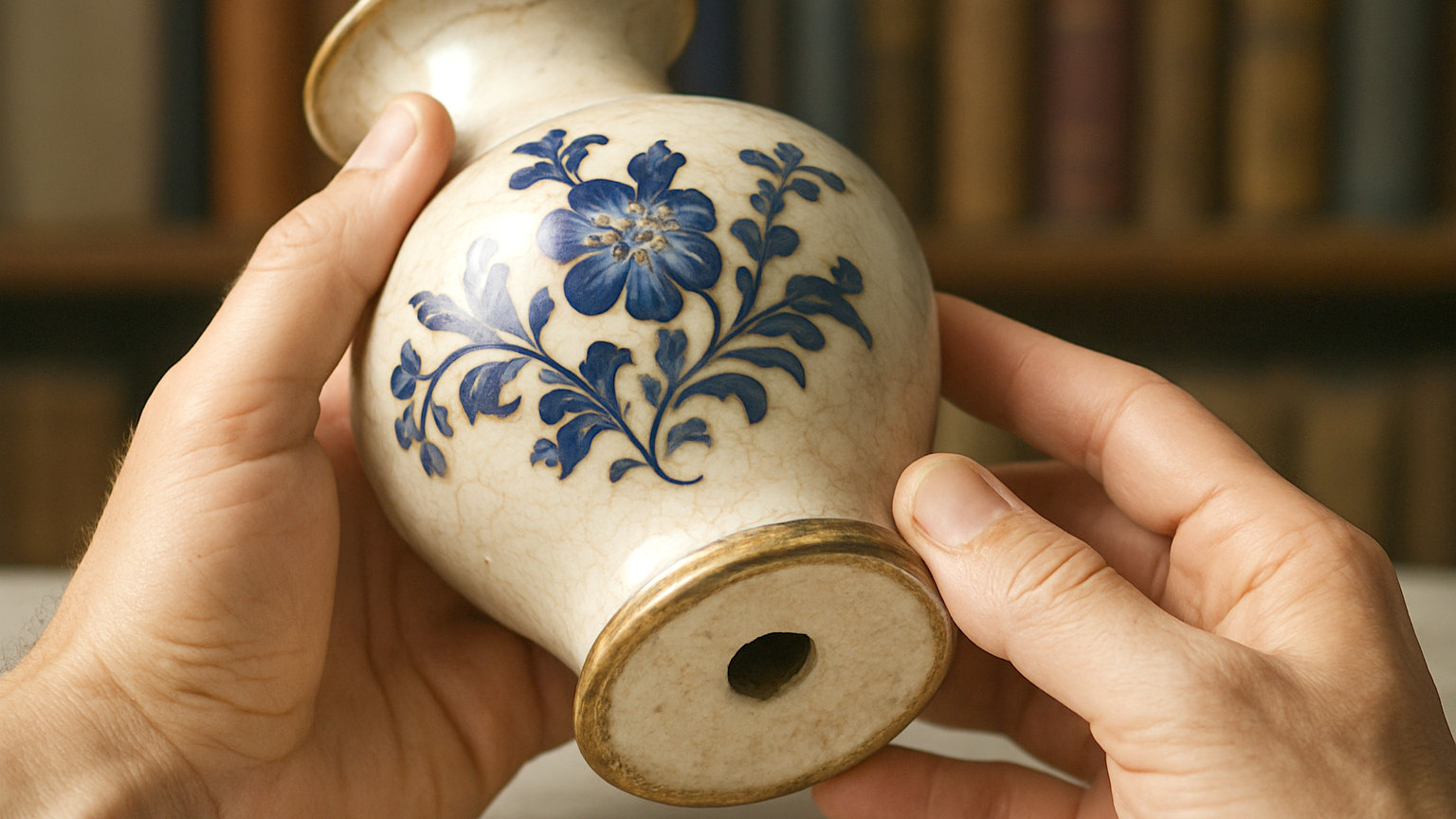
Because it is irreversible damage to make a vase into a lamp, and it substantially reduces value. A hole through the base or the side for a cable cannot be undone.
Turn every vase over and look. Some conversions are more sympathetic, passing a cable through an existing hole or over the rim without drilling at all, and those do far less harm. A drilled hole with chipping around it, or one that has been filled and disguised, should be reflected in the price.
How do you check the rim?
Carefully, because it is the most vulnerable part and the most frequently restored. Run a fingertip all the way round feeling for changes in texture, and look at the rim edge under a strong light.
Use an ultraviolet torch in a darkened room, which reveals restoration as patches fluorescing differently from the original glaze. A rim that has been ground down to remove chips will be thinner or slightly uneven, and the profile may not match the rest of the piece.
Does the cover belong?
Frequently not. Covered vases lost their covers constantly, and fitting one from elsewhere is common enough to check as a matter of routine.
Look at whether the cover sits precisely, whether the decoration continues logically from body to cover, and whether the glaze, body colour and degree of wear match. Check for marks on the cover separately, since these should agree with the body. A married cover reduces value considerably.
What about pairs?
Vases were frequently made in pairs and garnitures, and a genuine pair is worth substantially more than two singles. Assembled pairs are common.
Stand them side by side and compare height, the exact profile of the body, the decoration, and the colours. Painted decoration on a genuine pair should be similar but not identical, since each was painted by hand. Two pieces that are absolutely identical may be later moulded copies rather than a hand decorated pair.
Where are the marks?
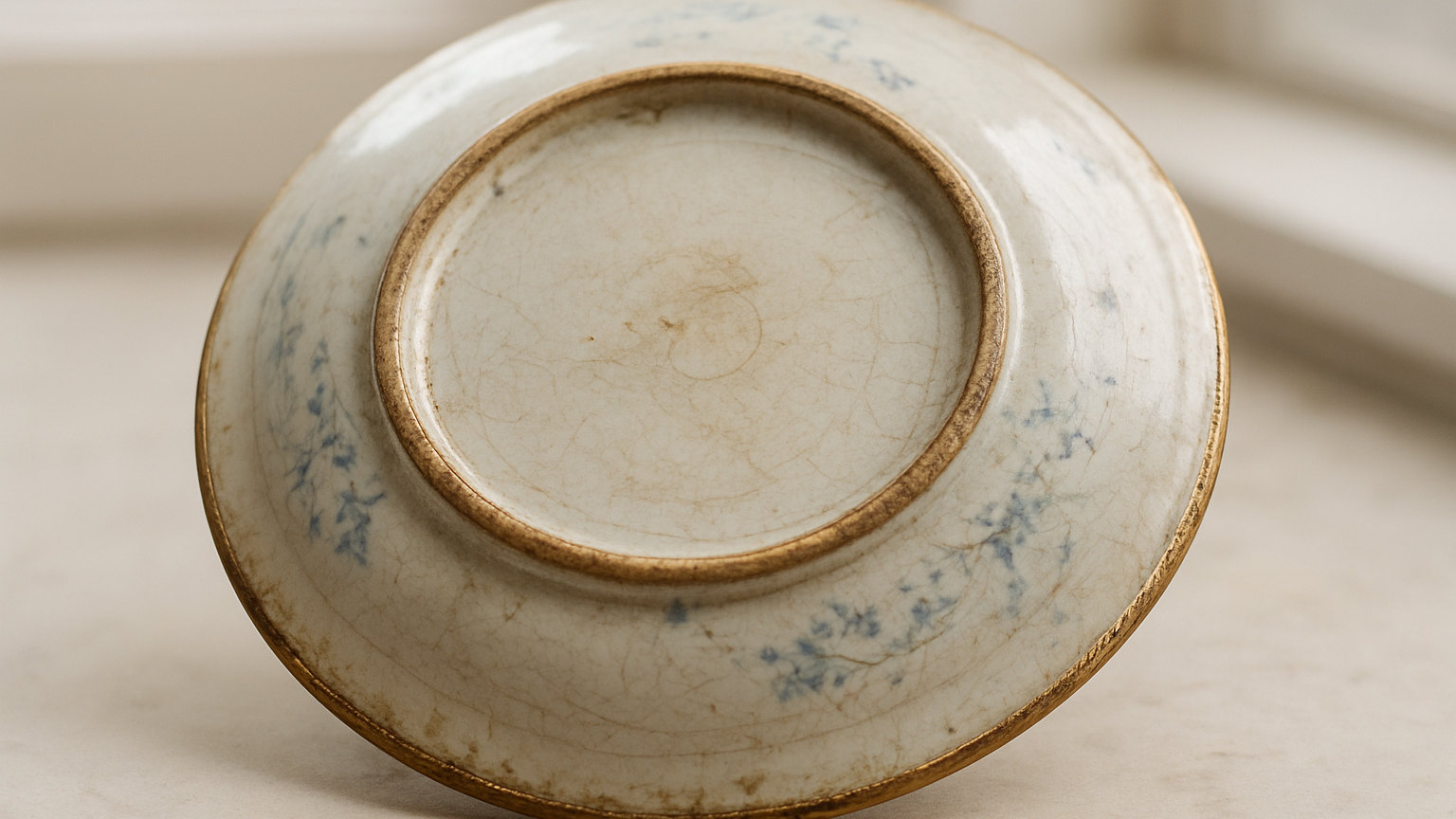
On the base, usually, though check inside the footrim and on the underside of any cover. Some are impressed into the body, some printed under the glaze, some painted on top, and the distinction matters.
An overglaze mark on a piece from a factory known to have marked underglaze is a warning. Check also whether the mark is one of the widely copied devices, since those were imitated by many factories and a visual match is weak evidence on its own.
How do you check for cracks?
By light and by sound. Hold the vase up to a strong light and turn it slowly, looking for hairlines appearing as dark lines through the body.
Then suspend it lightly and tap the rim gently with a fingernail. A sound piece rings clearly with a note that sustains briefly; a cracked one thuds. This works well on thinner vases and less well on very thick or oddly shaped ones, so use it alongside the light rather than instead of it.
What drives the value?
Factory, quality of decoration, size, condition and completeness, roughly in that order. Fine hand painting by an identified decorator adds substantially over a printed or transfer decorated piece.
Large impressive vases do well where the quality supports the scale. Condition matters more than in most ceramics because vases are display objects, so damage on a visible face is far worse than damage underneath. A genuine pair with covers intact is the best case.
How should a vase be displayed?
Somewhere stable, away from edges and away from anything that vibrates. Most damage to vases happens through being knocked rather than through use.
Use museum wax or a discreet stand for anything top heavy. If a vase is used for flowers, avoid standing water against crazed glaze, which absorbs and stains permanently, and never use a converted vase as a lamp without having the wiring checked by an electrician.