Porcelain dinner services arrive as inheritances more often than any other ceramic, usually incomplete and usually with several pieces nobody can name. Establishing the pattern and counting what survives is the whole assessment, and the shapes follow a logic that makes identification straightforward once explained.
What should a full service contain?
Dinner plates, side or dessert plates, soup plates or bowls, and a range of serving pieces including tureens, covered vegetable dishes, sauce boats and meat platters in graduated sizes.
Larger services add fish plates, cheese stands and dessert wares. When a service is described by a number, establish exactly what is counted, since a service for twelve may or may not include the serving pieces that carry most of the value.
How do you distinguish plate types?
By diameter and by profile. Dinner plates are the largest flat plates; side plates are noticeably smaller; soup plates have a deeper well and a wide rim.
Measure rather than judging by eye, since services included plates in several sizes and a listing describing a dinner plate may mean something different from yours. Record every size and count present, since that is what a replacement specialist will ask for.
How do you identify the pattern?
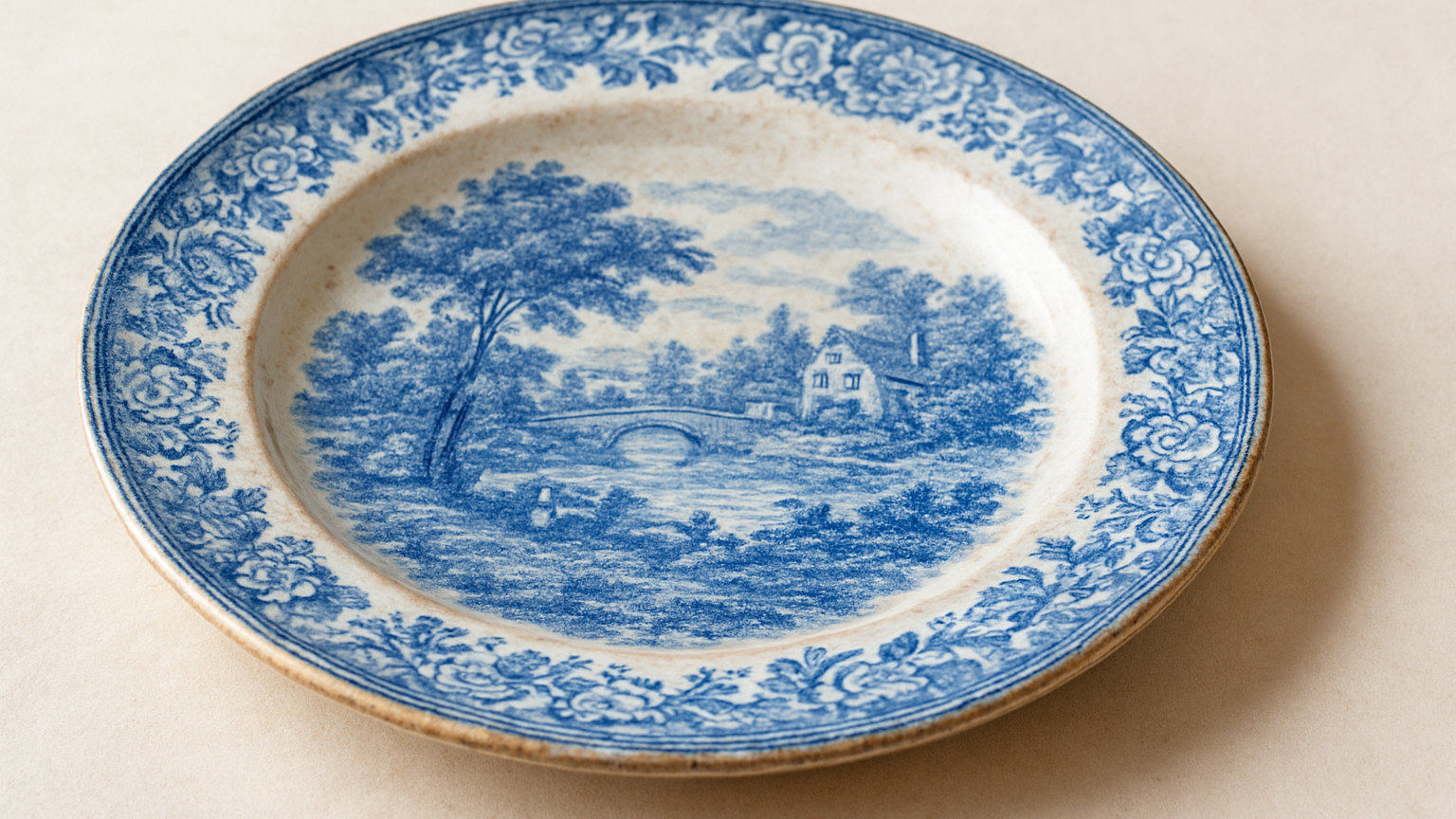
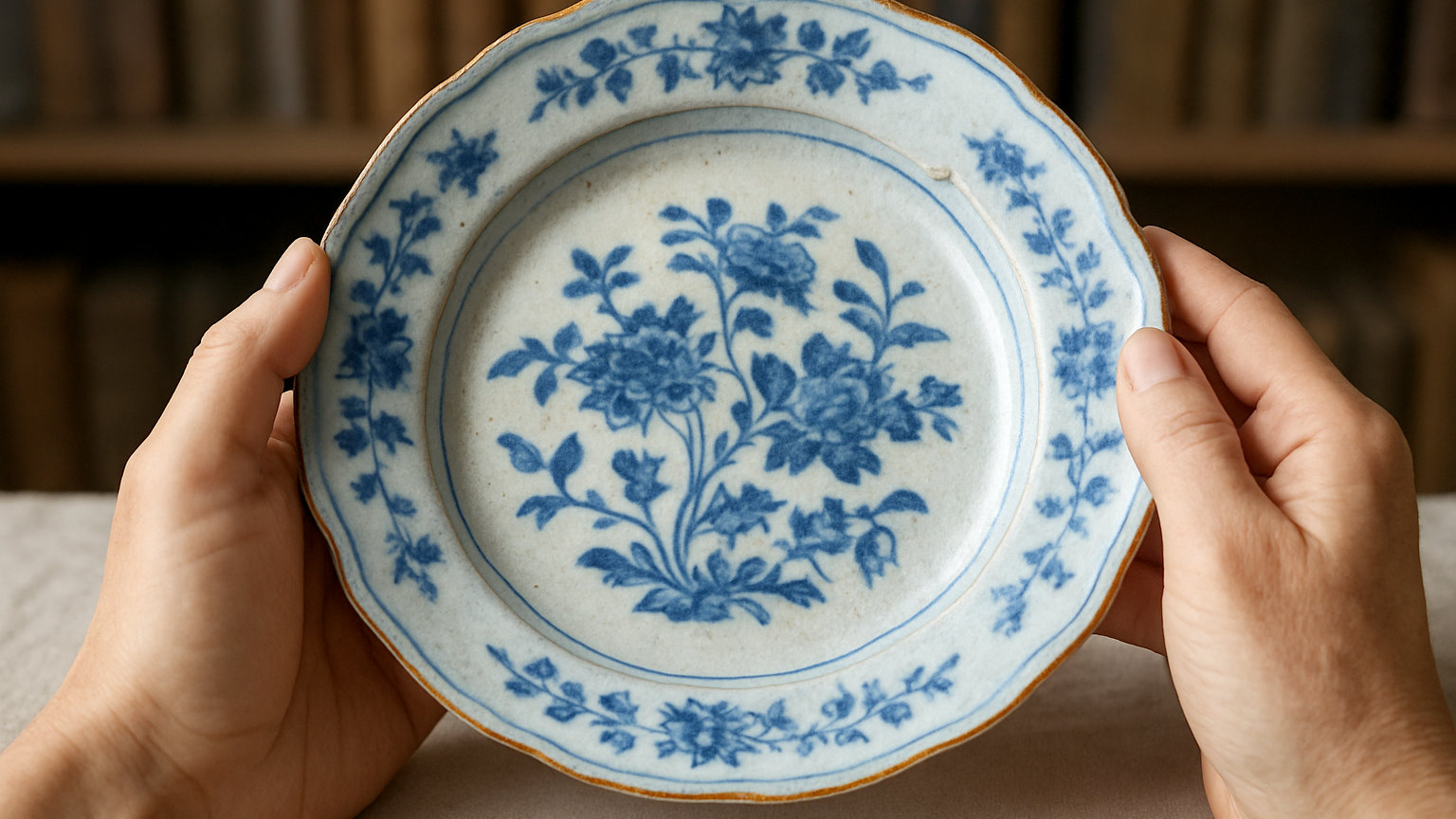
By the border first, since borders are more distinctive than centres and were reused less. Note the colours, the motifs, how many repeats run around the rim, and whether the pattern is continuous or panelled.
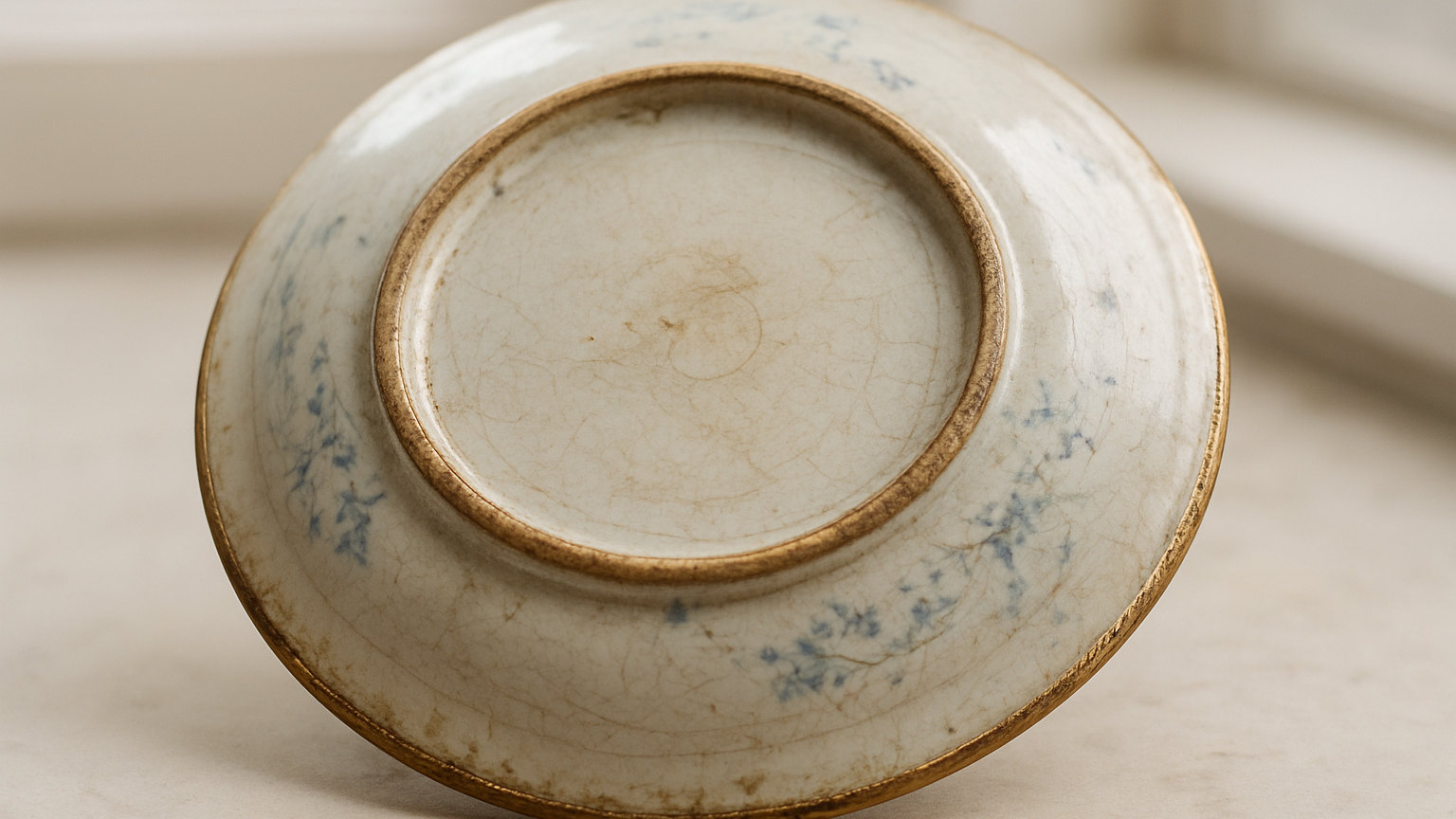
Then check the base for a printed pattern name, which many factories included alongside the mark. Where only a number appears, that is a pattern reference and needs the factory identified before it means anything.
What does the rim shape tell you?
Period and factory. Rims may be plain circular, gently wavy, deeply scalloped, fluted or moulded with a relief pattern, and each profile came from a mould specific to that maker.
Count the lobes or scallops and note whether the moulding continues onto the underside. These details identify a factory where the pattern alone will not, and they are how specialists place unmarked pieces.
Why do serving pieces matter most?
Because there was only ever one tureen to a dozen plates, it took the heaviest use, and it had a lid to lose. Serving pieces are the scarce survivors of any service.
Value them individually rather than lumping them with the plates. A tureen with its original lid, a graduated set of meat platters, or a complete pair of sauce boats can each be worth more than a stack of dinner plates.
How do you check lids belong?
By fit, pattern alignment, colour and wear. Lids were lifted constantly and lost, and fitting one from elsewhere is a common repair.
Check for marks on the lid separately, since these should agree with the base. A married lid reduces value considerably and is worth identifying before you price anything.
What condition issues matter?
Knife scratching on plate surfaces, which is expected and tolerated, and wear to gilding on rims, which is not recoverable. Hold plates to a strong light to reveal hairline cracks.
Check for restoration on serving pieces using ultraviolet light, since handles and finials break and are repaired constantly. Count how many pieces genuinely match, since services are frequently topped up with near misses from other patterns.
Is completing a part service worth it?
Sometimes, since the step from incomplete to complete carries a real premium. Replacement specialists hold stock of discontinued patterns and will search for specific pieces.
Do the arithmetic first, because serving pieces cost several times what a plate does. Where the cost of completion exceeds the increase in value, use and enjoy what you have rather than treating it as an investment.
What should you do before selling?
Count and photograph everything by type and size, record the marks exactly, and identify the pattern. A documented service sells far better than a box of assorted china.
Sell as a unit through a venue that can reach buyers for the whole, and say explicitly that the service is not to be divided, since a general saleroom may split it into box lots and lose the premium entirely.