Plates survive in greater numbers than any other ceramic form and are the cheapest way to handle genuine antique porcelain. They are also more systematic than they look, because border designs and rim profiles were factory specific and changed on a documented timetable, which makes a plate a good deal easier to place than a random hollow ware.
Why does the border matter most?
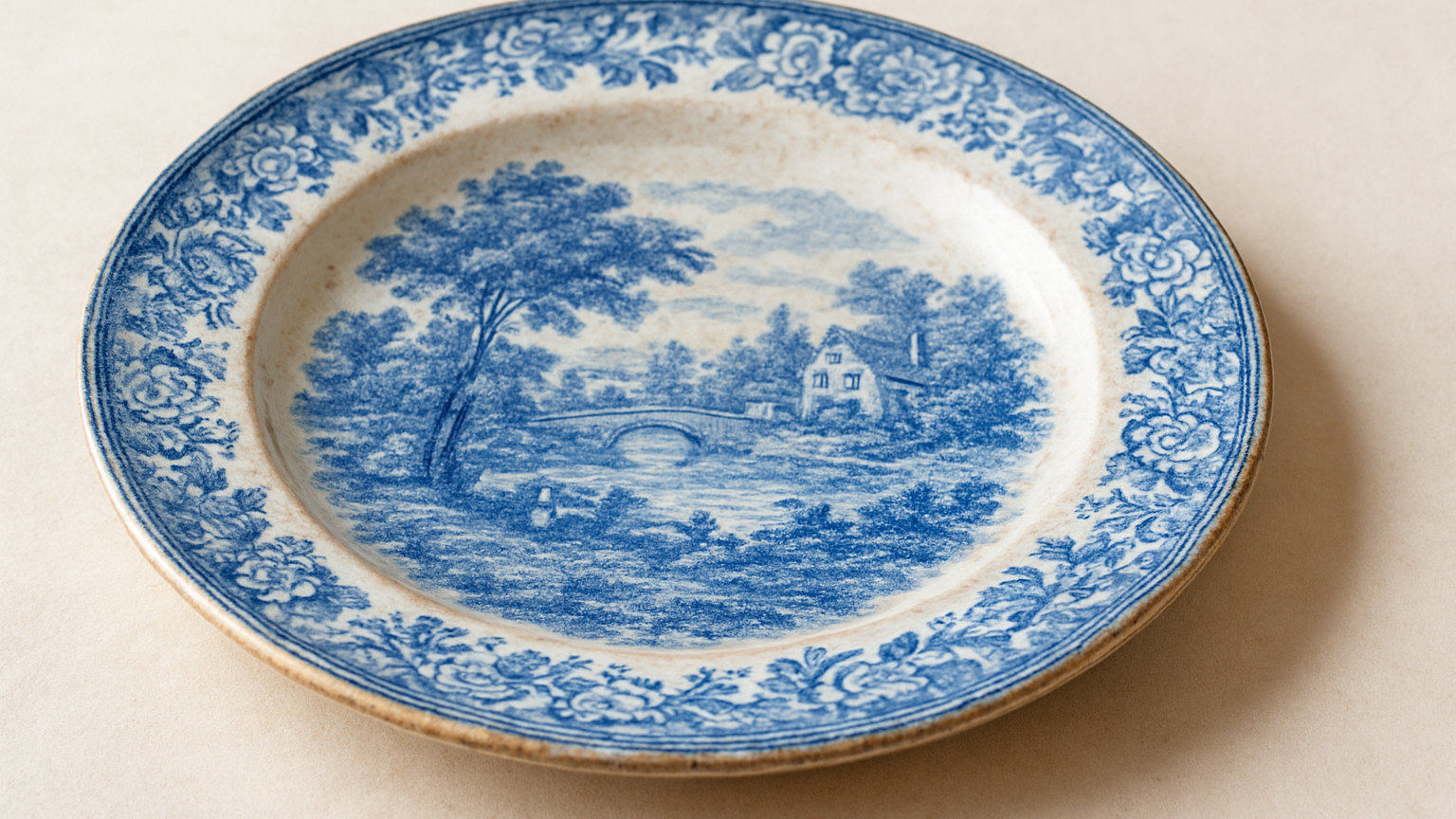
Because it is more distinctive than the centre and was reused less. Factories developed border patterns that they applied across many different central designs, so the border frequently identifies the maker where the centre does not.
Describe the border first when researching: the colours, the motifs, how many times the pattern repeats around the rim, and whether it is continuous or divided into panels. Replacement china specialists identify patterns from border descriptions as a matter of routine.
What do rim shapes tell you?
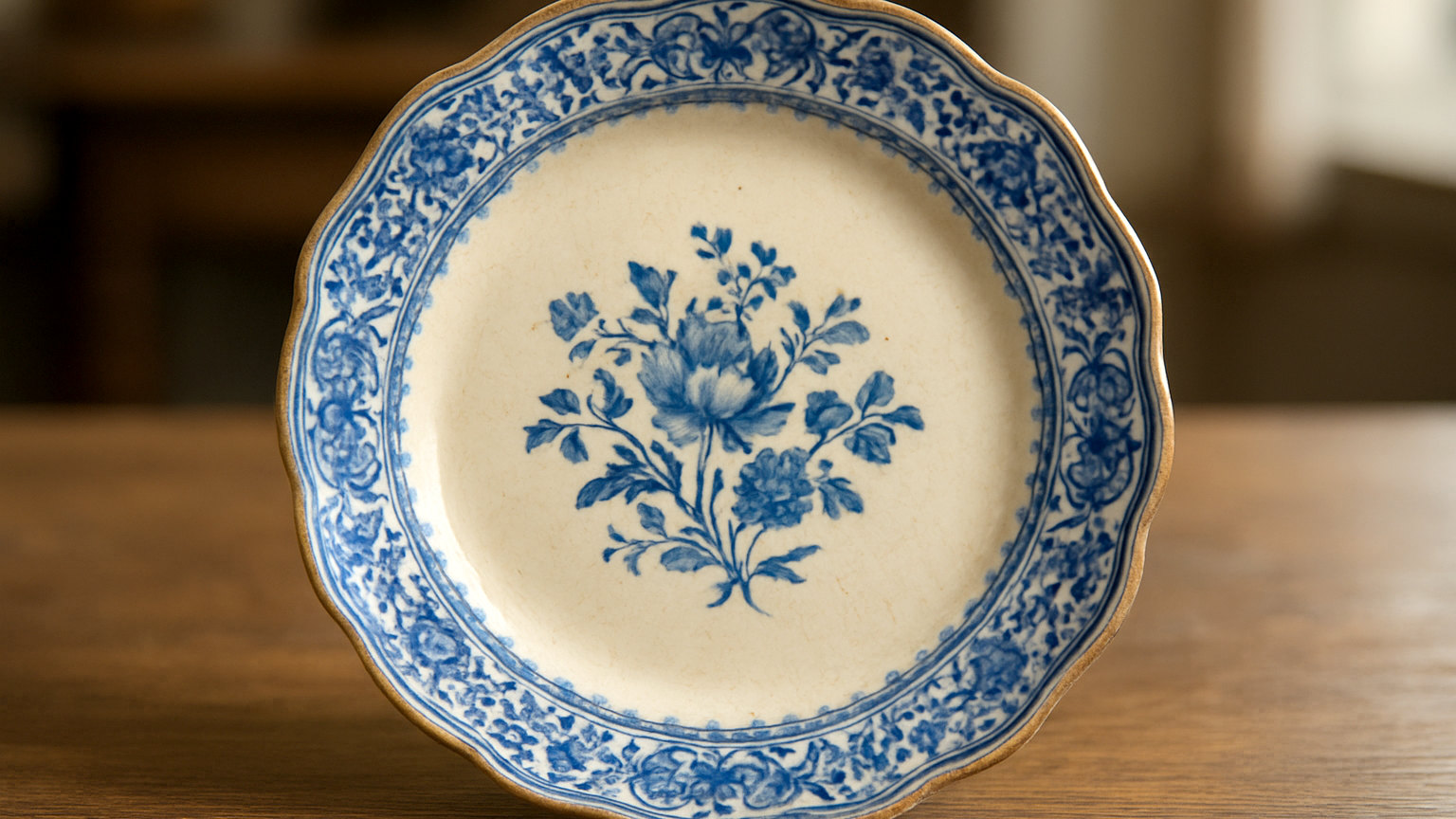
Period and factory. Rims may be plain circular, gently wavy, deeply scalloped, fluted, moulded with a relief pattern, or shaped into distinct lobes.
Shaped and moulded rims were formed in a mould specific to that factory, so the exact profile is diagnostic. Count the lobes or scallops and note whether the moulding continues onto the underside. Compare against reference images rather than judging by impression, since the differences are subtle.
What is a cabinet plate?
A plate made for display rather than use, usually with elaborate hand painted decoration, heavy gilding and frequently a signed painted scene in the centre.
These are valued as paintings on porcelain rather than as tableware, so the quality of the painting drives the price. Look for a painter signature in the decoration, usually small and at the edge of the scene, since named decorators command substantial premiums.
How do you check the foot rim?
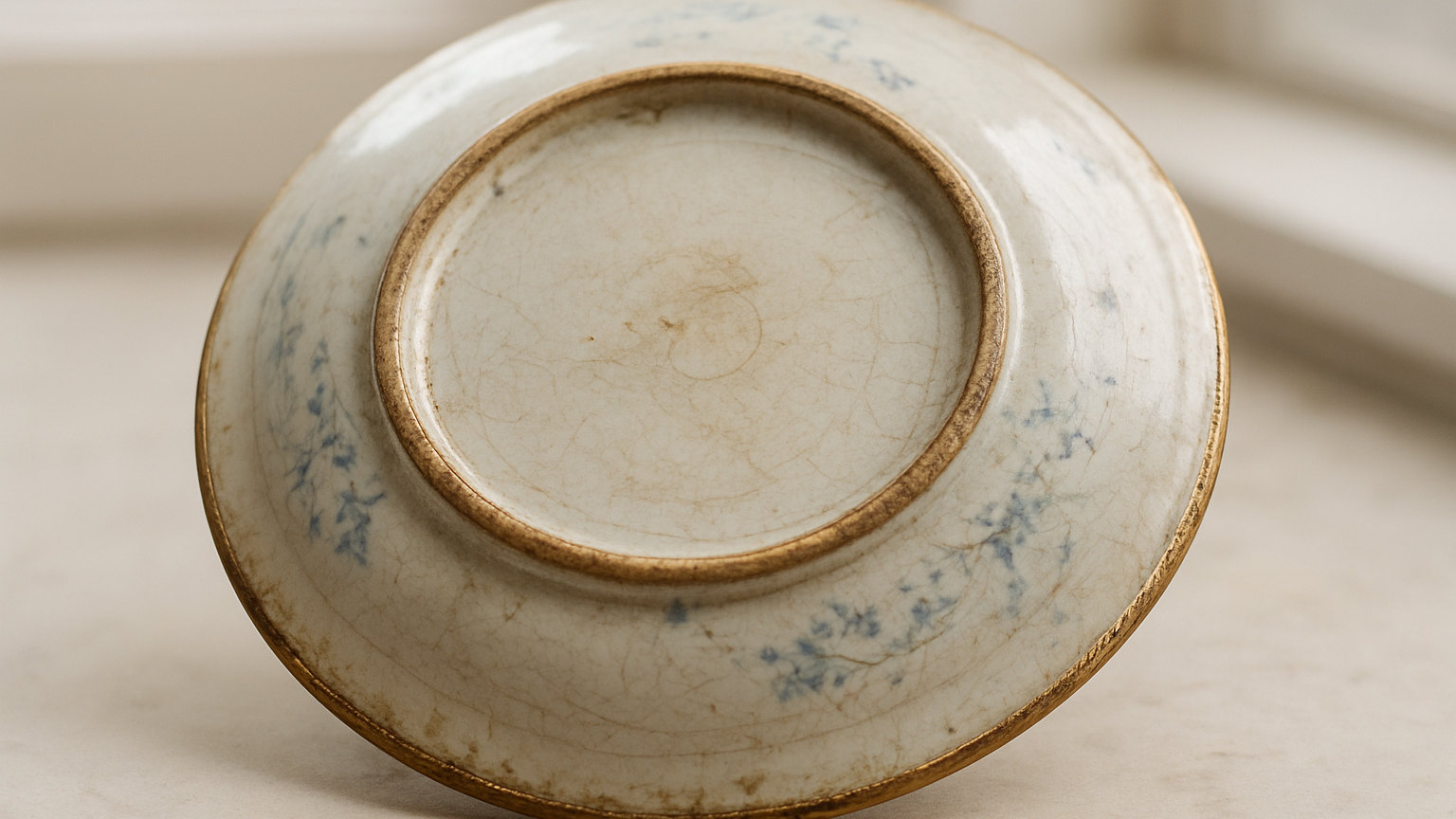
For the body, the wear and any kiln marks. The foot rim is frequently left unglazed, which shows you the clay directly and tells you whether you are holding porcelain or pottery.
Genuine wear is irregular, running in varied directions and concentrated where the plate actually rested. Look for stilt marks where kiln supports held the piece, and for the profile of the foot itself, which varies by factory and period and is worth comparing against references.
How do you find restoration?
Ultraviolet light in a darkened room, which reveals repairs as patches fluorescing differently from the surrounding glaze. Sweep the whole plate, front and back.
Follow up by touch, since restoration feels warmer and softer than fired glaze and the transition can often be felt as a faint step. Check the rim all the way round particularly, since that is where damage concentrates and where it is most often disguised by regrinding.
How do you check for cracks?
By backlighting and by sound. Hold the plate up against a strong light and look through it, since hairline cracks show as dark lines when light passes through the body.
Then balance it on your fingertips and tap the rim gently with a fingernail. A sound plate rings clearly with a note that sustains; a cracked one gives a dull thud. Both tests take seconds and between them they catch almost everything.
What affects value on plates?
Factory, quality of decoration, condition and whether the plate is part of a set. A single plate from a common service is worth very little; the same plate as one of twelve is worth considerably more per piece.
Hand painted decoration outperforms printed. Early wares outperform later. Damage matters a great deal on display plates and rather less on ordinary tableware. A signed cabinet plate by a recognised decorator is a different market entirely.
How should plates be stored?
Flat, with a soft interleaf between each one, rather than stacked bare. Stacking grinds the unglazed foot rim of one plate against the glazed face of the next and causes exactly the ring of scratching you see on inherited services.
For display, use a plate hanger sized correctly and check the tension periodically, since spring hangers relax over time. Wall hung plates should be secured properly, and heavy chargers need a stand rather than a wire hanger.