Cups and saucers survive in enormous numbers and are the cheapest way to handle genuine antique porcelain. They are also more informative than they look, because handle forms, foot rims and saucer depths all moved over time, which makes a single cup a reasonably good dating exercise.
What is a tea bowl?
A handleless cup, essentially a small bowl, used for tea before handles became usual. They indicate earlier wares and are frequently mistaken for small bowls and sold separately.
They pair with deep saucers, because tea was poured into the saucer to cool before drinking. If your set contains handleless cups and unusually deep saucers, it is likely earlier than a conventional cup and saucer service, and worth having identified properly.
What do handle shapes tell you?
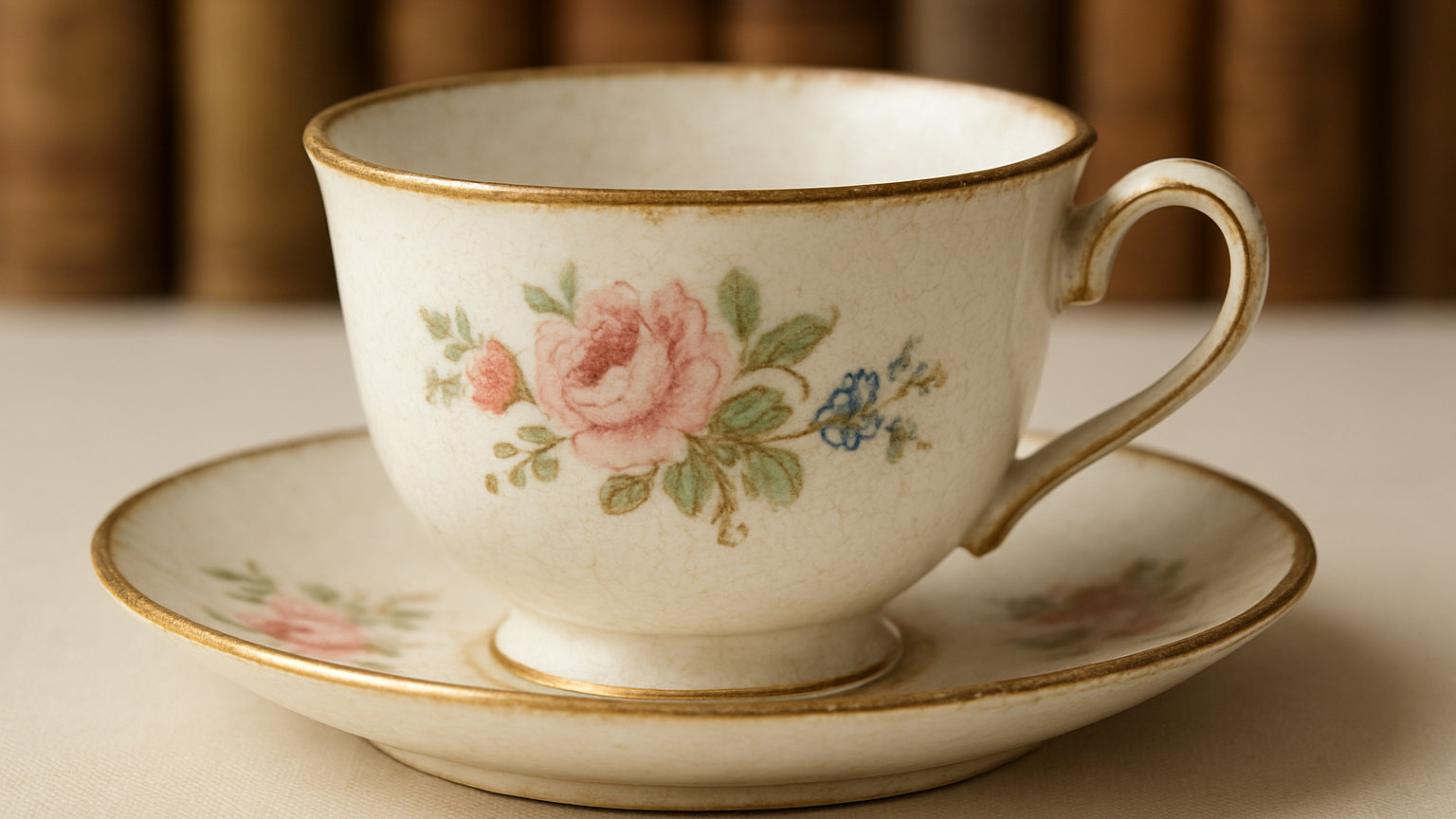
A good deal, since handle design followed fashion closely and each form belongs to a recognisable period. Loop handles, angular handles, entwined handles, ear shaped handles and handles with a thumb rest all appear.
Look at how the handle is attached and whether it was applied by hand, which shows as slight irregularity where it joins the body. Compare the handle against reference images for candidate factories, since some makers used distinctive forms consistently enough to identify them.
What should you check on the foot rim?
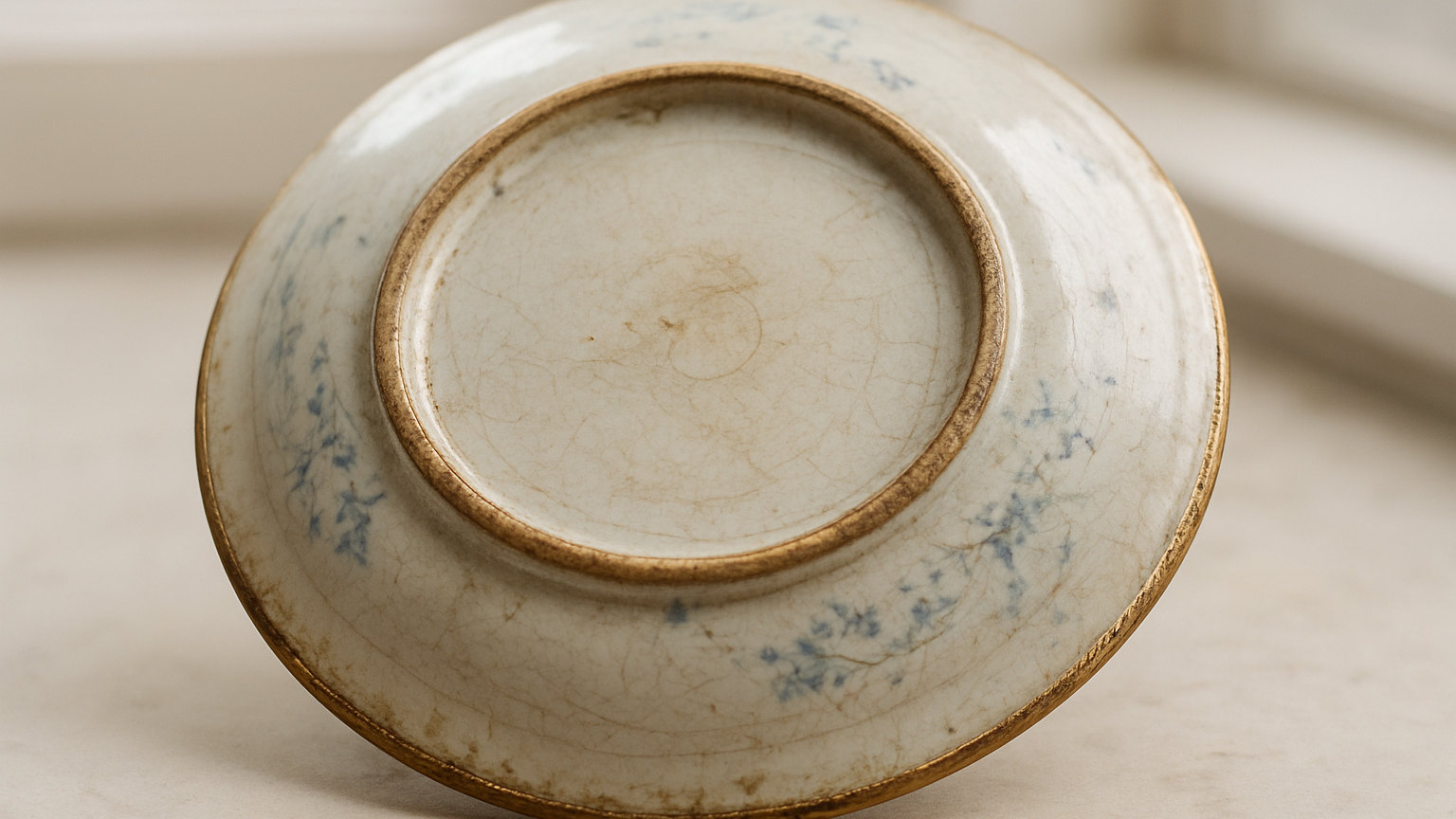
The profile and the glazing. Foot rims vary in shape between factories and periods, and some are left unglazed to show the body, which tells you what the piece is made of.
Look at the colour and texture of any exposed clay, since a dense white body indicates porcelain while a coarser coloured one indicates pottery. Check for kiln support marks, and for genuine wear, which should be irregular and concentrated where the piece actually rested.
Why does saucer size matter?
Because it indicates what the saucer was for. Deep saucers belong with tea bowls. Shallower saucers with a defined well belong with handled cups, and the well should match the diameter of the cup foot.
Check that your cups actually sit properly in their saucers, since assembled sets are common. A cup that rattles or that sits too high in the well came from a different service, even where the pattern appears to match.
What is a trio?
A cup, a saucer and a matching side plate, which is the standard unit for tea and how these are usually sold. Some services included both a tea cup and a coffee cup sharing one saucer.
Trios are worth more than the individual pieces, and a complete matched trio in good condition is a sensible thing to buy when learning a factory. Coffee cups are taller and narrower than tea cups and hold less, which is how to tell two cup shapes apart in one pattern.
How do you check condition?
Hold each piece to a strong light and look for hairline cracks appearing as dark lines. Run a fingertip around every rim and around the foot, since chips are commonest there.
Tap the cup rim gently while holding it on a fingertip: a clear ringing note suggests soundness, a dull thud suggests a crack. Check the gilding on rims and handles, which wears with use and washing and cannot be restored invisibly. Look inside for staining, which crazed glaze absorbs permanently.
Are they worth collecting?
They are the best value teaching material in ceramics. Ordinary cups and saucers cost very little, so you can handle a great deal of genuine marked porcelain and learn bodies, glazes and marks by comparison rather than from photographs.
Value concentrates in early wares, in fine hand painted decoration and in complete services with their serving pieces. A single cup from a common service is worth very little, which is precisely what makes it an affordable way to train your eye.
What should you avoid doing with them?
Dishwashers and microwaves, both of which destroy gilding and overglaze enamel. Wash by hand in warm water with mild detergent and dry immediately.
Do not stack cups inside one another, which chips rims and can jam them together tightly enough that separating them breaks both. Hang them or stand them separately instead.