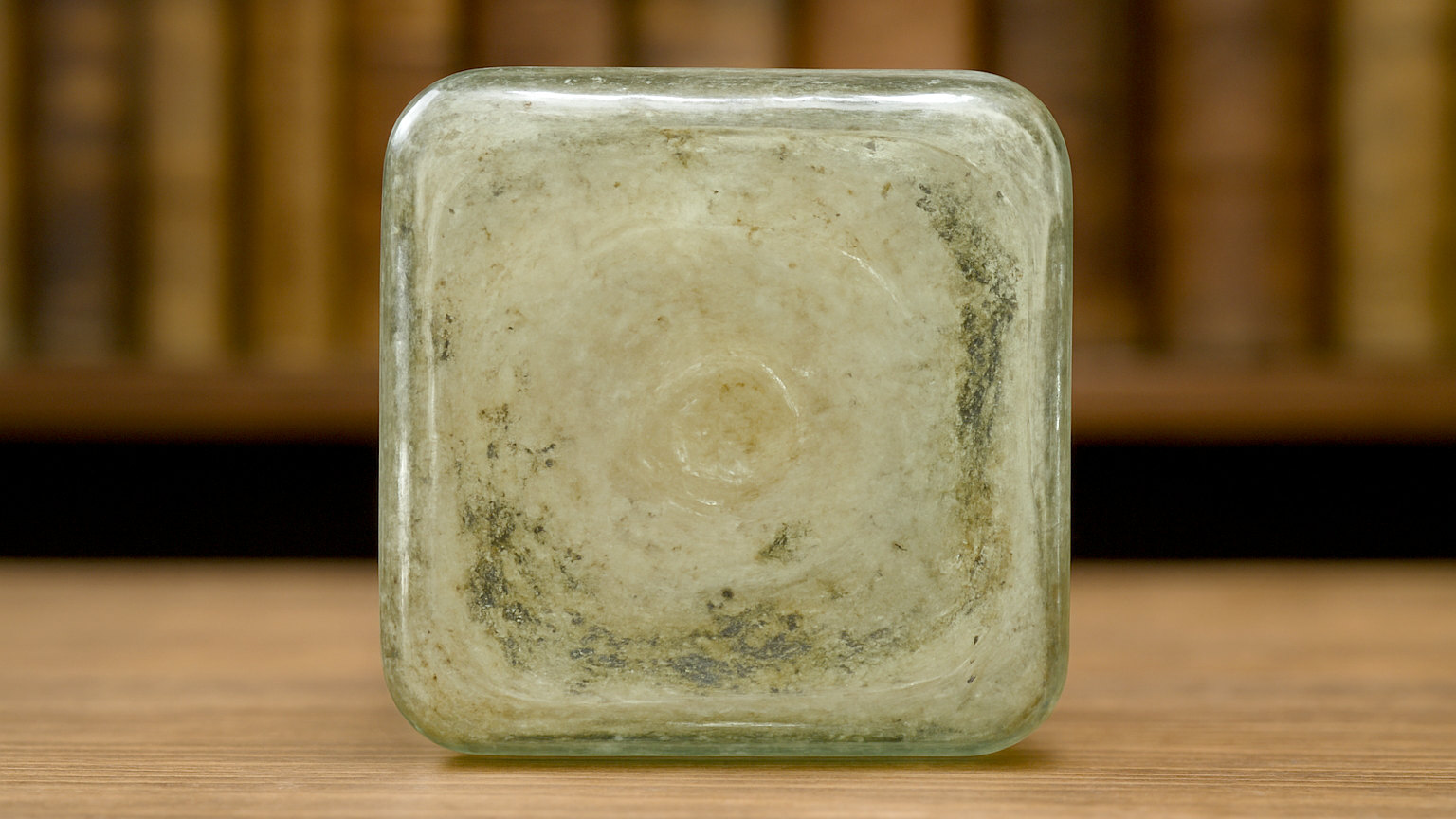
Turn an old drinking glass over and you may find a rough patch, a ring, or a small crater in the middle of the base. That is a pontil mark, and it is one of the most useful pieces of evidence in glass identification. Learning to recognise it is the difference between guessing at a glass and reading it.
What causes a pontil mark?
When glass is blown, the piece begins on a blowing iron attached at what will become the rim. To finish the rim, the maker needs to hold the glass from the other end, so a solid rod called a pontil is attached to the base with a blob of hot glass.
When the work is complete, the pontil is broken away, leaving a scar in the centre of the base. That scar is direct physical evidence of the object having been made by hand, one piece at a time.
What do the different kinds look like?
A rough or open pontil is the most obvious: a sharp irregular area of broken glass, sometimes with a slight crater, and rough enough to catch a fingernail. This is characteristic of earlier and simpler production.
A polished pontil has been ground and smoothed after breaking, leaving a shallow circular depression with a satin or polished surface, often slightly dished. This indicates a more expensive piece where the maker took the trouble to finish the base. A ring pontil leaves a circular ridge rather than a central scar, where the rod was attached in an annular shape.
Does an absent pontil mark mean the piece is modern?
No, and this is where people go wrong. Glass made in moulds does not need a pontil at all, and moulded glass has been produced for a very long time. Later hand production used snap tools that grip the body of the glass rather than attaching to the base, leaving no mark whatsoever.
So a pontil mark is good evidence for hand blowing, but its absence proves very little on its own. Treat it as one clue among several rather than a pass or fail test.
What else should you check on the base?
Wear rings are the most valuable supporting evidence. A glass that has stood on hard surfaces for many decades develops fine scratches on the underside of the foot, and genuine wear is irregular, varying in direction and depth, concentrated on the parts that actually touch a table.
Artificial wear tends to be regular, running in one direction, and often extends to areas that would never contact a surface. Look at the wear under a good light and ask whether the pattern makes physical sense.
How does the glass itself date a piece?
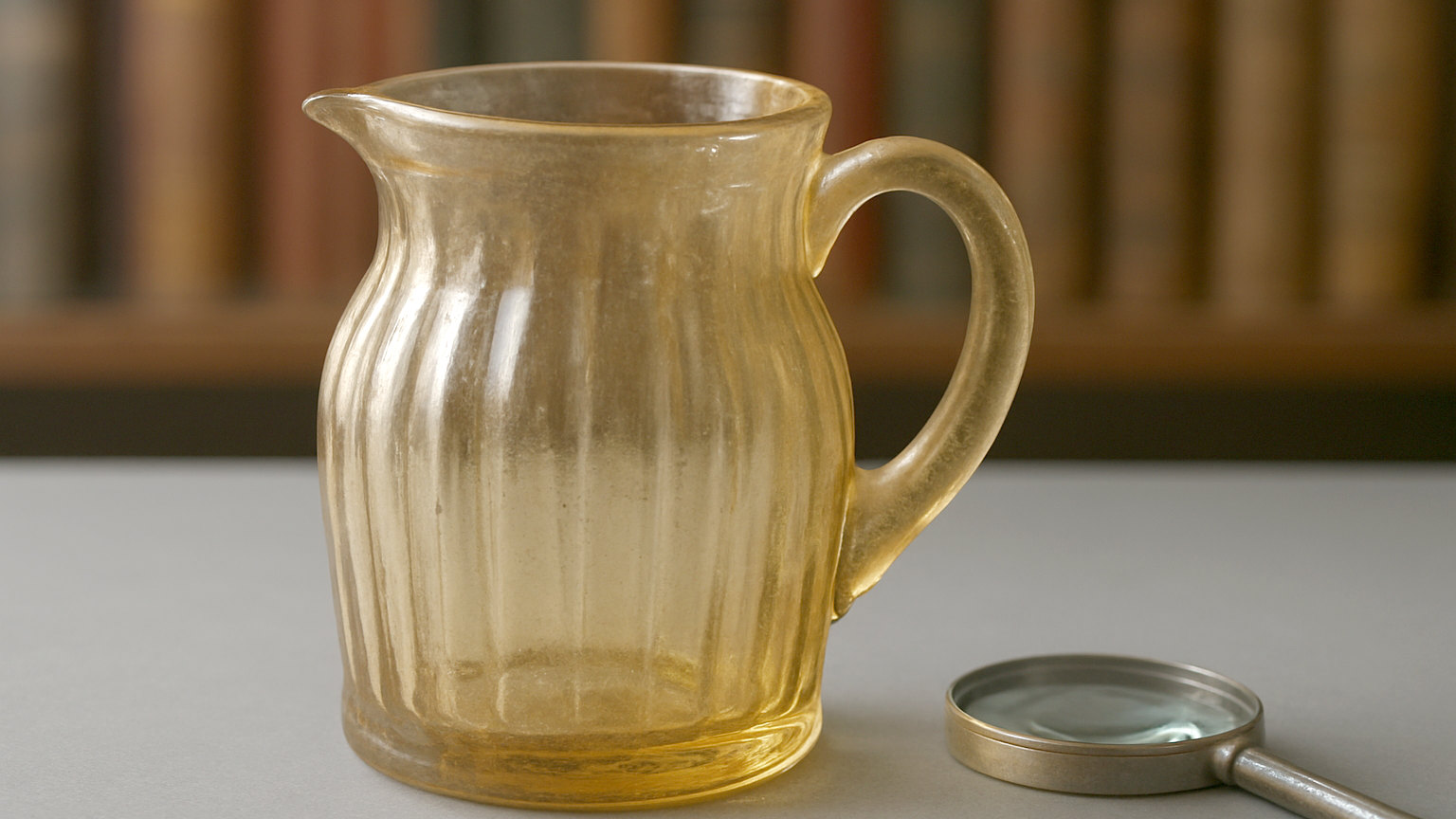
Early glass often has a slight grey, green or straw tint from impurities in the raw materials, visible when you look through a thick section such as the foot. Modern glass is generally water clear because the ingredients are purer.
Lead crystal has a distinctive heaviness and gives a sustained ringing note when tapped gently, and it refracts light more strongly, which is why cut lead glass sparkles as it does. Small bubbles and faint striations within the metal indicate less refined production and often greater age, and they are quality indicators in reverse.
How do you tell cut glass from pressed?
Run a fingertip over the pattern. Cut decoration is made by grinding into the surface, so the edges of the design are crisp and can feel sharp, and the cut facets are highly polished. Pressed glass is moulded, so the pattern edges are rounded and softer.
Pressed glass also frequently shows faint mould seams running vertically up the sides, which you can feel more easily than see. Cut glass has no seams. Pressed pieces imitating cut patterns were made in enormous numbers, so this check matters commercially as well as academically.
What condition problems should you look for?
Hold the glass up to the light and turn it slowly. Look for chips on the rim and foot, which are the most vulnerable areas, and for internal cracks that catch the light as bright lines.
Cloudiness inside a decanter, sometimes called sickness, is etching of the interior surface caused by liquid left standing, and it is usually permanent. It cannot be washed out, and professional treatment is expensive and not always successful. Check the inside of any decanter against the light before buying.