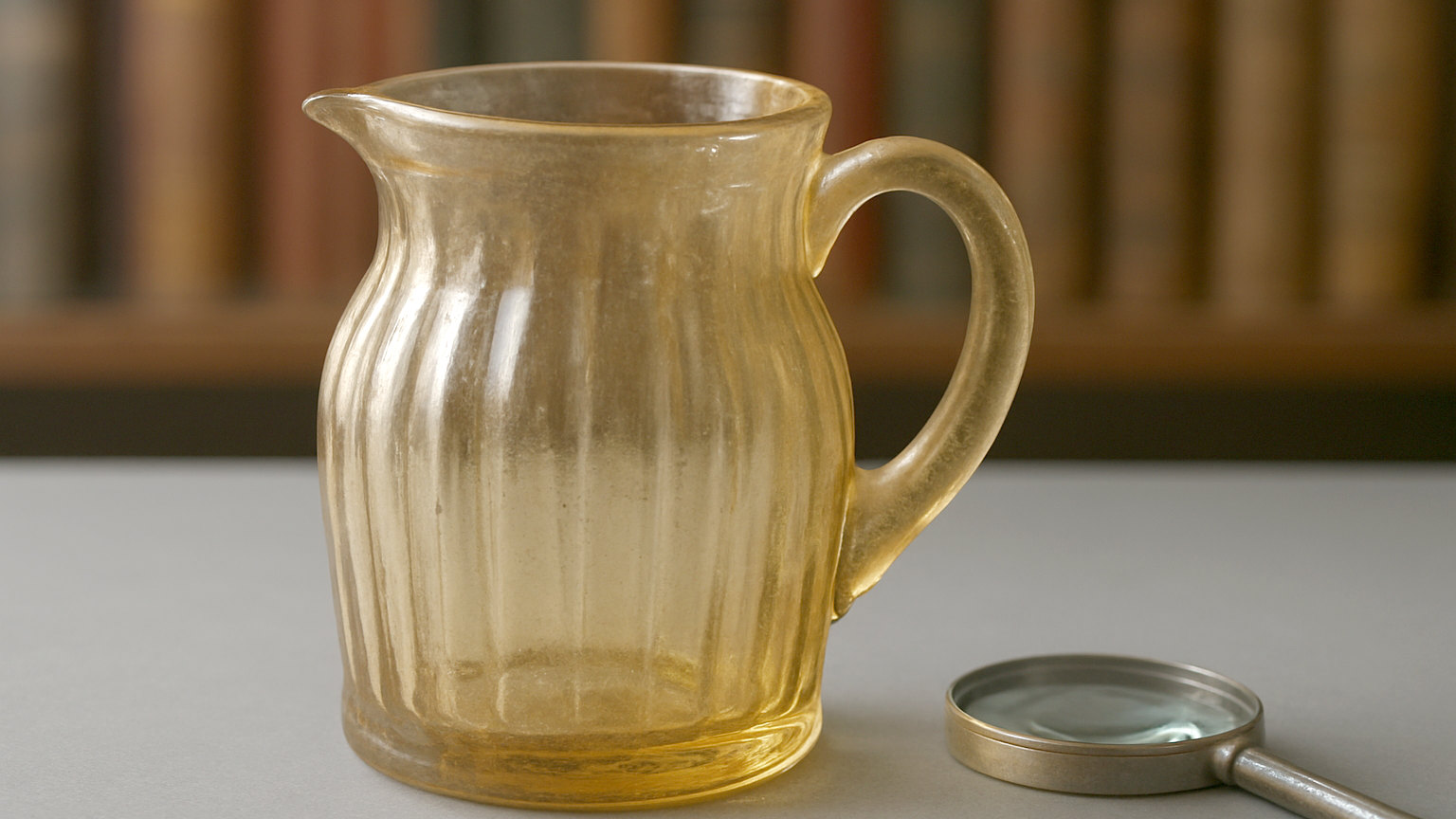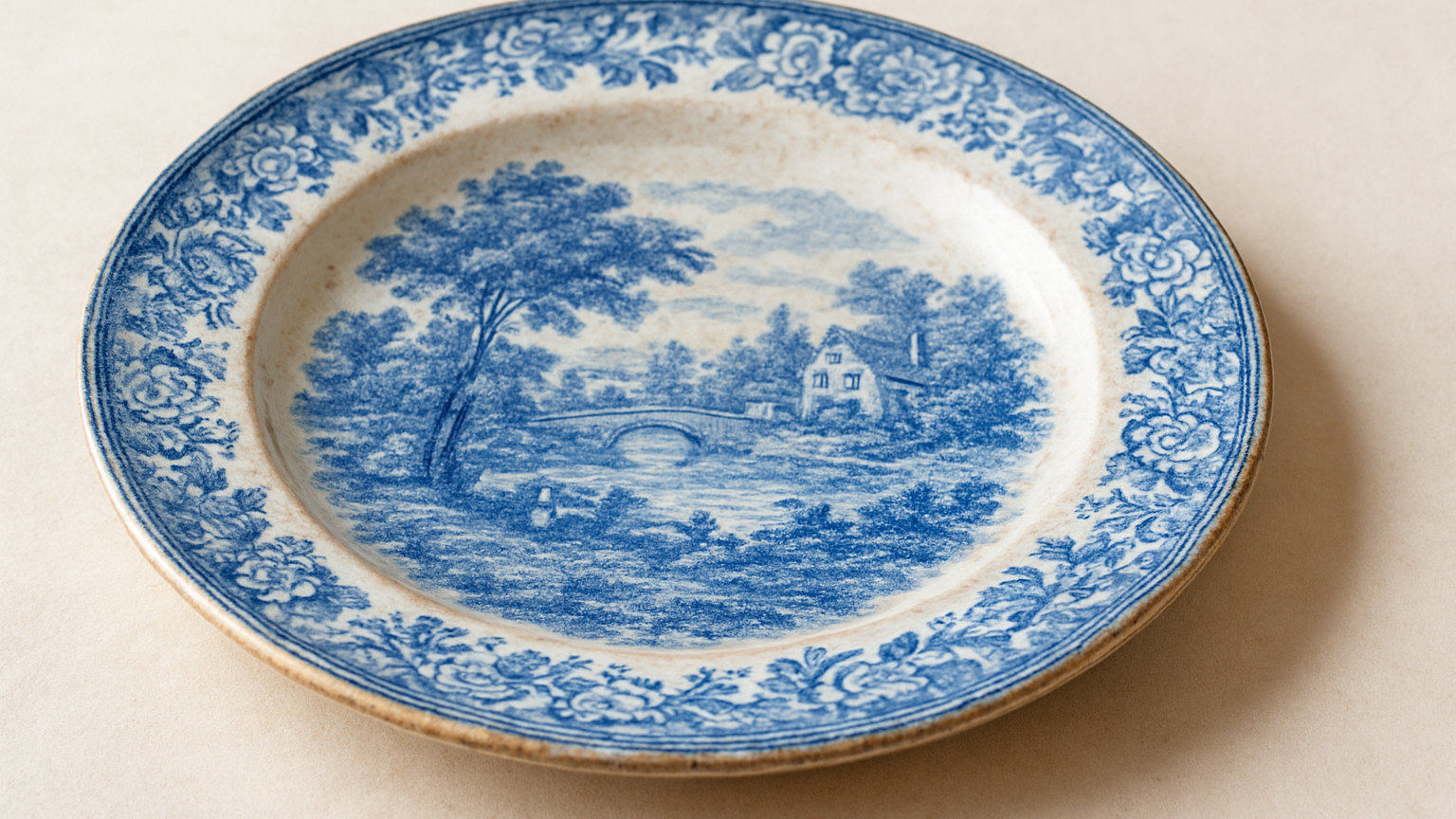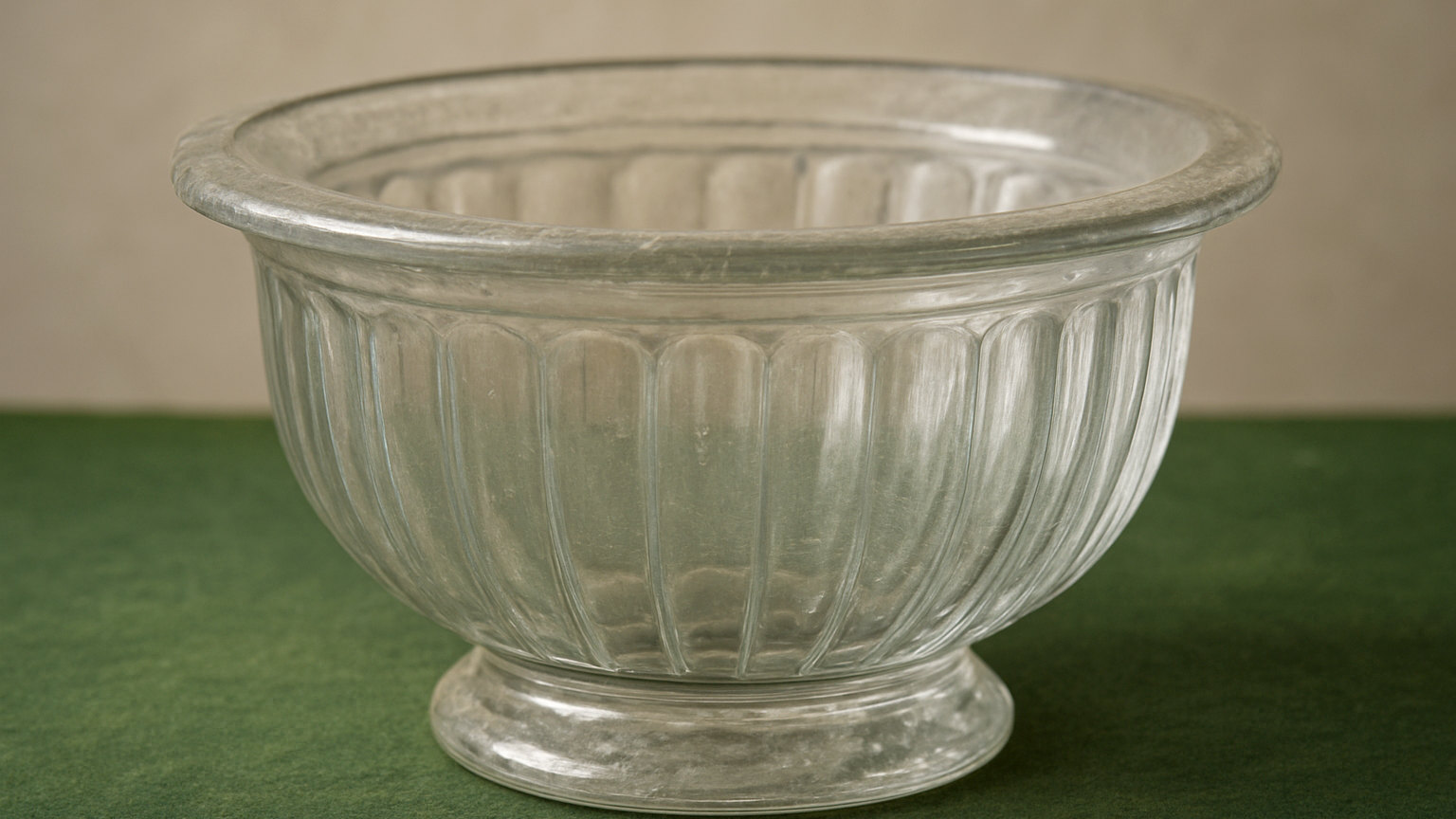
Bowls and dishes are the most exposed glass in any household. The rim is at hand height, the base is dragged across tables, and both take damage constantly. That means condition assessment matters more here than in almost any other glass form, and one particular repair is disguised often enough to be worth checking every time.
What should you look at on the base?
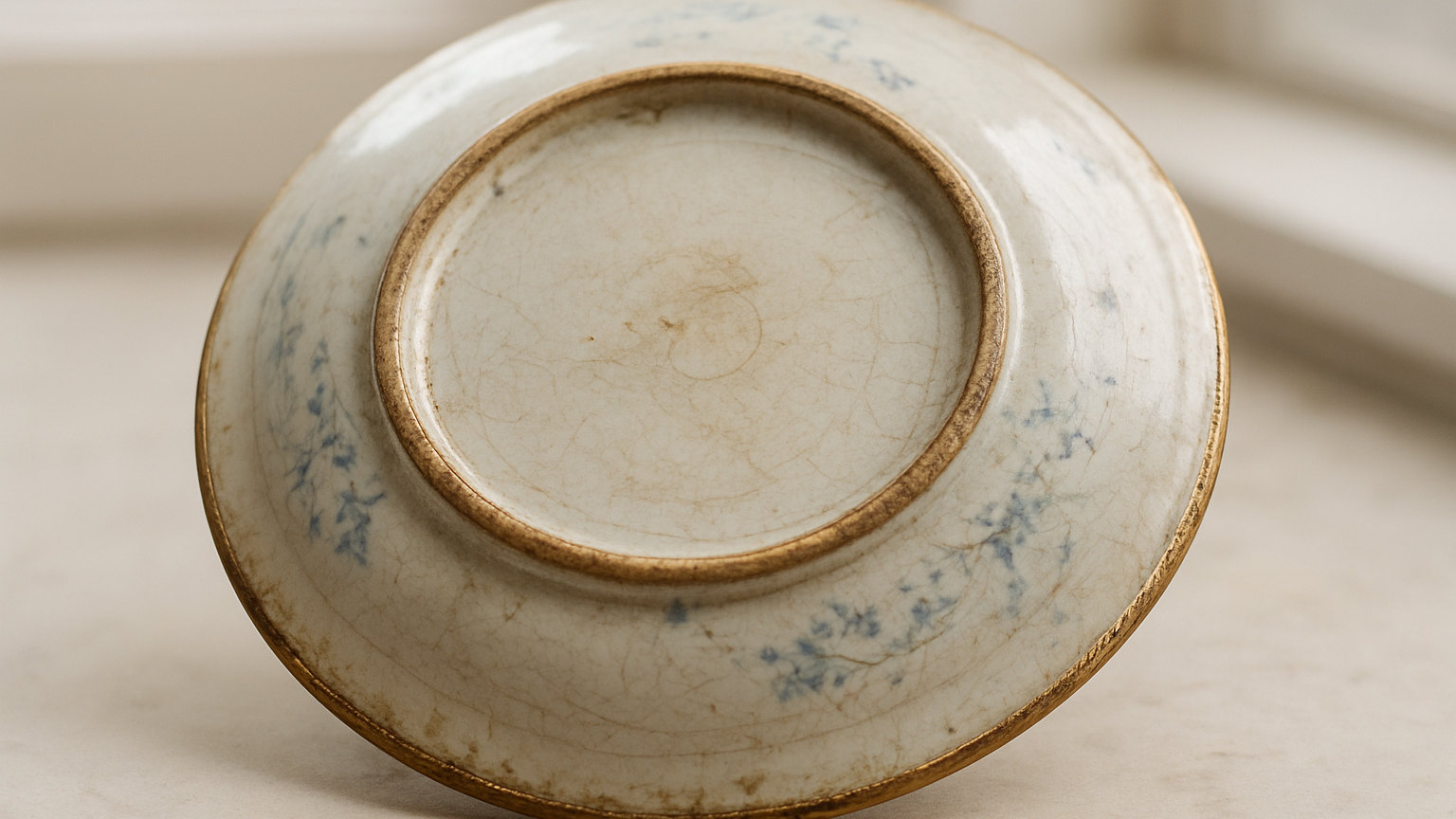
The pontil area first. Turn the bowl over and look for a rough scar, a polished depression or a ring in the centre, which indicates the piece was held on a pontil rod during making.
A rough or open pontil suggests earlier and simpler production. A polished pontil, ground smooth and slightly dished, indicates a maker who took trouble finishing the base. Moulded bowls have no pontil at all, which does not date them late but does tell you how they were made.
What do wear rings tell you?
Whether the piece has genuinely stood on tables for decades. Look at the underside of the foot under a strong light for fine scratches.
Genuine wear is irregular, varying in direction and depth, and concentrated only where the glass actually contacts a surface. Artificial wear tends to run in one direction and frequently extends to areas that would never touch anything. Ask whether the pattern makes physical sense.
How do you spot a ground down rim?
By profile and thickness. When a chipped rim is ground away to remove the damage, the rim ends up thinner than it should be, sometimes noticeably so, and the profile changes.
Run a fingertip around the whole rim feeling for changes in thickness, then look along the rim edge from the side. A ground rim frequently has a flat top rather than a rounded one, and the proportions of the bowl look slightly wrong because height has been lost. Compare against the foot for consistency of finish.
What is a folded rim?
A rim where the glass has been turned back on itself to double the thickness, giving strength at the most vulnerable edge. It is a construction feature rather than a fault.
Folded rims appear on earlier work and on the feet of drinking glasses as well as on bowls. Look for the visible fold as a distinct band, and check it has not split, since a folded edge can separate. Its presence is generally a good sign of age.
What forms will you encounter?
Fruit bowls, salad bowls, sugar bowls, finger bowls, rose bowls and comports, which are bowls raised on a stem and foot. Serving dishes, butter dishes and sweetmeat dishes all turn up.
Comports are worth particular attention since the stem is a weak point and the bowl and foot were frequently made separately then joined. Check the join for a visible seam and for repairs, and check the stem is straight by sighting down it.
How do you judge the decoration?
By feeling the pattern edges. Cut decoration has crisp edges that can feel sharp, with highly polished facets. Pressed decoration has rounded softer edges and frequently shows a mould seam running vertically.
Engraved decoration is shallower than cut work and frosted rather than polished, and under magnification shows the fine lines of a wheel. Etched decoration is uniformly matt where acid worked. Each represents a different amount of labour and a different price.
How do you check for cracks?
Hold the bowl up to a strong light and turn it slowly, looking for bright lines catching the light within the glass. Internal cracks show clearly this way and are almost invisible otherwise.
Then tap the rim gently with a fingernail while supporting the bowl lightly. A sound piece gives a clear note that sustains briefly; a cracked one thuds. Check the base and the stem of any footed piece particularly, since stress concentrates there.
How should glass be washed and stored?
By hand in warm water, one piece at a time, with a soft cloth or padded mat in the sink. Never in a dishwasher, where detergent and heat cloud the surface permanently.
Dry thoroughly rather than leaving to drain. Store bowls separately rather than stacked, since nesting glass chips rims and pieces can jam together tightly enough that separating them breaks both. Avoid sudden temperature changes, which is what cracks old glass.