Coloured glass covers an enormous range, from simple bottle green to technically extraordinary cameo work, and the prices span the same range. What separates them is technique rather than colour, so learning to recognise how a piece was made is more useful than learning to name shades.
Where does the colour come from?
Metal oxides added to the molten batch. Cobalt gives deep blue, copper and chromium give greens, gold gives the pink and ruby tones, manganese gives purple, and iron gives the greens and browns common in ordinary bottle glass.
Because certain colours required expensive additions, they indicate quality. Gold ruby glass was costly to produce and is correspondingly desirable. Judge a piece partly on how difficult its colour was to achieve rather than on how attractive it looks.
What is cased glass?
Glass made in layers, with one colour laid over another, so that cutting through the outer layer reveals the colour beneath. The effect is a two or three colour design with crisp boundaries.
Look at a cut edge or a chip: you should see distinct layers rather than colour running through the whole thickness. Hold the piece to a light and the layers become obvious. Cased pieces are worth substantially more than glass coloured throughout, because the technique is far more demanding.
What is cameo glass?
The most technically ambitious form, in which a cased blank is carved back by hand so that a design in one colour stands in relief against a ground of another, like a carved shell cameo.
Genuine cameo work shows tool marks and slight irregularity under magnification, since it was cut by hand over many hours. Acid etched imitations have softer edges and a uniform matt surface where the acid worked. Signed cameo glass by recognised makers commands very serious prices.
What is uranium glass?
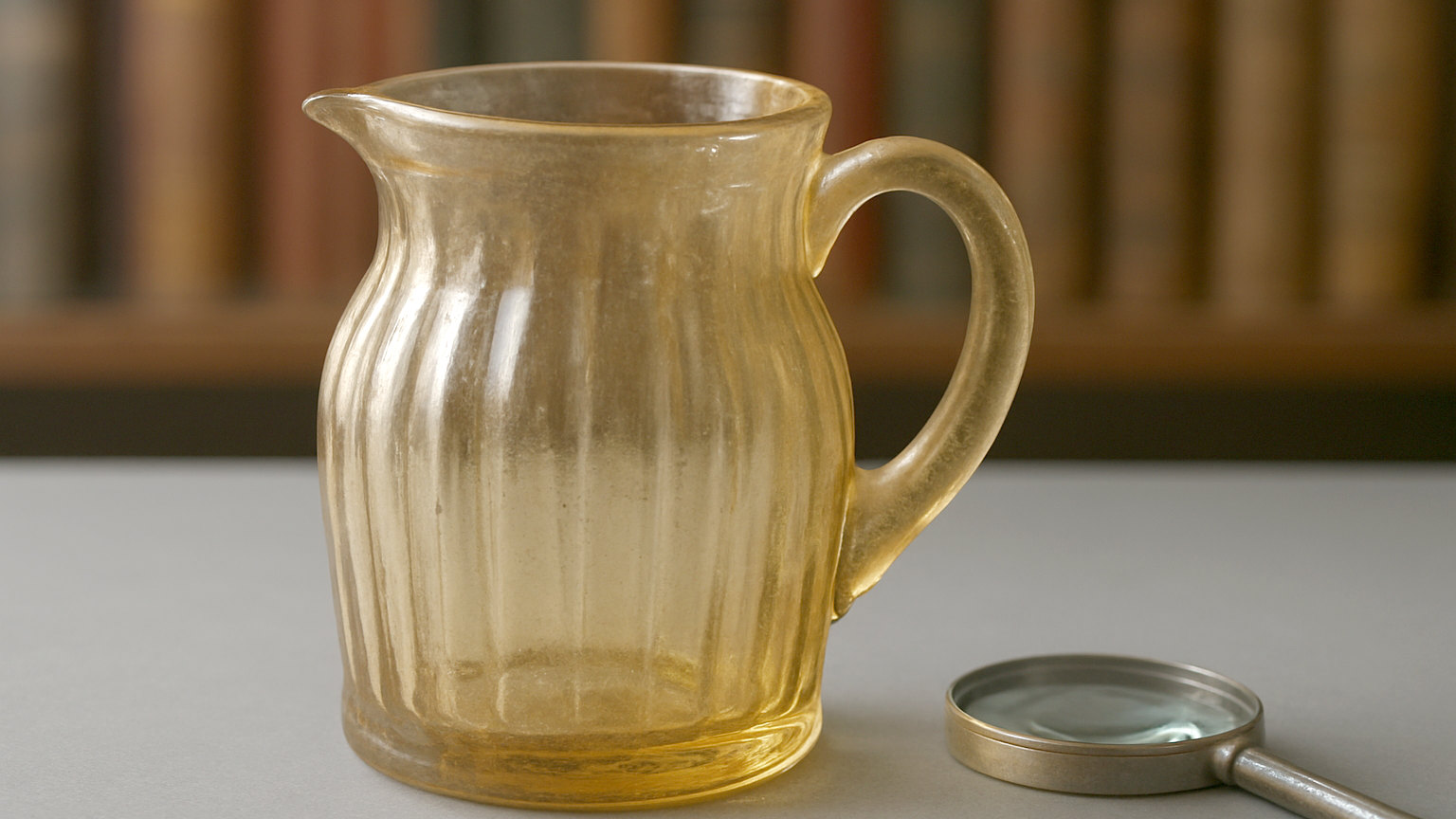
Glass coloured with uranium compounds, producing a distinctive yellow green, and it has one unmistakable property: it fluoresces bright green under ultraviolet light.
A small UV torch settles the question instantly and is worth carrying. The glow is vivid and unlike anything else. It was produced over a long period and in many forms, and the radioactivity is negligible in normal handling, though it is sensible not to eat or drink from it.
How do you recognise iridescent glass?
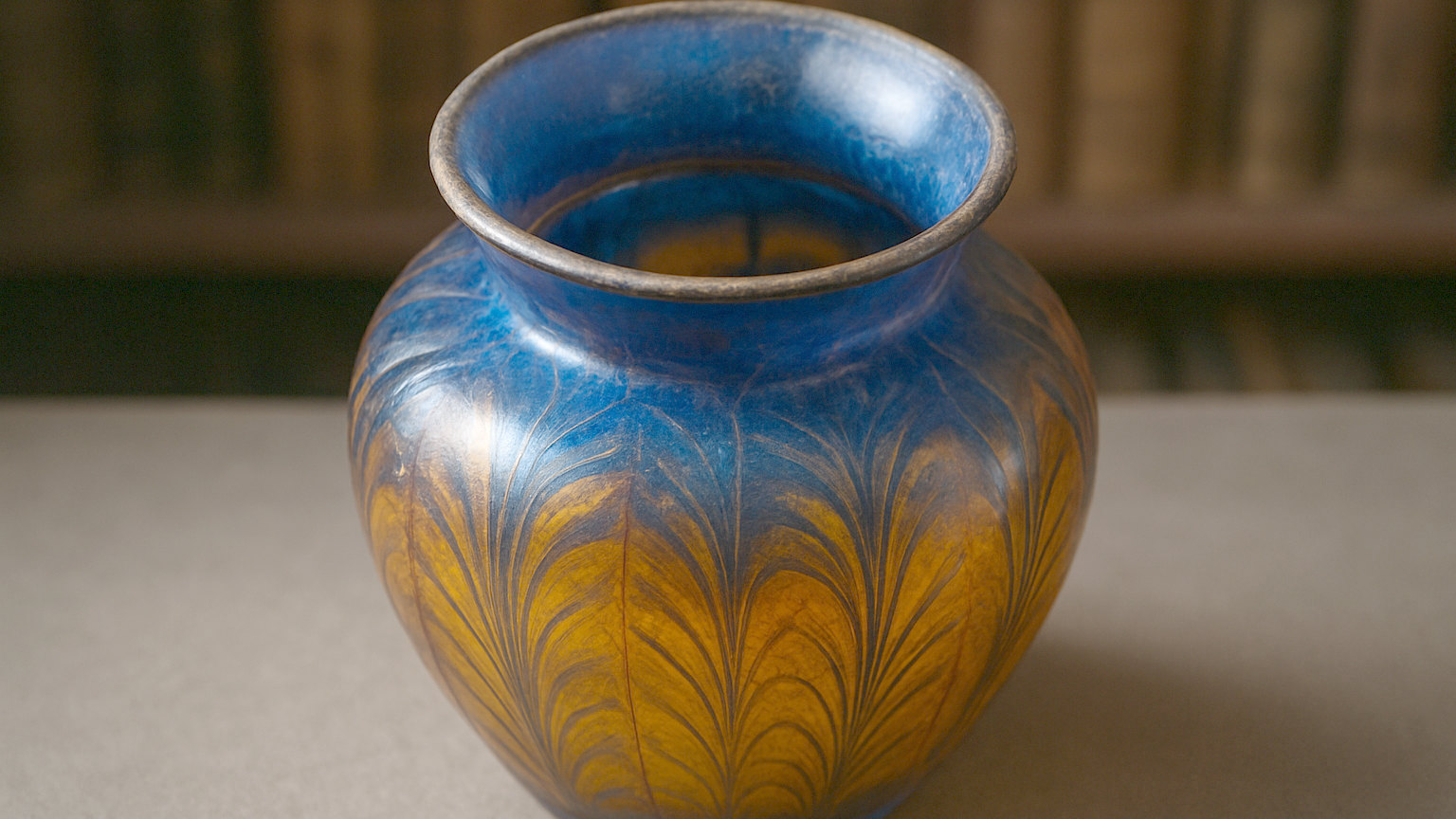
By the shifting metallic surface, which changes colour as the piece is turned. It was produced by exposing hot glass to metallic vapours, leaving a thin surface film that refracts light.
Iridescence is strongly associated with the Art Nouveau period and with several celebrated makers. Look at whether the effect is in the surface or applied on top: genuine iridescence is integral and does not rub or flake, while later sprayed finishes can wear away at handled points.
What is opaline and milk glass?
Semi opaque and opaque white glass, coloured with additions that cloud the batch. Opaline is translucent with a slightly milky quality and frequently a warm fiery glow when held to a light.
Milk glass is fully opaque white. Both were produced in enormous quantities and quality varies accordingly. Hold a piece to a strong light and look at the edge: good opaline shows an orange or pink flash at the rim, which is a genuine quality indicator worth checking.
What should you check on condition?
Chips and internal cracks, using a strong light and a slow turn of the piece. Run a fingertip carefully around every rim and foot, since these are the exposed edges.
On cased and cameo glass, check whether any layer has been ground down to remove damage, which shows as a shallow dip or a change in the thickness of the coloured layer. On iridescent glass, look for wear to the surface film at handled points, which cannot be restored and reduces value considerably.
How do you check whether a signature is genuine?
By looking at how it was applied and whether it sits correctly for the maker. Signatures may be engraved, acid etched, moulded or applied in a cane within the glass, and each maker used particular methods.
Examine under magnification and raking light, since engraved signatures on the base are shallow. Be sceptical of a crisp signature on a piece whose quality does not support it, because celebrated names were added to unsigned glass frequently once the market recognised them.