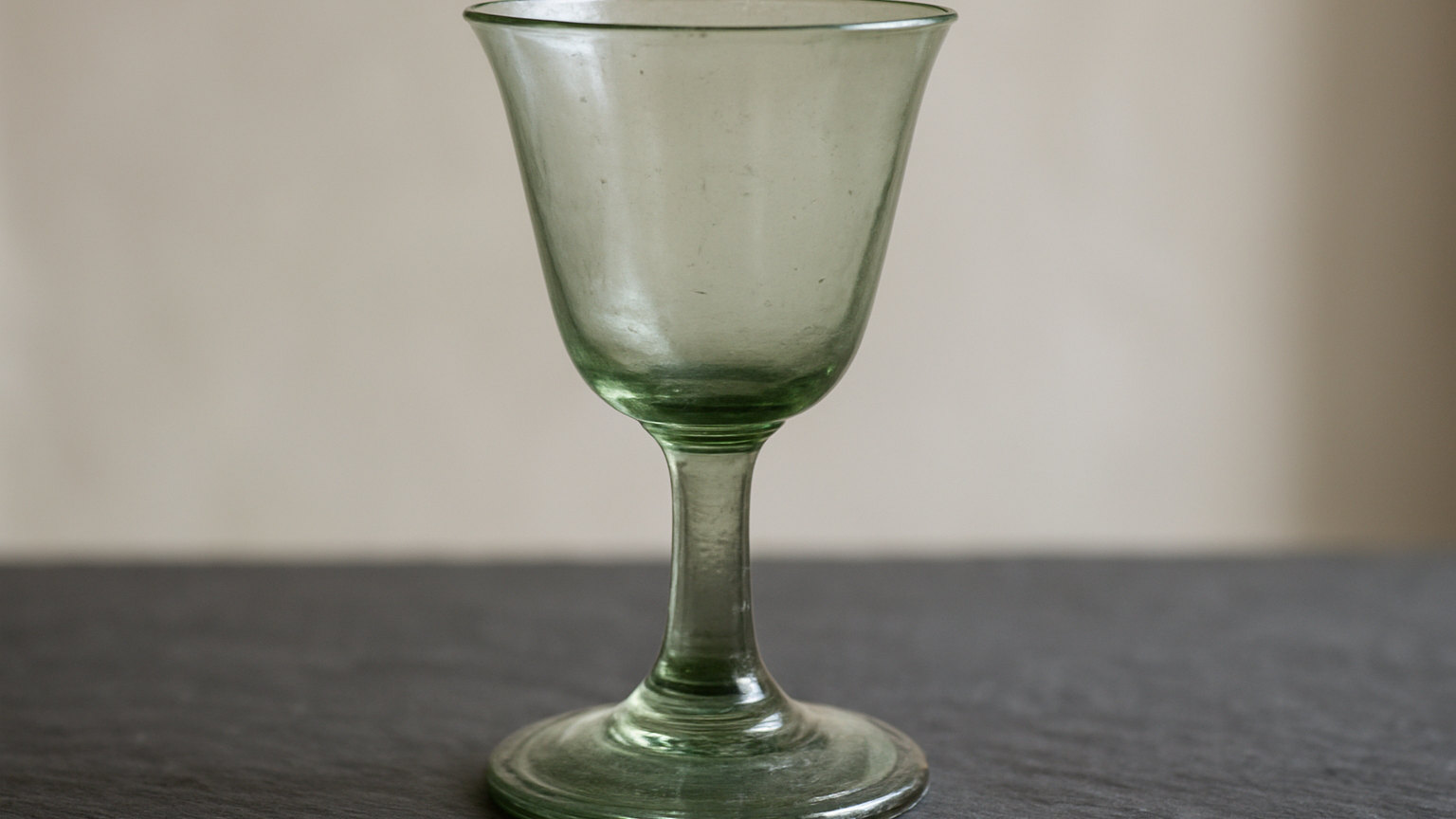
Antique drinking glasses are among the most systematically studied of all antiques, because the stem changed in a well documented sequence. Learning that sequence lets you date a glass within a few decades from across a table, and the differences are visual rather than technical.
Why does the stem carry the date?
Because it was where the glassmaker showed skill and where fashion focused. Bowls changed shape more slowly and feet barely at all, while stems moved through a series of quite distinct treatments.
Each treatment required different techniques, so the sequence reflects developing craft as much as changing taste. Hold a glass up and look at the stem before anything else, since that will place it faster than any other feature.
What is a baluster stem?
A stem with a heavy swelling, usually pear shaped or inverted, sometimes with additional knops above or below. These are the earliest of the sequence and the heaviest in feel.
Baluster glasses have real weight in the hand and a solid presence. Look for bubbles or tears deliberately trapped within the knop, which appear as elongated air pockets and were a decorative feature. Later balusters become lighter and more attenuated, with smaller knops.
What is an air twist?
A stem containing spiralling threads of air, produced by trapping bubbles in the glass and then drawing and twisting the stem so they stretch into fine helices.
They appear as silvery spirals running the length of the stem, and the effect is unmistakable. Multi spiral air twists with many fine threads indicate greater skill than a simple single spiral. Air twists represent a distinct and fairly narrow period, so identifying one dates a glass usefully.
What is an opaque twist?
The same principle using white or coloured glass canes instead of air. Rods of opaque white glass were embedded in the stem and twisted, producing dense white spirals.
These followed air twists and are generally later. Colour twists, using canes of blue, green or red alongside the white, are scarcer and considerably more valuable. Count the number of separate spirals and note whether they are simple or compound, since complexity affects both dating and price.
What about facet stems?
Stems cut with flat facets rather than being left round, producing a faceted or diamond cut surface that catches light. These are later in the sequence and coincide with the rise of cut decoration generally.
Facet cutting was applied to plain stems by grinding, so the facets have crisp polished edges you can feel. A facet stem indicates a later date than a twist and generally a lighter overall glass.
What should you check on the foot?
Whether there is a pontil mark, and whether the wear makes sense. Early glasses frequently show a rough or ground pontil scar in the centre of the underside where the glass was held during making.
Look for wear rings on the underside of the foot: fine scratches, irregular in direction and depth, concentrated where the glass actually touched a table. Artificial wear runs in one direction and reaches places that would never contact a surface. Check also whether the foot is wider than the bowl, which is usual on earlier glasses.
What condition issues matter?
Chips and grinding to the rim above all. Run a fingertip carefully around the rim, and look at whether the rim is thinner than it should be or slightly uneven, which suggests damage has been ground away.
A ground down rim substantially reduces value and can distort the proportions of the bowl. Check the foot rim for chips, which are common, and hold the glass to a light looking for internal cracks appearing as bright lines. Cloudiness inside the bowl, caused by liquid left standing for long periods, is an etching of the glass surface itself and is usually permanent. It cannot be washed out, professional treatment is expensive and not always successful, and it is worth checking for by holding any glass up to a window and looking through it before you buy.