Stamp collecting is unusually easy to start badly. The equipment is cheap, material is abundant, and none of that prevents a beginner from damaging a genuinely valuable stamp in the first week through handling that seems entirely reasonable. A little discipline at the outset saves a great deal later.
Should you collect broadly or narrowly?
Narrowly, almost always. Attempting to collect the whole world produces a large accumulation of common material with no depth and no direction, and it becomes discouraging quickly.
Choose a focus: one country, one reign, one period, or a theme such as a particular subject depicted. A narrow focus lets you learn a field properly, recognise what is scarce, and build something that has coherence and value as a collection rather than as a pile of individual stamps.
What equipment do you actually need?
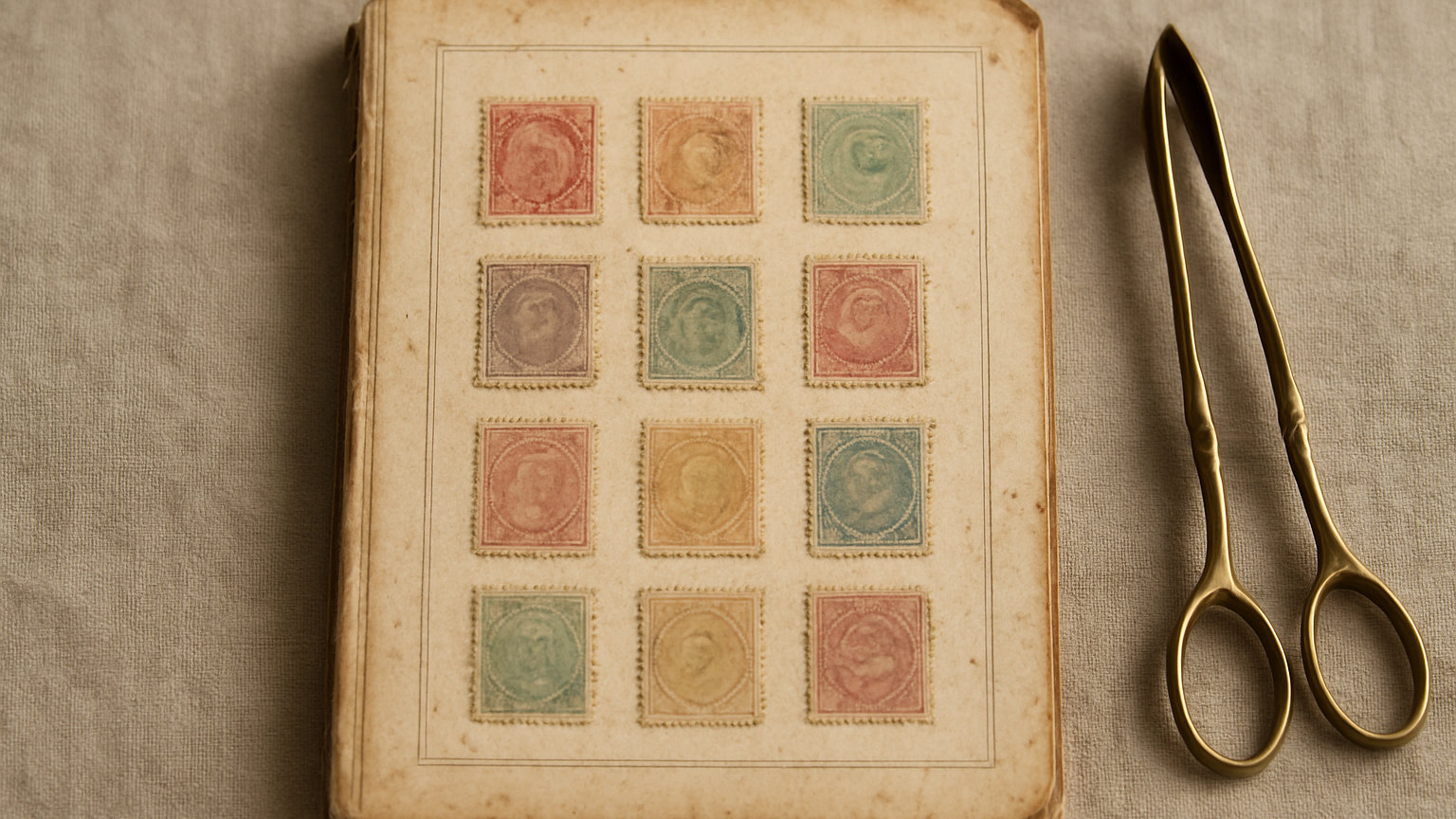
Very little. Tongs with rounded flat tips, a magnifying glass of modest power, a perforation gauge, and an album with acid free pages or a stock book with proper strips.
A watermark detector tray is useful later. Avoid buying an expensive album before you know what you are collecting, since a specialist album for the wrong country is wasted money. Good tongs and a catalogue for your chosen area matter more than anything else.
Why should you never use fingers?
Because skin carries oils and salts that stain paper permanently, and the damage appears months later when it is too late. Fingerprints on a mint stamp with original gum are particularly destructive.
Tongs feel awkward for about a week and then become automatic. Use tongs designed for stamps rather than tweezers, since pointed tips cut through paper. Work over a clean surface, and never handle stamps while eating or drinking.
What is the problem with hinges?
They disturb the gum on mint stamps, and gum condition is a substantial part of value. A stamp described as never hinged is worth considerably more than the same stamp with a hinge mark.
Modern mounts that enclose the stamp entirely are the better choice for anything of value, since they hold it without touching the gum. Peelable hinges are acceptable on used stamps where gum is irrelevant. Never use ordinary adhesive tape or glue anywhere near a stamp.
How should stamps be removed from paper?
By floating rather than pulling. Trim the paper around the stamp, float it face up on a shallow dish of cool water, and wait until it releases on its own.
Never pull a stamp off, since that thins the paper and creates a fault that halves the value. Some coloured papers run and will stain the stamp, so soak those separately. Dry face down between clean absorbent sheets under light weight. Never soak a stamp on coloured paper with the rest of a batch.
Where should you buy?
From established dealers, from societies, and from auctions, rather than from unknown online sellers offering bargains. Reputable dealers describe faults honestly because their business depends on it.
Join a local philatelic society, which costs little and provides expertise, exchange packets and people who will look at your material honestly. Buy a catalogue for your area and read it before spending seriously, since knowing what exists prevents overpaying for common material.
What should you avoid buying?
Mixed kiloware and large lots sold by weight, which are entertaining and rarely contain anything of value. Also avoid stamps described vaguely, since a seller who does not mention condition usually has a reason.
Be cautious of anything offered as an investment. Stamps are collected because people enjoy them, and buying purely for appreciation has disappointed a great many people. Buy what genuinely interests you, buy the best condition you can afford rather than the largest quantity, and treat any increase in value as a bonus rather than a plan. A small collection of good material in one field will always be worth more, and be more satisfying, than a large accumulation of common stamps.