Coins are durable objects that can nonetheless be ruined by storage, and the damage happens over years rather than immediately, which is exactly why it goes unnoticed. The single commonest cause is a flexible plastic holder that seemed perfectly sensible when the coins went into it.
What is the problem with soft plastics?
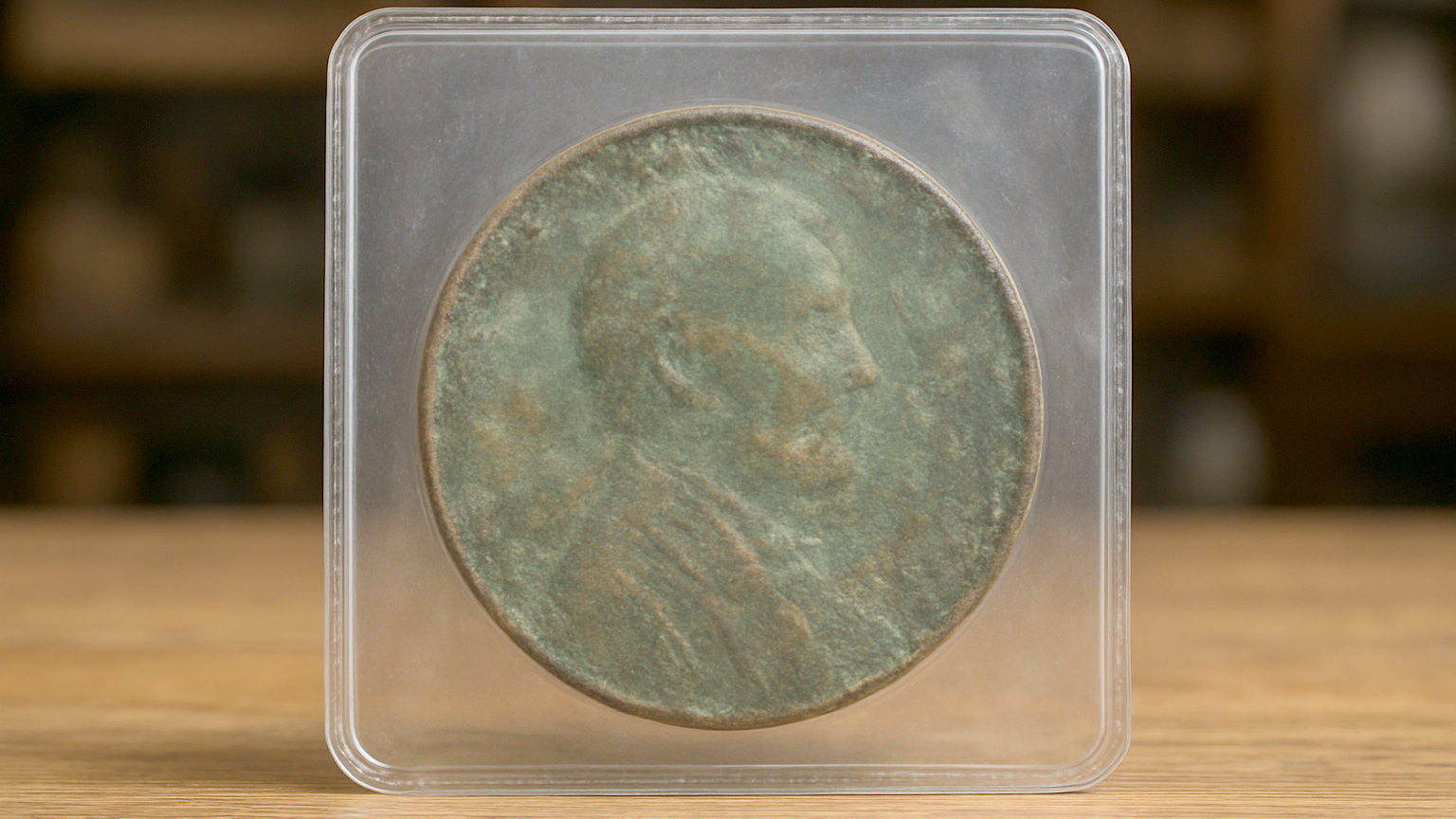
Plasticisers. Soft flexible plastics contain chemicals that keep them pliable, and these break down over time, releasing compounds that attack the coin surface.
The result is a green sticky residue on the coin, which is extremely difficult to remove and frequently leaves permanent surface damage beneath it. Any holder that feels soft and bendy should be treated with suspicion and replaced with inert alternatives.
Which materials are safe?
Rigid inert plastics designed for the purpose, acid free card holders, and traditional wooden cabinets made from suitable timbers with felt lined trays.
Look for holders explicitly described as archival or inert. Paper envelopes should be acid free, since ordinary paper contains sulphur compounds that tone silver. Cardboard flips with a clear window are widely used and acceptable provided the card itself is acid free.
What about wooden cabinets?
Traditional and excellent, provided the timber is right. Some woods release acidic vapours that tone coins, so cabinets should be made from suitable timbers rather than assembled from whatever is available.
A proper coin cabinet has shallow trays with felt or baize lined recesses sized for the coins. They protect from light and dust, they are pleasant to use, and they have housed collections successfully for centuries. Check any secondhand cabinet for residual smells suggesting unsuitable timber.
How should coins be handled?
By the edges only, between thumb and forefinger, never touching the faces. Skin carries oils and salts that etch into the surface over time and leave permanent fingerprints.
Work over a soft cloth or padded tray so a dropped coin does not acquire an edge knock. Wear cotton gloves for anything valuable, and avoid speaking directly over a coin, since droplets cause spotting that appears months later.
What conditions should you aim for?
Dry and stable above everything. Humidity drives corrosion, particularly the active bronze disease that affects copper alloys and spreads between coins stored together.
Keep collections away from lofts, garages, basements and outside walls. Silica gel sachets in a cabinet help considerably in damp conditions, provided they are replaced or dried periodically. Avoid large temperature swings, which cause condensation.
What should a catalogue record?
For each coin: denomination, date, mint mark, variety reference, metal, weight, diameter, grade, and where and when you acquired it with the price paid.
Add photographs of both faces. That record serves several purposes at once: it is your insurance evidence, it identifies a coin if stolen, it saves your executors an enormous amount of work, and it prevents you buying duplicates you had forgotten owning.
Why does provenance matter in a catalogue?
Because a documented chain of ownership adds value and removes doubt about authenticity. Record which dealer or sale a coin came from, and keep the invoice or catalogue entry.
Coins from named collections carry a premium, and that provenance only survives if somebody writes it down. Keep the paperwork with the catalogue rather than filing it separately, since reuniting a coin with its history later is usually impossible.
Should coins be graded professionally?
Only where the value justifies the fee, since third party grading seals a coin in a tamper evident holder with an assigned grade. That removes argument about condition and makes remote selling far easier.
For ordinary circulated material the cost is disproportionate and a dealer opinion is entirely sufficient.
Where should the records be kept?
Somewhere other than with the collection, and backed up. A catalogue stored in the same room as the coins is of no help after a fire or a theft.
Keep a copy digitally, backed up somewhere remote, and one printed with your important papers. Tell somebody the collection exists and where the records are kept. Collections are regularly sold for a small fraction of their worth by families who had no idea what they were looking at, and a catalogue nobody knows about prevents none of that.