Coin and medal collections are among the easiest antiques to sell badly, because the value is concentrated in a few pieces among many ordinary ones and a buyer offered an unsorted box will price for the trouble of sorting it. An afternoon of preparation changes the figure substantially.
What should you do first?
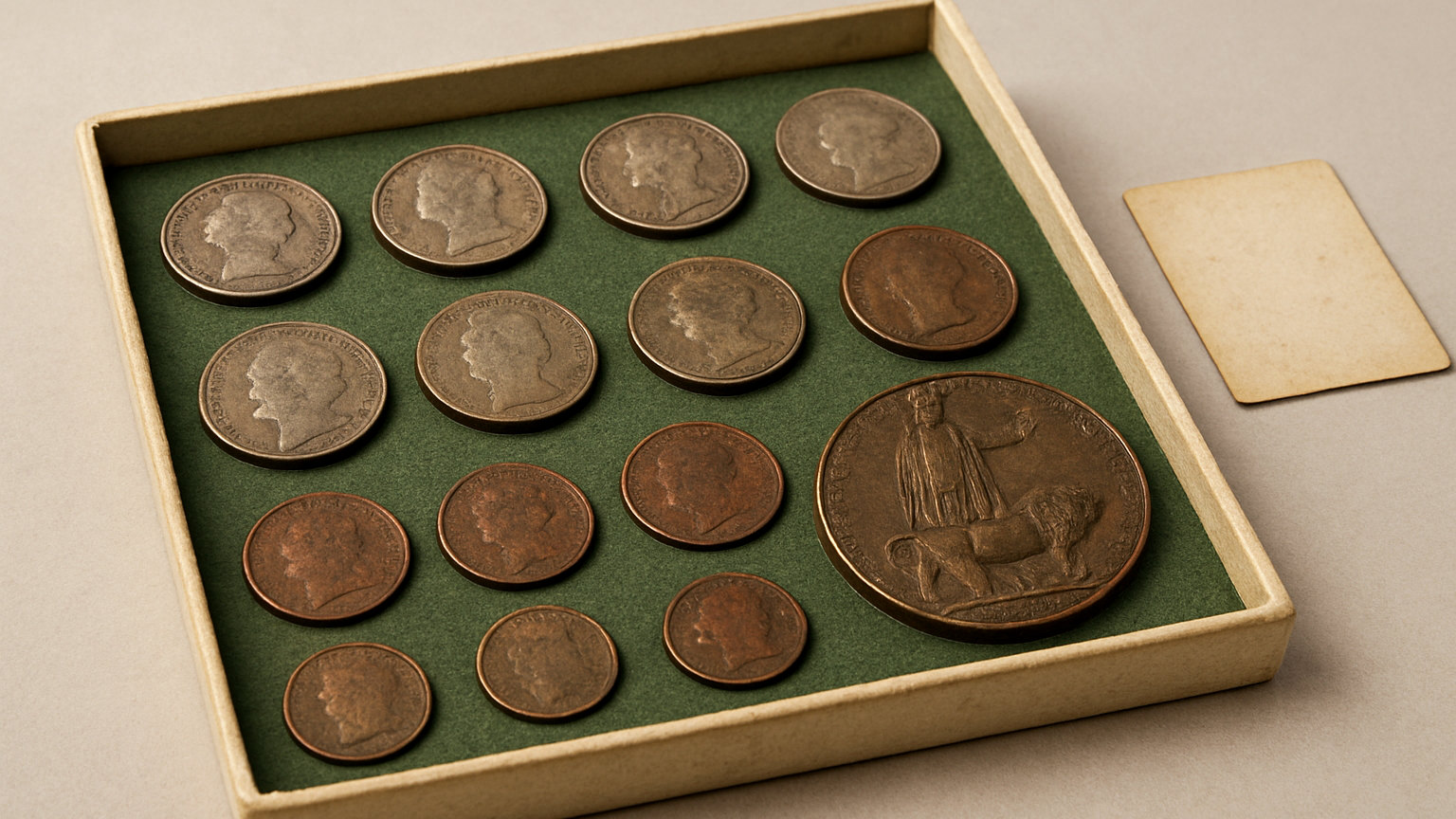
Sort and list, before approaching anybody. Separate by country, then by denomination, then by date, handling everything by the edges only.
Record each piece with date, denomination, mint mark, metal and any obvious variety. Photograph anything that looks scarce or unusual. This is tedious and it is exactly what converts a box into a collection somebody can assess.
How do you spot the pieces that matter?
By checking dates and mint marks against a catalogue rather than assuming. Scarce dates look identical to common ones, and mint marks are small enough to be missed entirely.
Set aside anything in high grade with original surfaces, anything gold, anything with a scarce date or mint, and anything you cannot identify. Those are the pieces that need individual attention rather than being sold in bulk.
Should the collection be split?
Usually yes, by route rather than by value. Good individual coins deserve a specialist auction or a dealer who knows the series. Bulk ordinary material sells better as a lot.
The exception is a coherent collection built around a theme, which may be worth more together because the assembly represents work somebody else would otherwise have to do. Ask a specialist whether that applies before breaking anything up.
Where should good coins go?
To a specialist numismatic auction or a dealer in that series. General salerooms frequently catalogue coins in mixed lots and sell them to the trade well below their worth.
Specialist sales reach collectors who compete with each other, which is what produces strong prices. The commission is higher and the result is usually considerably better, particularly on anything scarce.
What about bullion coins?
Gold sovereigns and similar pieces have a metal floor, so they can be sold to a bullion dealer quickly at a percentage of spot price. Ask what percentage is being offered.
But check dates and mint marks first. A scarce date sold as bullion loses whatever premium it carried, and that premium can be a large multiple of the metal value. Never sell gold coins by weight without checking each one.
How do you handle medals?
Keep groups together, always, since a group tells a service story that the individual medals do not. Never split a group to sell pieces separately.
Research the recipient before selling, since documented research adds real money by removing work for the buyer. Include copies of medal roll entries, service records and anything else you have found, and keep original ribbons and mounting with the medals.
What should you never do?
Clean anything. This is the single most costly mistake and it applies to coins, medals and tokens equally. A cleaned piece is described as damaged regardless of how bright it looks.
Also avoid pressing, polishing or tidying in any way. Take everything to a dealer exactly as found, dirt included, since they would far rather see original surfaces than improved ones.
How many offers should you get?
Two or three at minimum, from people who specialise in what you have. Offers vary considerably because dealers have different customers and different stock needs.
Be wary of anyone who wants to take everything including the worthless bulk without separating it, since that usually means the good pieces subsidise the clearance. Ask them to identify which pieces they are paying for.
What paperwork should you keep?
Your catalogue, the photographs, and a record of what was sold to whom for how much. Provide provenance to the buyer where you have it, since it adds value permanently.
Keep your records afterwards rather than discarding them, since questions arise years later and a contemporaneous list settles them. Photograph everything before it leaves your possession, which is the single most useful precaution in any sale.