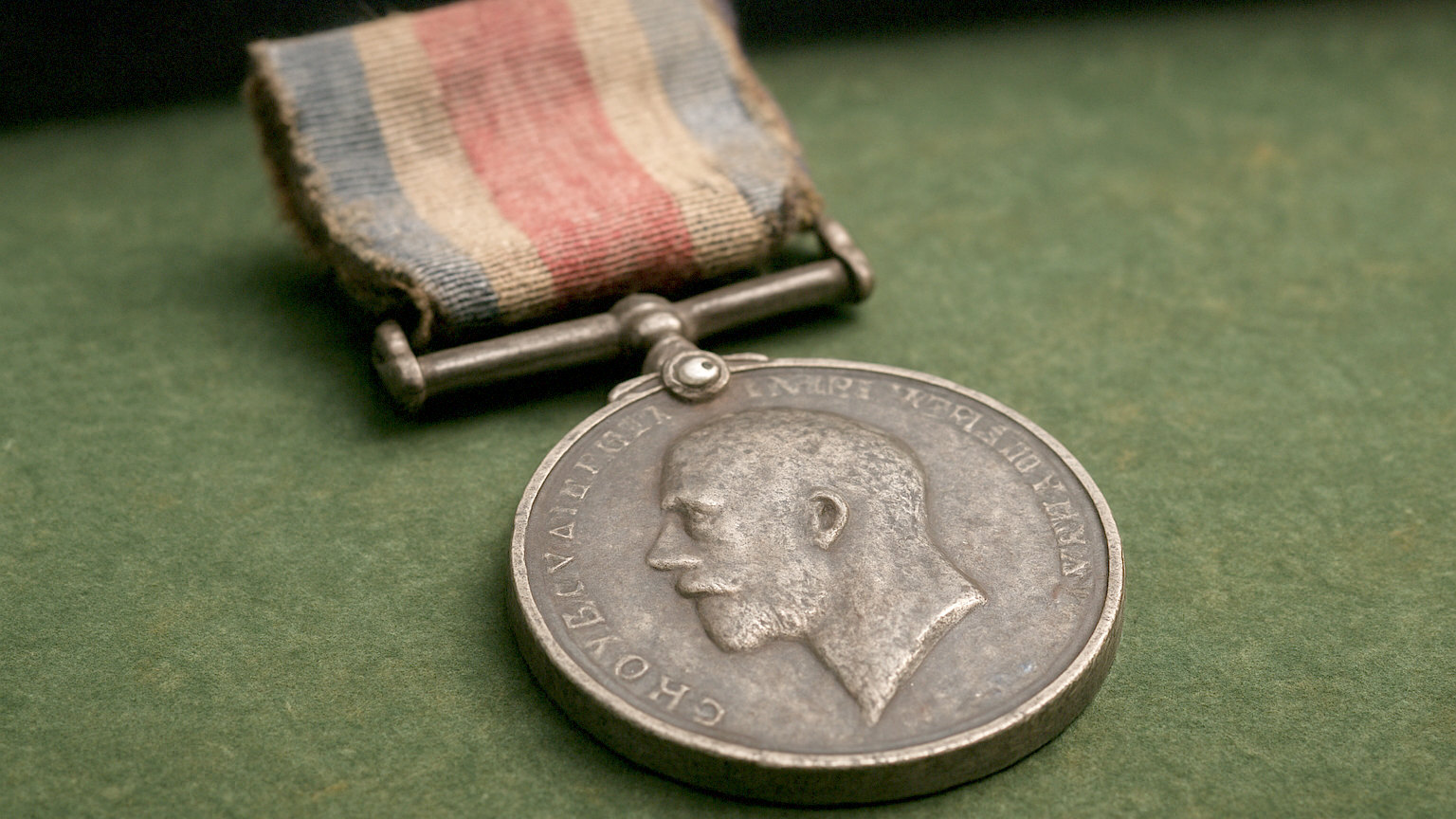
Military medals are unusual among antiques because a great many of them name the person they were awarded to. The rim carries a rank, a name, a number and a unit, which means the object can be traced to an individual and a documented service record. That research is what transforms a small piece of metal into a history, and it is what most of the value rests on.
What is on the rim?
Typically a service number, a rank, a surname and initials, and a regiment or unit, impressed or engraved around the edge. Formats vary considerably by campaign and by period, and some medals were issued unnamed.
Read it under raking light with magnification, since rims wear from handling and from rubbing against other medals in a group. Record exactly what is there including punctuation and abbreviations, and photograph it by rolling the medal slowly under angled light.
How do you trace the recipient?
Start with medal rolls, which are the official lists recording who was entitled to which award. These survive for most campaigns and are increasingly digitised, and they confirm that the naming on your medal matches the official record.
From there move to service records, unit war diaries and casualty records. The service number is usually the most reliable search key, since names recur constantly and numbers do not. Regimental museums hold material that is not online and are often extremely helpful.
What is a medal group and why does it matter?
Several medals awarded to one person, mounted together as they were worn. A group is worth considerably more than the same medals separated, because it tells a complete service story.
Check that every medal in a group is named to the same person, since groups are assembled from unrelated medals to increase value. Compare the naming style, the wear and the toning across all pieces. Inconsistency in the lettering or a medal in noticeably different condition is a warning.
How do you spot a renamed medal?
Look at the rim surface itself. Removing original naming requires machining away metal, which reduces the rim thickness and often leaves it slightly flattened or narrower than it should be.
Compare the rim depth against a known genuine example of the same medal. Look for lettering that is differently spaced, differently shaped, or cut rather than impressed where the issue was impressed. Any sign of file marks, polishing on the rim alone, or a rim that has lost its original edge profile should be treated seriously.
What affects value most?
Who the recipient was and what they did. A medal to a man who was present at a famous action, who was wounded, decorated or killed, or who served in an unusual unit is worth a multiple of the same medal to an ordinary soldier.
Rarity of the campaign and of any clasps fitted matters, as does the unit. Casualty medals and those with documented research attached command premiums. Condition matters less here than in coins, because these were worn objects, though heavy polishing does reduce value.
Should medals be cleaned or remounted?
Not cleaned. Polishing removes detail from the design and can erase rim naming entirely, which destroys the entire research value of the piece. Original toning is expected and preferred.
Original mounting and ribbons should be kept even when tattered, since they are part of the object as worn. If a group must be remounted for display, keep the original ribbons and mounting bar with the medals rather than discarding them.
How should research be recorded?
Keep everything together with the medals: copies of the medal roll entry, service papers, unit diaries, photographs and any correspondence with family or a regimental museum.
Documented research adds real money at sale, because it removes work and doubt for the next owner. Write down where each document came from as well as what it says, so that a future researcher can verify it rather than taking it on trust.