Copper and bronze coinage is the most commonly encountered and the most commonly mishandled. It corrodes in ways silver does not, one of those ways is progressive and will destroy a coin, and the patina that collectors value is exactly what most people want to remove. The rules are different enough to be worth learning separately.
What is the difference between copper and bronze?
Copper coinage is essentially pure copper. Bronze is copper alloyed with tin and zinc, adopted later because it is harder, wears better and produces a sharper strike.
The change happened at a documented point in most coinage systems, which makes the metal itself a dating feature. Bronze coins are generally slightly lighter and harder than the copper coins they replaced, and the surfaces survive better.
What does good patina look like?
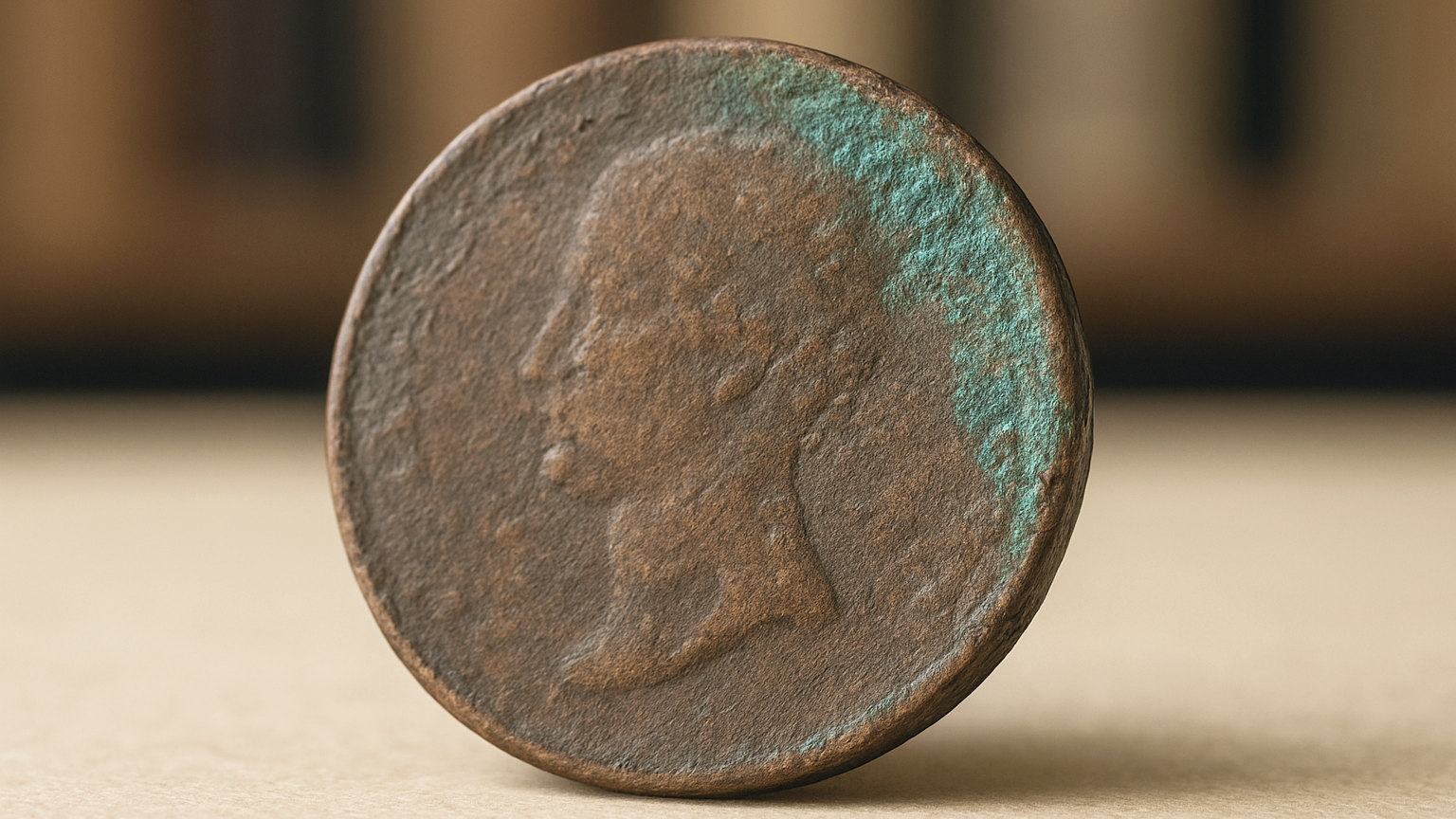
An even, stable, dark brown surface, sometimes with hints of red or purple showing through. It forms slowly and it protects the metal beneath.
Collectors value it highly, and an evenly toned copper coin is worth considerably more than one that has been cleaned to bare metal. Bright red original mint colour on an uncirculated coin is prized separately and is quite different from a coin that has been polished bright.
What is bronze disease?
Active corrosion, appearing as light green powdery spots that spread and eventually eat through the coin. Unlike stable patina, it is progressive and it will not stop on its own.
It is the one situation where intervention is genuinely necessary. Isolate the affected coin immediately, since it can spread to others stored nearby, and take advice from a conservator or an experienced dealer. Do not simply scrape the spots off, which leaves the underlying problem untouched.
How do you tell it from harmless verdigris?
By texture and behaviour. Stable green deposits are hard, dark and adherent. Bronze disease is pale, powdery and light, and it reappears after being brushed away.
Check by examining under magnification and by looking at whether spots have grown between inspections. Store any suspect coin separately and dry, since humidity drives the reaction. Low humidity storage is the single most effective preventive measure.
How is condition graded?
On the same scale as any coinage, but the high points wear faster because copper is soft. Learn where the design stands proudest on the specific type, since that is where wear appears first.
On a portrait that usually means the cheekbone, brow and hair. On the reverse it is whatever stands highest in the design. Compare against photographic grading guides for that exact coin rather than working from a written definition, since copper grading is harder to judge than silver.
Why should you never clean one?
Because cleaning removes patina permanently and leaves a surface that retones unevenly and unattractively. A cleaned copper coin is treated as damaged regardless of appearance.
The change is obvious to anyone who handles the material, since cleaned copper has a flat pinkish brightness quite unlike natural colour. Soil can be removed by soaking in distilled water with no rubbing whatsoever, and nothing beyond that should be attempted.
What creates value in copper coinage?
Scarce dates and varieties, high grade, and original surfaces. Because these coins circulated heavily, examples surviving in high grade with original colour are far scarcer than the mintage figures suggest.
Check dates and mint marks against a catalogue before assuming a coin is common, since small differences between dies create varieties with substantial premiums. An inherited jar of pennies occasionally contains one worth many times the rest, and the only way to find out is to look properly.
How should they be stored?
Dry above everything, in inert holders, and individually so coins cannot rub against each other. Humidity is what drives active corrosion, so a stable dry environment matters more than any other precaution.
Avoid soft flexible plastics containing plasticisers, which break down over time and leave a green sticky residue easily confused with corrosion. Silica gel in a cabinet helps considerably in damp conditions.
What should you do with an inherited jar?
Sort by date and denomination before doing anything else, handling by the edges only. Check each date and mint mark against a catalogue rather than assuming common coins.
Set aside anything with green powdery spots into separate dry storage immediately, since bronze disease spreads. Take anything that looks scarce to a dealer exactly as found rather than cleaning it first.