Campaign medals follow rules. There is a correct order in which they are worn, ribbons identify each award, and a genuine group belonging to one person will conform. A group in the wrong order has usually been assembled from unrelated medals, which is worth knowing before paying for a group price.
What is the order of wear?
Gallantry awards first, closest to the centre of the chest, followed by campaign medals in the order the campaigns occurred, then long service and good conduct awards, then any foreign awards last.
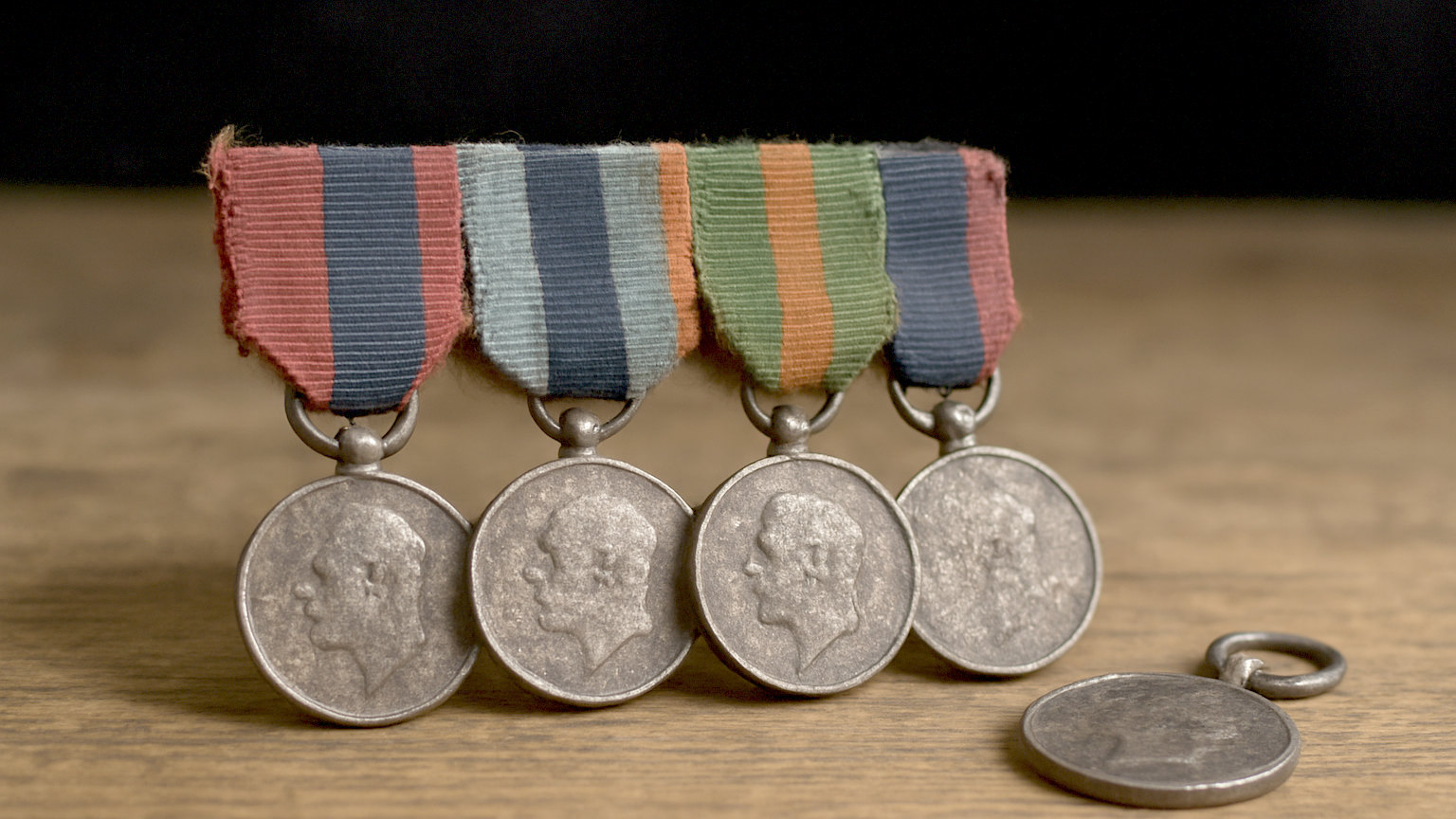
Worn on the left breast, the sequence runs from the wearer right to left, so the most senior award sits nearest the centre. A group mounted in a different order should prompt questions, since it suggests the medals were put together by someone unfamiliar with the convention.
How do ribbons identify a medal?
By their colour pattern, which is unique to each award. Ribbons are the quickest way to identify a medal at a glance and are illustrated in every reference work.
Original ribbons fade and fray, and replacements are readily available, so a fresh ribbon on an old medal is normal rather than suspicious. Keep any original ribbon even when replaced, since it belongs with the medal. Check that each ribbon actually matches its medal, since mismatches indicate later assembly.
What are clasps and bars?
Metal bars attached to the ribbon naming a specific action or period within a campaign, awarded to those present at that engagement. A medal may carry several.
Clasps add substantially to value, particularly scarce ones awarded to few recipients. Check that the clasps are correctly ordered, with the earliest at the bottom nearest the medal, and that they are properly attached rather than loosely added. Clasps are frequently added to increase value, so verify entitlement against the medal roll.
What is court mounting?
A method of mounting where the medals are fixed to a backing board with the ribbons stretched flat, so the group does not swing. It is standard for formal wear.
Swing mounting, where the medals hang loose from a bar, is the older arrangement. Neither is wrong, and remounting is common and acceptable. What matters is that any original mounting and ribbons are kept with the group rather than discarded when it is remounted.
How do you verify a group?
By checking the naming on every medal rim against the medal rolls, which are the official lists recording entitlement. All medals in a genuine group should be named to the same person.
Compare the naming style, the lettering and the degree of wear across all the medals. Inconsistency in the impressed lettering, or one medal in noticeably different condition, is a warning. Verify the entitlement to each medal and each clasp, since assembled groups are common.
How do you spot a renamed medal?
By examining the rim itself. Removing original naming requires machining metal away, which reduces the rim thickness and frequently leaves it flattened or narrower than it should be.
Compare against a known genuine example of the same medal. Look for lettering that is differently spaced or cut rather than impressed where the issue was impressed, and for file marks or polishing confined to the rim. Any of these should be taken seriously.
What drives the value?
The recipient and what they did. A medal to someone present at a famous action, wounded, decorated or killed, or serving in an unusual unit, is worth a multiple of the same medal to an ordinary soldier.
Scarce clasps, scarce units and documented research all add. Condition matters less than in coins, since these were worn, though heavy polishing reduces value and can erase rim naming entirely, which destroys the research value.
How should a group be kept?
Together, with all research, original ribbons and mounting. Never split a group to sell medals individually, since the group tells a service story that the parts do not.
Do not clean them. Polishing removes detail and can obliterate the naming that makes the group traceable. Store in a dry place away from light, which fades ribbons, and keep copies of the medal roll entries and service records with the medals themselves.