Inherited libraries create a particular problem: they are large, they look valuable, and the overwhelming majority of the contents are worth very little. Value in books concentrates sharply, and the practical task is finding the few titles that carry it rather than assessing everything equally.
Why is most of a library worth little?
Because ordinary books were printed in enormous numbers and survive in quantity. Common editions of standard works, book club editions, and reading copies without jackets have almost no resale value however handsome they look.
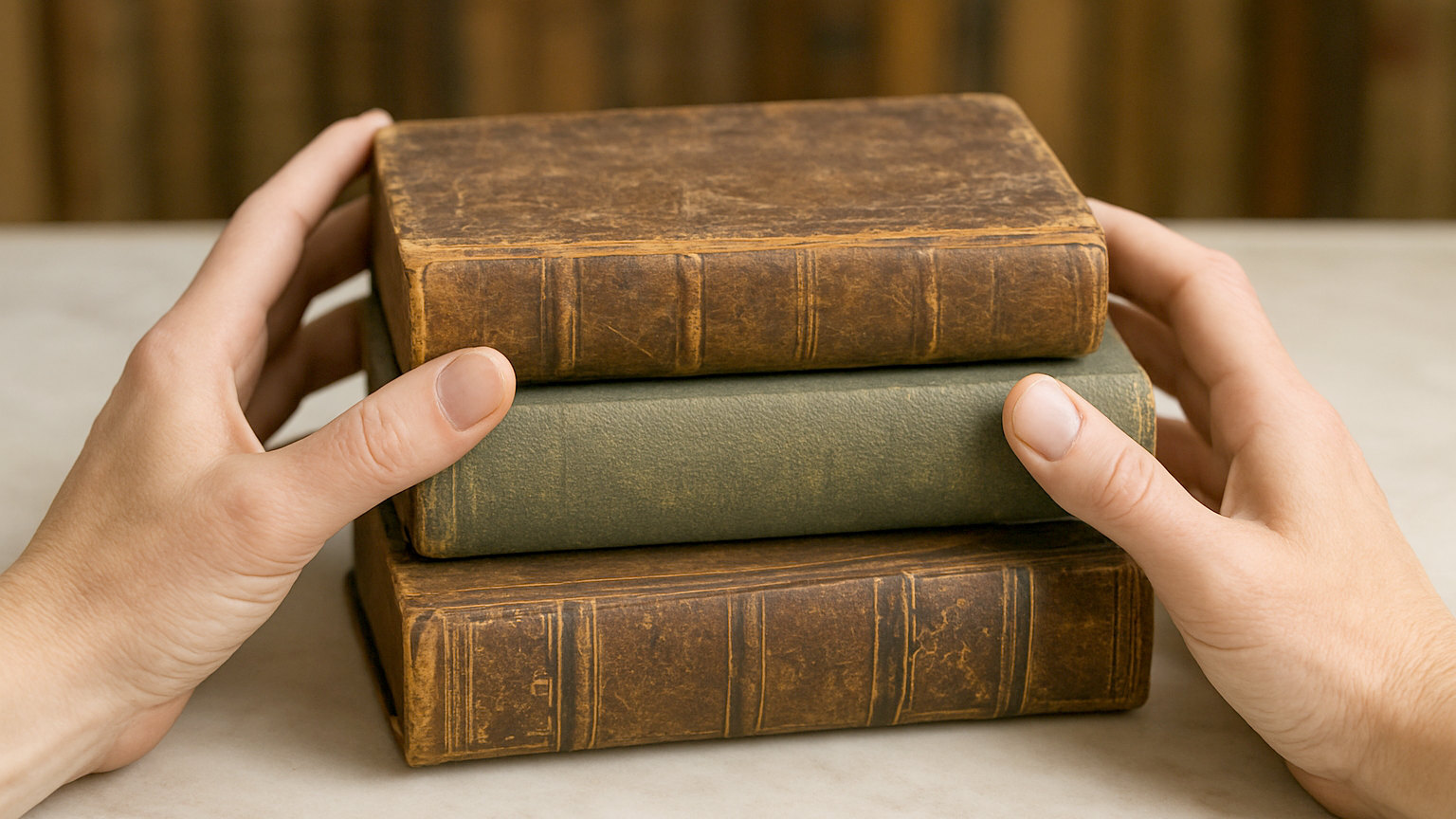
Leather bindings mislead people constantly. A shelf of uniformly bound sets frequently looks like the most valuable thing in a house and is frequently among the least, since decorative bindings were produced commercially for exactly that impression.
Where does the value concentrate?
In first editions of collected authors, in books with intact dust jackets, in illustrated books with all their plates, in association copies inscribed by the author, and in books on subjects with active collector bases.
Local history, natural history, travel, science, and anything with fine plates or maps all have markets. So does anything with genuine scarcity. A single title can easily be worth more than the rest of a room combined.
How should you sort a collection?
By separating out anything that might carry value before deciding what to do with the bulk. Look for early dates, dust jackets, inscriptions, plates and maps, and unusual subjects.
Check the copyright page of anything by a known author for edition information. Set aside anything signed. Do not throw away anything with loose plates or maps inside, since those may be worth more than the volume. Photograph the shelves before moving anything.
How do you check a title?
By searching completed sales rather than asking prices, since booksellers list optimistically and unsold listings persist indefinitely. Note the exact edition, printing and condition of each comparable.
Condition drives book prices sharply, and the trade grading runs from fine downwards through near fine, very good, good, fair and poor. Note that good in this vocabulary means well worn, which is below what most collectors want.
What are the selling routes?
A specialist bookseller for good individual titles, a book auction for anything notable, a general saleroom for mixed lots, and online marketplaces for mid range material you are willing to list and post yourself.
For the bulk, a bookseller who buys quantities, a charity, or a house clearance. Match the route to the material rather than sending everything one way, since a good title lost in a box lot is the commonest way value disappears from a library.
What should you expect from a bookseller?
An offer well below retail, since they must sell on at a profit and may hold stock for years. Books are slow moving and take shelf space, so margins are necessarily wide.
A specialist in the subject will pay more than a generalist because they know the market and have customers. Get two or three offers, and be wary of anyone who wants to take everything including the worthless bulk without separating it, since that usually means the good items subsidise the clearance.
Should you have it catalogued?
For a substantial or specialist library, yes. A professional cataloguer or valuer will identify titles you would miss and produce a document that lets you sell intelligently.
For an ordinary domestic library it is rarely proportionate. In that case sort it yourself, research the twenty most promising titles, and take those to a specialist while dealing with the remainder separately.
What should you avoid?
Cleaning, repairing or rebinding anything, all of which reduce value. Do not remove bookplates, do not tape torn jackets, and do not discard a jacket because it is damaged, since on many books it carries most of the value.
Do not break up sets or remove plates and maps to sell separately, however tempting. And do not let anything be cleared before somebody knowledgeable has looked, since books are among the items most often thrown away by mistake.