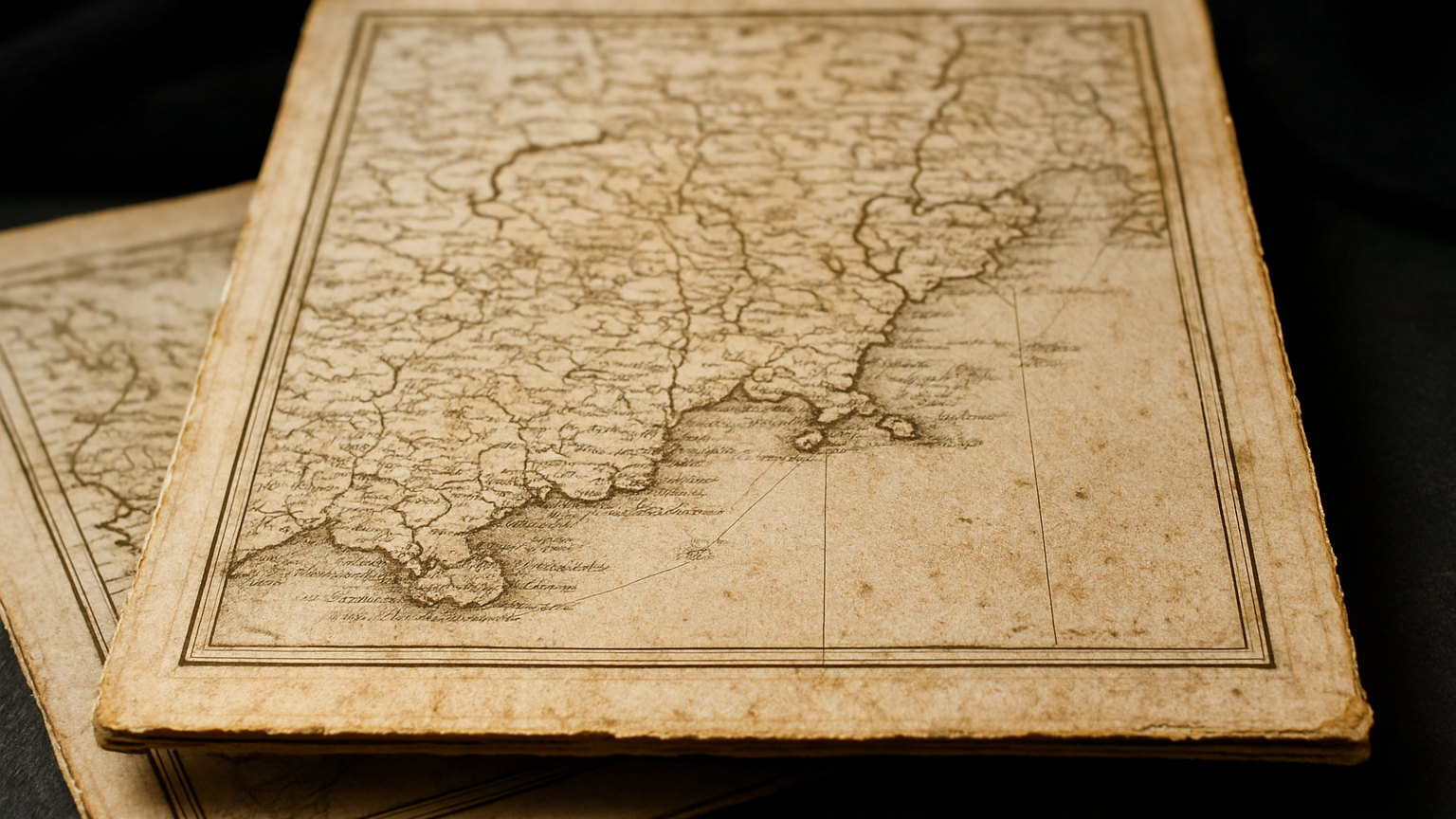
Decorative maps sell well, which means a great many reproductions circulate, some framed and aged convincingly enough to fool a casual buyer. The good news is that the printing methods used for originals leave physical traces in the paper, and those traces are visible with nothing more than a window and a magnifying glass.
What is a plate mark?
The impression left in the paper by the edge of the copper plate during printing. Engraved and etched maps were printed under enormous pressure, which pressed the plate edge into damp paper and left a visible indentation slightly larger than the image.
Look for a rectangular embossed line around the printed area, and feel for it with a fingertip. It should be a genuine physical depression that you can detect from the back of the sheet as well as the front. Modern reproductions printed by other methods have no plate mark, though some fake one by embossing, so check that the indentation has the slightly irregular quality of a real impression.
What does the paper tell you?
A great deal. Older paper was made by hand on a wire mesh mould, so holding it to the light reveals a pattern of fine parallel lines called laid lines, crossed at wider intervals by heavier chain lines.
Many sheets also carry a watermark, a design worked into the mould that shows as a lighter area when backlit. Watermarks can often be traced to a particular papermaker and period, which dates the sheet. Modern machine made paper shows none of this, appearing uniform when held to light.
How do you check the printing method?
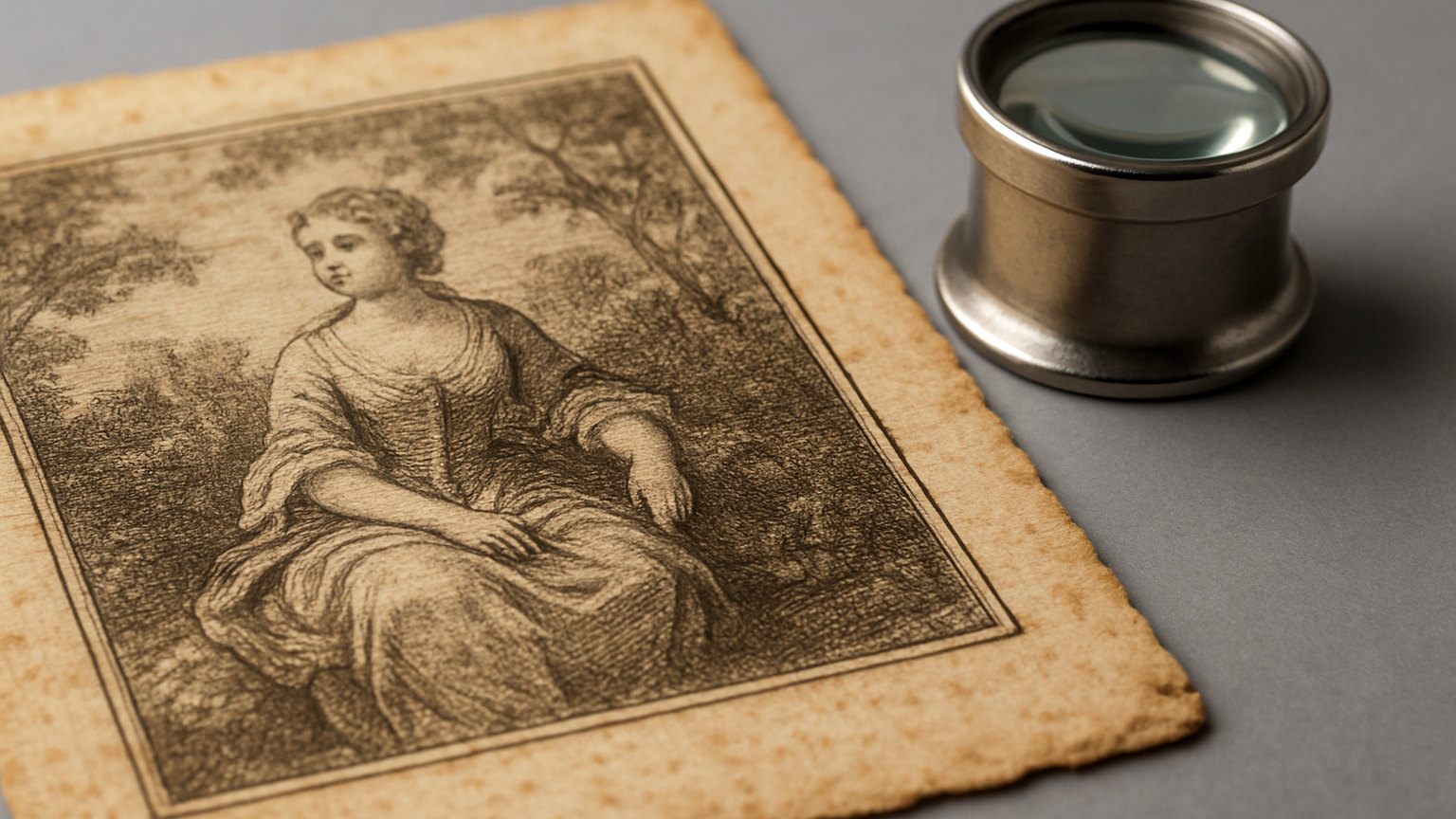
With magnification. Line engraving produces lines of varying width made by a cutting tool, and the ink sits very slightly proud of the paper surface because it was pressed into the paper from the recesses of the plate. You can sometimes feel this.
Modern reproductions are usually printed photographically or digitally, which under magnification shows a regular pattern of dots or a mechanical screen. Look at a solid black area and at a shaded area. Continuous varied lines indicate an original; a dot pattern indicates a copy.
What about hand colouring?
Many original maps were issued uncoloured and coloured later by hand, sometimes at the time and sometimes recently. Original period colour is generally softer, sits slightly unevenly, and may have faded differently in different pigments.
Look at whether the colour follows the engraved lines precisely or wanders slightly, and whether it has soaked into the paper fibres or sits on the surface. Modern colouring on a genuine old map is common and honest, and it should be described as later colour. It does affect value, so it is worth establishing which you have.
Does a fold mean anything?
Frequently yes, and it is a useful clue. Maps issued in atlases were folded along a centre line to be bound, so a genuine atlas map often shows a soft vertical centre fold with a slightly worn or reinforced edge where it was stitched.
Look for small stitch holes along the inner margin. Their presence is good evidence the sheet came from a bound volume. A sheet with no fold, no stitch holes and pristine margins may still be genuine if it was issued separately, but the absence is worth noting.
What condition issues affect value?
Trimmed margins are the most common problem, since a map cut down to fit a frame loses both the plate mark and any publication details printed outside the image. That reduces value considerably.
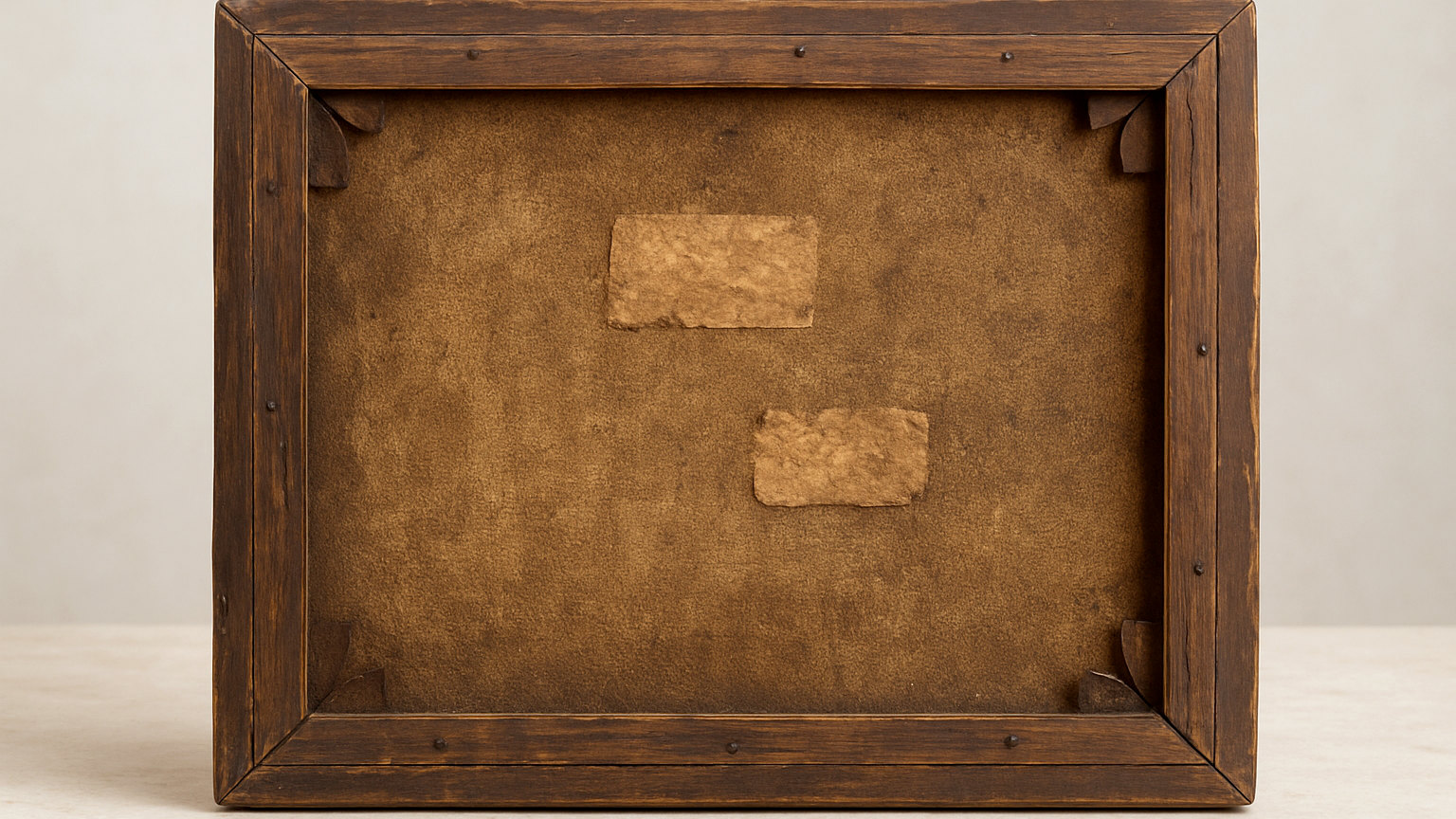
Foxing, which is brown spotting, tears, repairs, backing onto card and heavy staining all count against. Backing is particularly awkward because it conceals the reverse and makes conservation harder. Check the sheet out of its frame wherever possible, since frames hide exactly the problems you need to see.
What should you ask before buying?
Whether the sheet is an original impression of the period, whether the colour is original or later, and whether the margins have been trimmed. Ask for the answers in writing on the receipt.
Ask to see it out of the frame. A reputable dealer will agree without hesitation, since everything worth checking is either in the paper or in the margins, and both are concealed by a mount.