Books are among the most durable antiques when kept properly and among the most fragile when they are not. Paper and leather both respond badly to the conditions found in most houses, and the damage accumulates invisibly for years before becoming obvious. Almost all of it is preventable with a few simple habits.
How should books be shelved?
Upright, supported on both sides, with the shelf full enough that nothing leans. A book left leaning at an angle for years develops a permanent distortion in the spine that cannot be corrected.
Do not pack so tightly that a book cannot be removed without force. Very large or heavy volumes should lie flat rather than standing, since their own weight pulls the text block away from the binding. Never shelve a book fore edge down, which strains the binding at its weakest point.
How do you take a book off a shelf?
By pushing the volumes either side back slightly and gripping the middle of the spine, not by hooking a finger over the top of the spine and pulling.
That hooking habit is responsible for an enormous amount of damage, since it tears the headcap at the top of the spine, which is the most commonly damaged part of any leather binding. Once torn, it requires a bookbinder to repair properly.
What conditions should you avoid?
Damp above everything, since it causes mould, cockling of the paper and the deterioration of leather and adhesives. Avoid exterior walls, lofts, garages, basements and any room prone to condensation.
Heat and dry air are equally damaging, drying leather until it cracks, so keep books away from radiators and fireplaces. Direct sunlight fades spines within months and embrittles paper. Stable moderate conditions matter far more than any particular temperature.
What is red rot?
The powdery reddish deterioration of leather, caused by atmospheric pollution reacting with the tanning. It leaves a fine red dust on your hands and on the shelf below.
It cannot be reversed, though it can be slowed by consolidation treatments applied by a conservator. Do not apply leather dressings or oils in an attempt to fix it, since these frequently make matters worse, darken the binding and can transfer to the pages. Handle affected books as little as possible.
What is foxing and can it be removed?
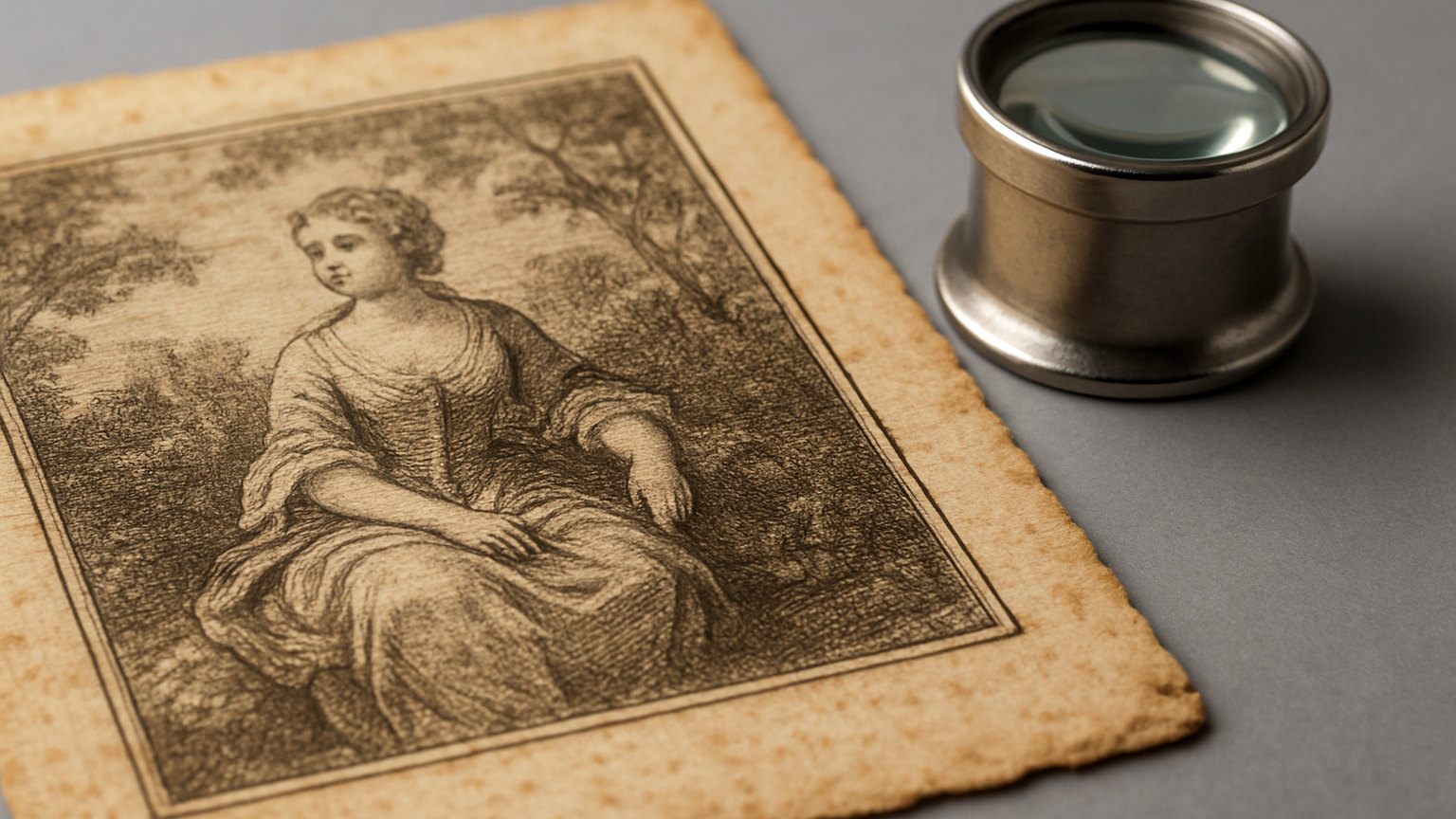
The brown spotting that appears on old paper, caused by a combination of impurities in the paper, moisture and fungal activity. It is extremely common and largely cosmetic.
Removal involves bleaching, which weakens paper and frequently leaves the sheet looking worse than the spots did. Leave it alone. Preventing further foxing by controlling humidity is far more useful than attempting to reverse what has already happened.
Should you clean an old book?
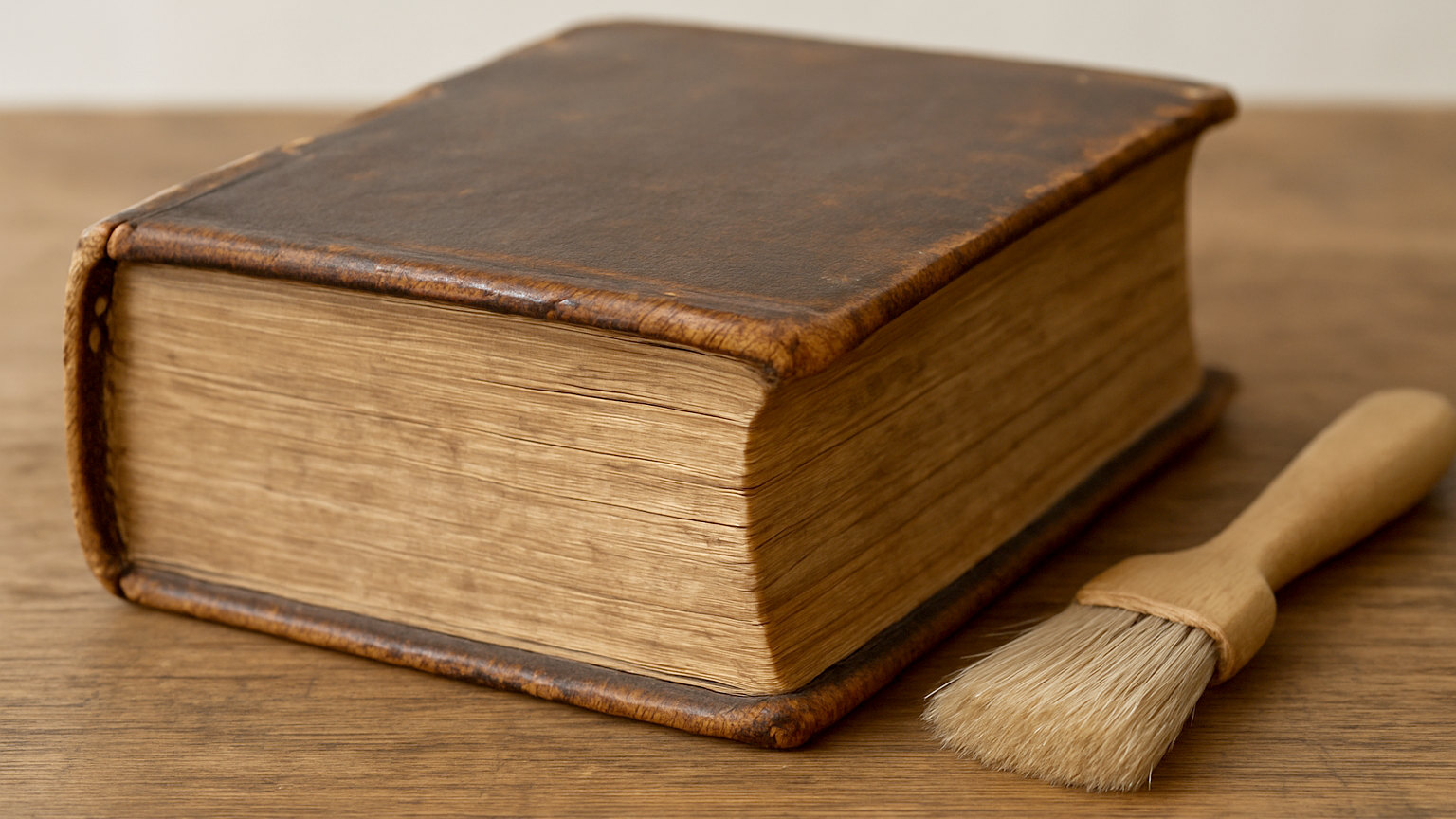
Only the outside, and only dust. Use a soft brush to remove dust from the top edge with the book closed firmly, brushing away from the spine so nothing falls into the text block.
Do not use water, solvents, erasers or any household cleaner on paper or leather. Do not attempt to repair tears with adhesive tape, which stains permanently and is very difficult to remove. Anything needing more than dusting should go to a bookbinder or paper conservator.
What should you do with a dust jacket?
Protect it, because on many books it accounts for most of the value. Fit a clear archival jacket cover, which supports the paper and prevents further chipping at the edges.
Never trim a jacket to fit, never tape a tear, and never discard a jacket because it is damaged. A tattered original jacket is worth far more than none at all. Keep any loose pieces with the book rather than throwing them away, since a competent restorer can reattach them.
Should a damaged binding be rebound?
Usually not, because collectors want the original publisher binding and a handsome later rebinding is worth less than a shabby original one.
Where a binding has failed completely, a conservator can reback a volume using the original spine and boards, which preserves what matters while making the book usable again. Ask specifically for a conservation repair rather than a rebinding, and confirm that original material will be retained.