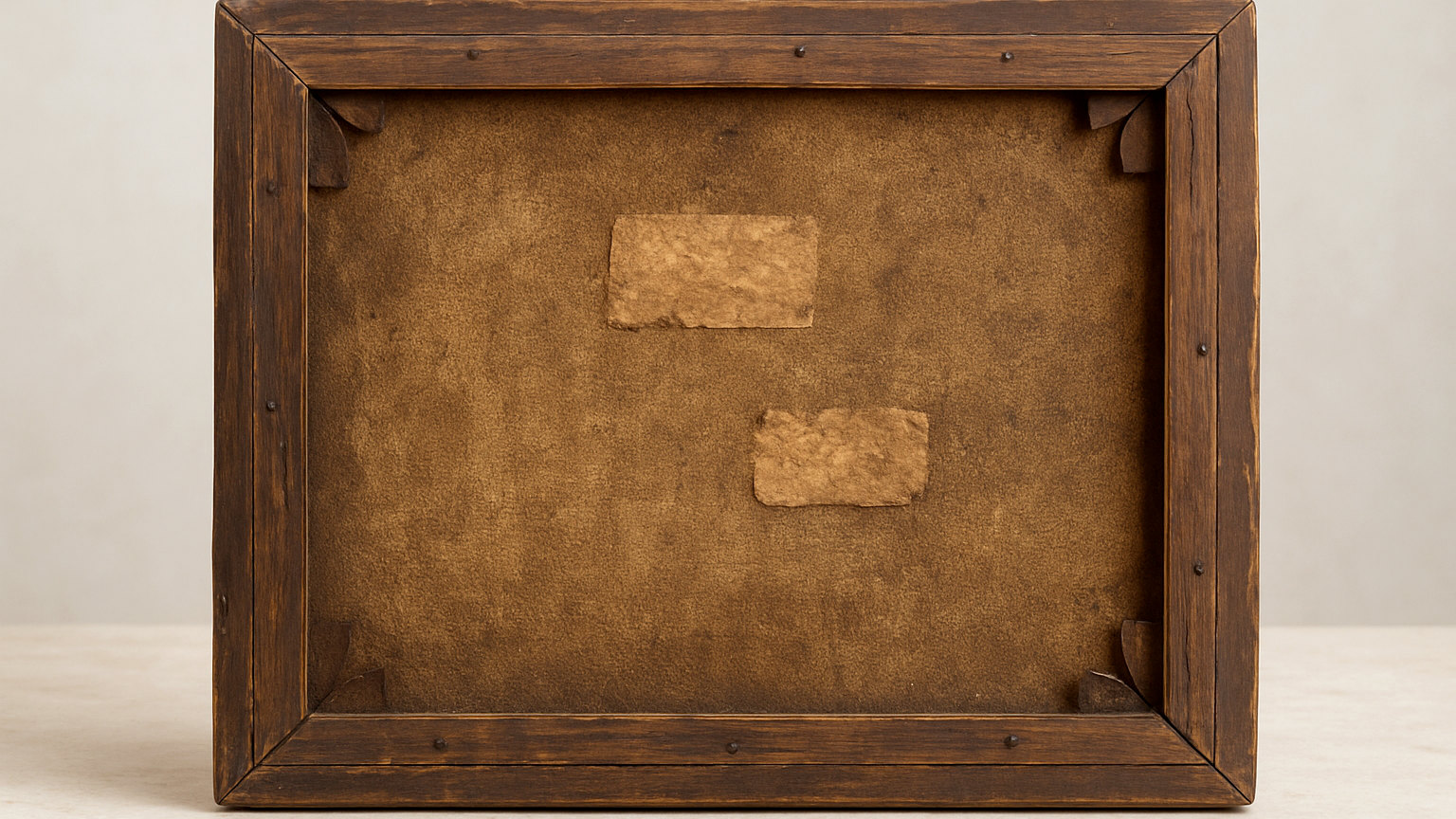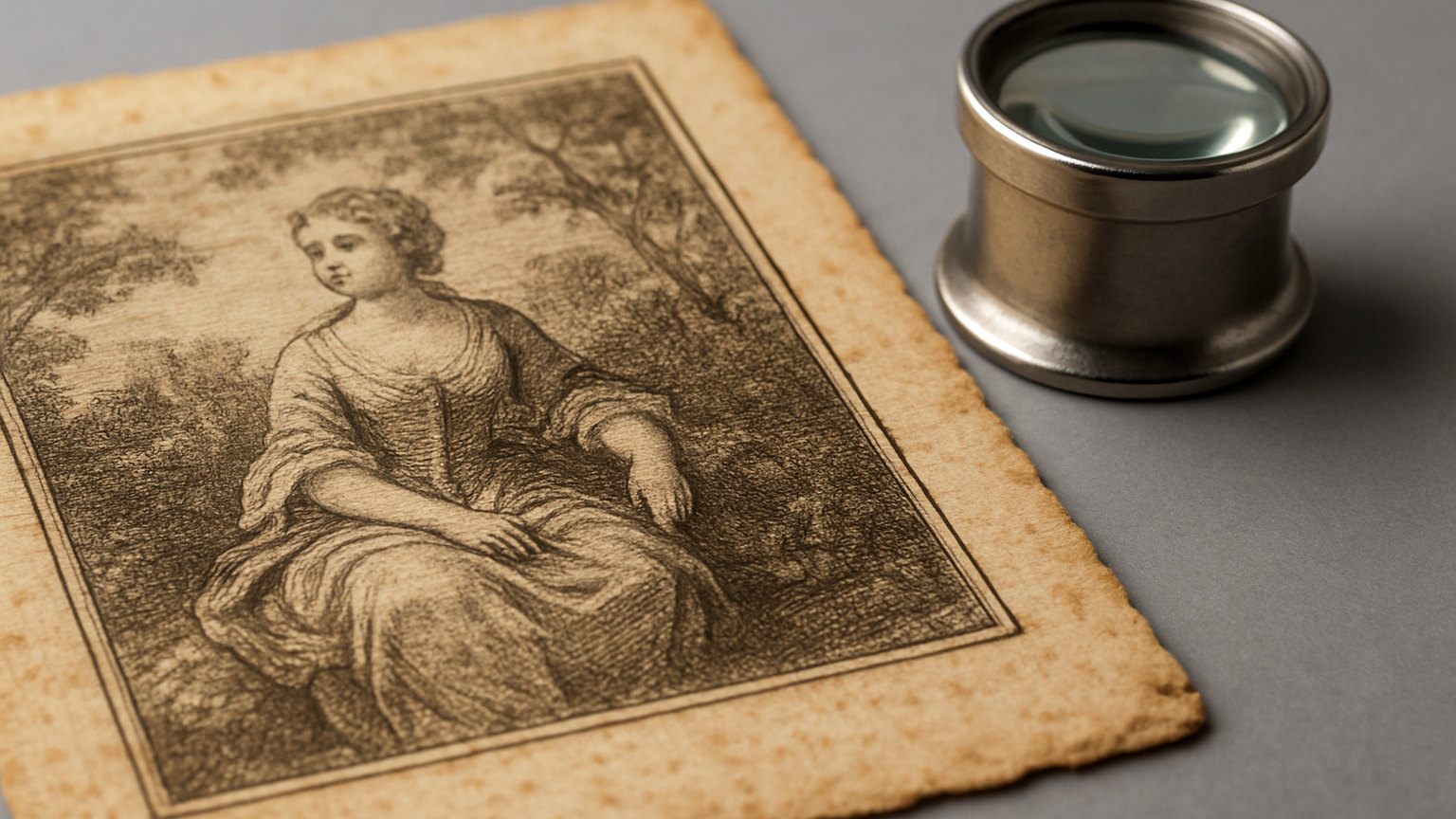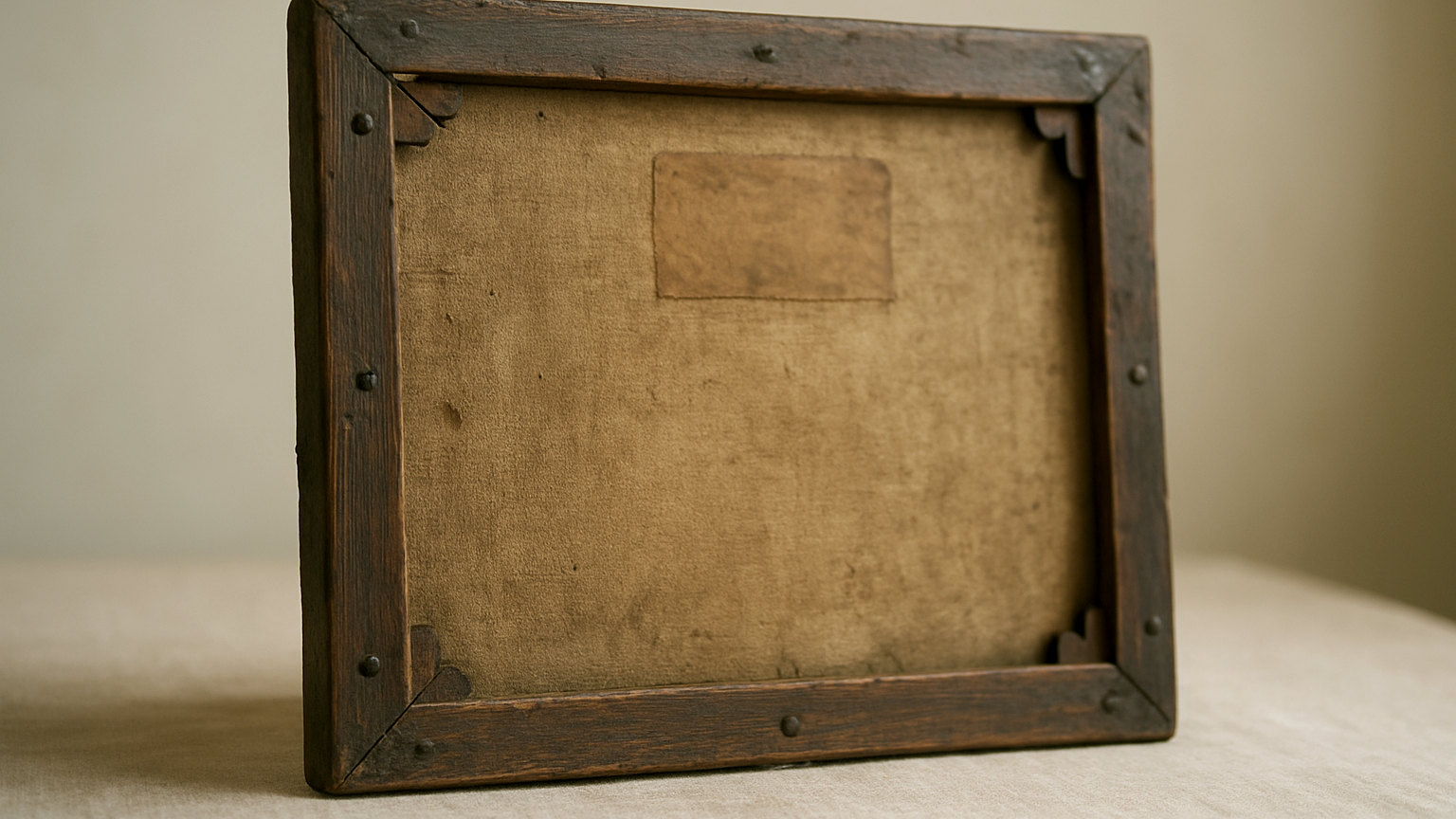
An unsigned painting is not an anonymous one. Pictures accumulate evidence throughout their lives, and almost all of it collects on the back where nobody looks. Working through it systematically frequently produces a date, a location and occasionally a name, without any signature at all.
Where do you start?
By photographing the entire reverse before touching anything, then the front square on. That record matters because labels get lost during any subsequent framing or restoration.
Then examine the back systematically: the stretcher, the canvas, every label, every stamp, every inscription and every stencilled number. Each is a separate line of enquiry and any one of them may be the decisive piece.
What do labels tell you?
Where the picture has been. Gallery labels, exhibition labels, framer stickers, auction stencils and shipping marks all record a stage in its history.
A gallery name and address can be traced through trade directories to a run of years. An exhibition label may lead to a catalogue naming the work and its artist. Never remove a label however tattered, since a fragment carrying part of an address is frequently traceable.
What is a colourman stamp?
The mark of the firm that supplied the prepared canvas or panel, stamped or stencilled on the reverse, giving a name and frequently an address.
This is among the most useful dating evidence available, since those firms traded at known addresses in known years. A colourman stamp gives a firm earliest possible date for the support and therefore for the painting on it.
What does the support itself tell you?
Period and place. Hand woven canvas shows slight irregularity in the threads; machine woven canvas is perfectly regular. Panel paintings can sometimes be dated from the timber and its preparation.
Look at the tacking edges for original tack holes, and count how many sets there are, since each restretching leaves its own. Old square cut tacks are a good sign. A canvas with a single set of modern staples has been restretched recently.
How does the subject help?
Enormously, and it is the part most people underuse. An identifiable building, a stretch of coastline, a ship, a costume or a piece of machinery all date and locate a picture.
Local history societies and archives will frequently identify a view from a photograph, and a topographical picture of a specific place attracts buyers from that place who pay well above the general market. Establishing the location is often worth more than establishing the artist.
What does style indicate?
A period and sometimes a school, though it must be used carefully since styles were revived and imitated. Look at the handling of paint, the palette, the composition and the treatment of light.
Compare against dated works in museum collections rather than relying on impression. Style narrows the field; it rarely settles a question on its own, and confident stylistic attribution without supporting evidence is how mistakes get made.
What should you do about a possible signature?
Look for one properly before concluding there is none. Signatures hide in dark areas, along edges, under later varnish and occasionally on the reverse.
Examine the whole surface under raking light and magnification. Do not attempt to clean an area to reveal a signature, since solvents remove paint as readily as varnish. A conservator can examine safely if it matters.
How should you record the research?
With a source for every fact. Note which directory, which archive, which catalogue produced each conclusion, since an attribution without a source cannot be defended or verified.
Keep the file with the picture permanently. Documented research adds real value at sale because it removes work and doubt for the buyer, and it lets somebody else check your reasoning rather than take it on trust.
When should you get an expert opinion?
When your research points somewhere specific and the sums would justify confirmation. Take your evidence with you rather than asking cold, since a specialist engages far more usefully with somebody who has already done the groundwork.
Be prepared for the answer to be that the picture is by an unidentified hand, which is the case for most surviving paintings. That is not a failure, and a good unsigned picture of an interesting subject sells perfectly well on its own merits.