Watercolours are the most fragile works of art most people own, and the damage they suffer is almost entirely preventable and entirely irreversible. A watercolour hung in a bright room will fade measurably within a decade, and no conservator can put the colour back. Understanding that changes how you treat one.
How do you tell a watercolour from a print?
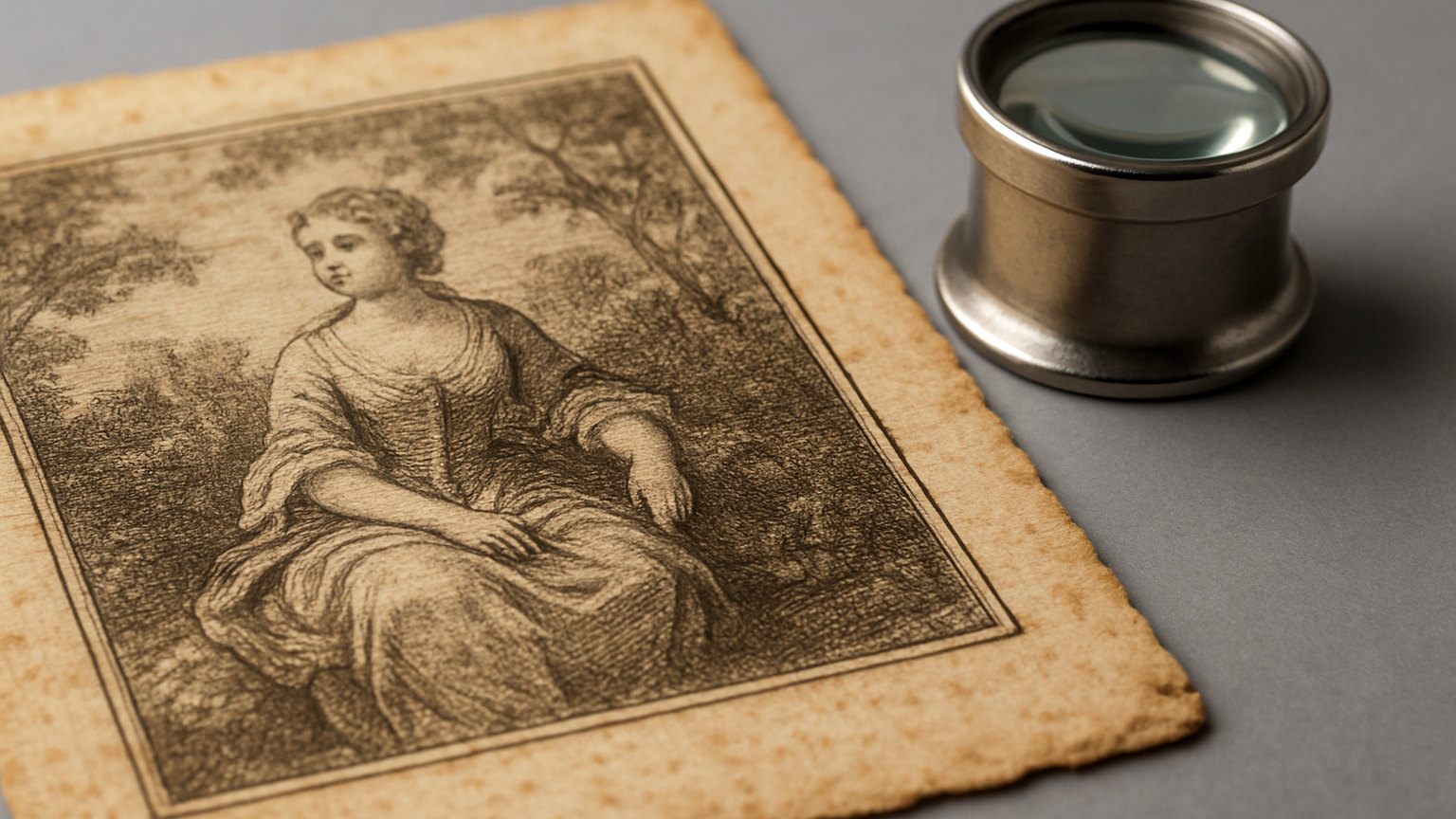
Under magnification, looking at a mid tone area. A watercolour shows pigment absorbed into the paper fibres with soft edges where washes met, frequently with slight granulation where heavier pigment settled.
A printed reproduction shows a regular pattern of dots or a mechanical screen. Look also at whether the paper texture shows through the colour, which it does on a genuine watercolour, and at whether brush edges vary in a way no printing process would produce.
What does the paper tell you?
Age and quality. Older paper was frequently handmade, so holding it to the light reveals laid lines and chain lines from the mould, and sometimes a watermark identifying the papermaker.
Watermarks can often be traced to a maker and a period, which dates the sheet and gives an earliest possible date for the work. Machine made paper appears uniform against the light. Check the edges too, since a genuine old sheet may have deckle edges rather than cut ones.
What is body colour?
Opaque watercolour, made by adding white to the pigment, used to give highlights and solidity where transparent washes could not. It sits on the surface rather than sinking in.
Look for it in highlights and in areas of dense colour, where it appears slightly raised and matt. Its presence is normal and is worth noting, since body colour is more vulnerable than transparent washes and can flake if the sheet is flexed.
Why is light so damaging?
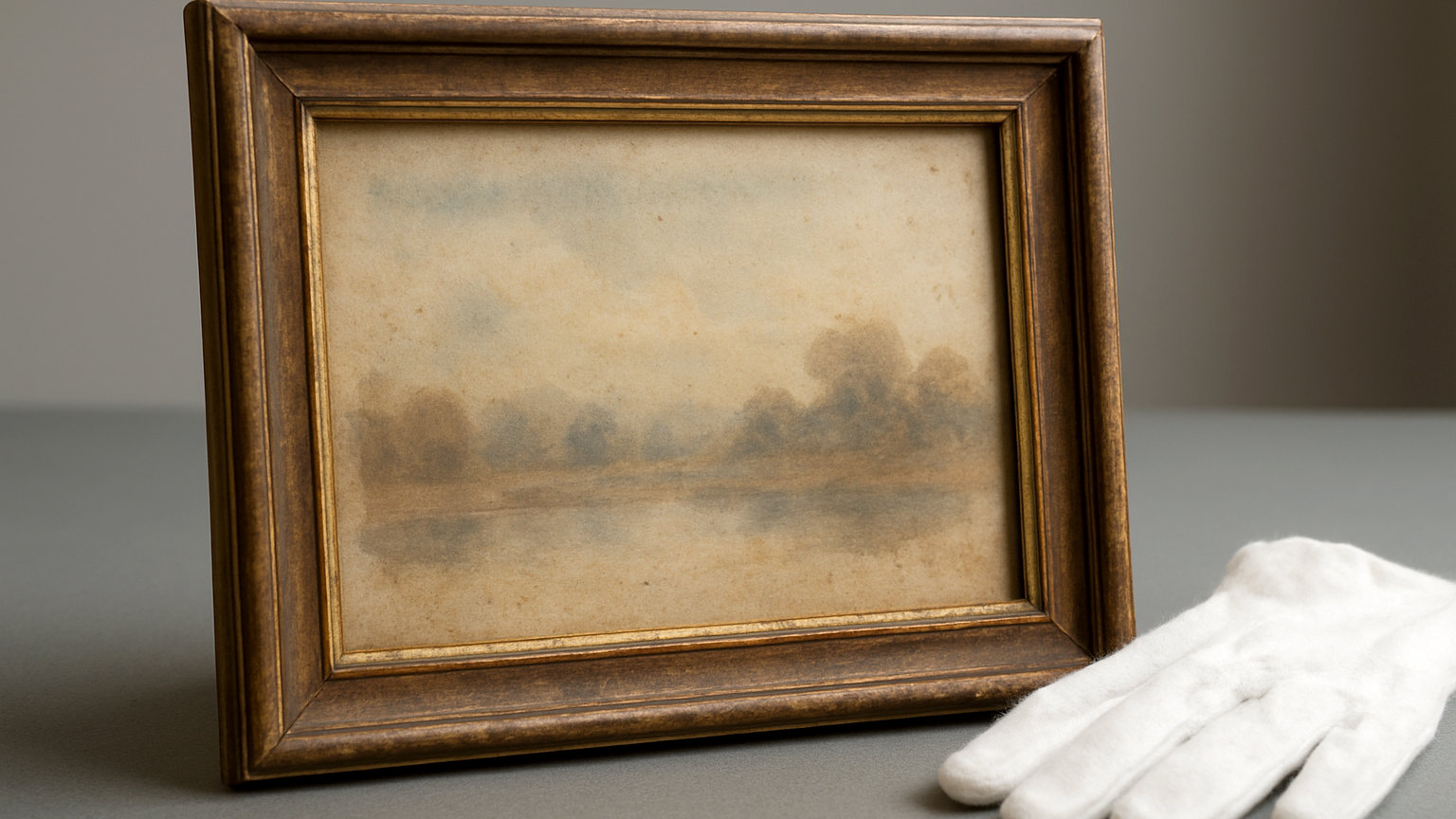
Because watercolour pigments are thin, unprotected by any varnish, and several traditional colours are fugitive, meaning they fade on exposure. The damage is cumulative and permanent.
Sunlight is worst but ordinary daylight and artificial light both contribute. Fading is frequently uneven, so a work may lose its blues and reds while browns survive, which distorts the whole image. Compare a small area under the mount, which has been protected, against the exposed sheet to see how much has already gone.
What is mount burn?
A brown discolouration where acidic mounting board has been in contact with the paper, appearing as a stained line following the mount opening.
It is extremely common on works framed decades ago, when acid free materials were not usual. The staining migrates into the sheet and is difficult to reverse. Any watercolour still in an old frame should be checked, since the damage continues as long as the acidic board remains in contact.
What is foxing and can it be treated?
Brown spotting caused by impurities in the paper reacting with moisture, and it is very common on old works on paper.
Treatment involves bleaching, which weakens paper and frequently produces a result worse than the spots. A paper conservator can sometimes reduce it safely, but the honest answer for most works is to leave it and control humidity instead. Never attempt any chemical treatment yourself.
How should one be framed?
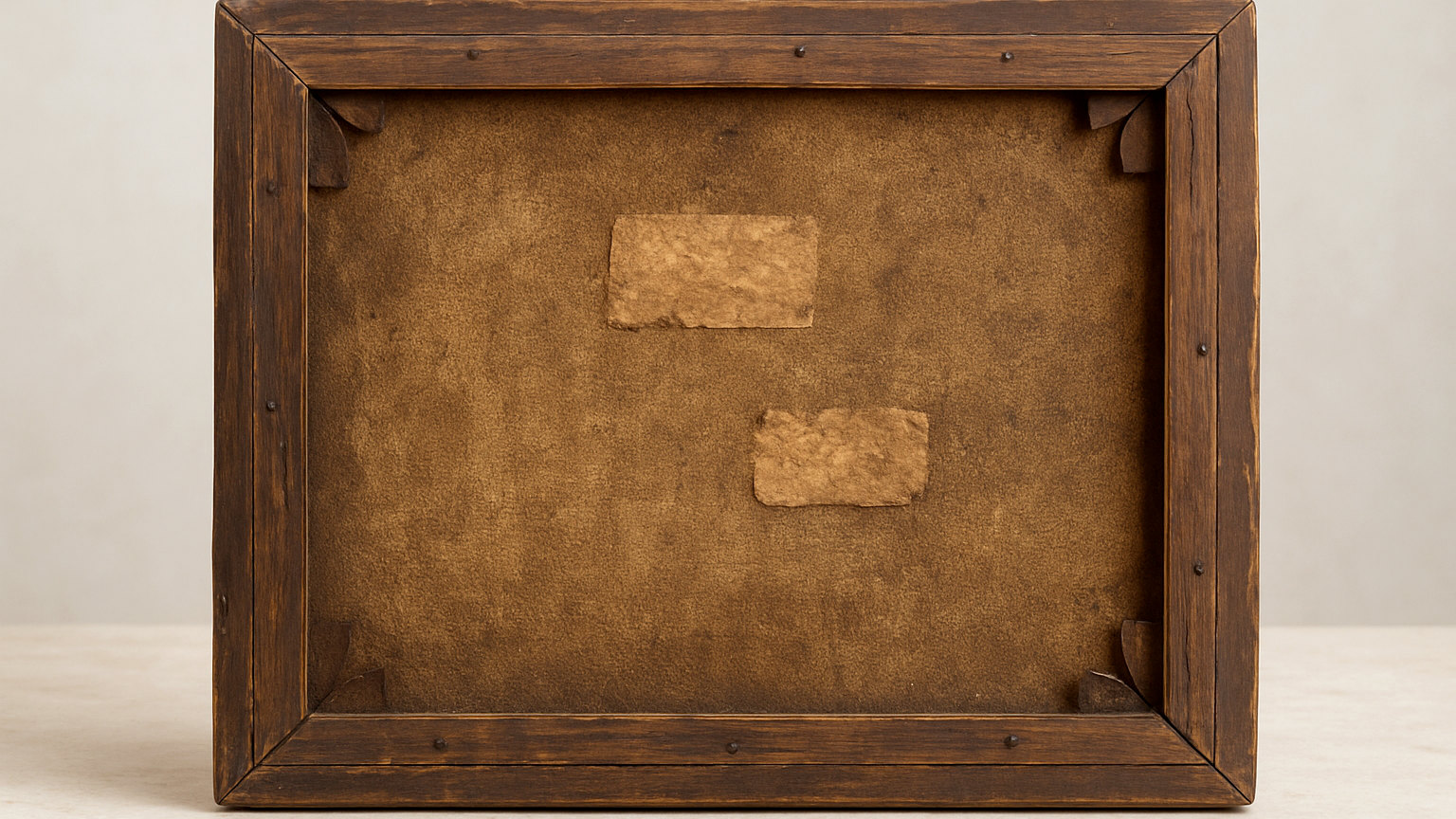
With conservation materials throughout. Acid free mount board, acid free backing, and the sheet hinged with reversible paste rather than taped or glued to anything.
Use glazing with ultraviolet filtering, and ensure the mount holds the sheet clear of the glass, since paper touching glass in a damp environment will stick and cannot be separated. Never trim a watercolour to fit a frame, and never use adhesive tape anywhere near one.
Where should it hang?
Out of direct sunlight, away from radiators and fireplaces, and on an interior wall rather than an exterior one prone to condensation. Low light levels genuinely matter.
Serious collectors rotate works on paper, displaying them for limited periods and storing them flat in the dark between times. That is not excessive caution; it is the only way to keep a watercolour looking as it does now for the next century.