Frames are routinely ignored, which is odd given that a good period frame can be worth more than the picture in it. They are also frequently not original to their contents, since pictures were reframed as fashions changed and frames were reused for whatever fitted. Assessing the frame separately is worth doing every time.
What are frames made of?
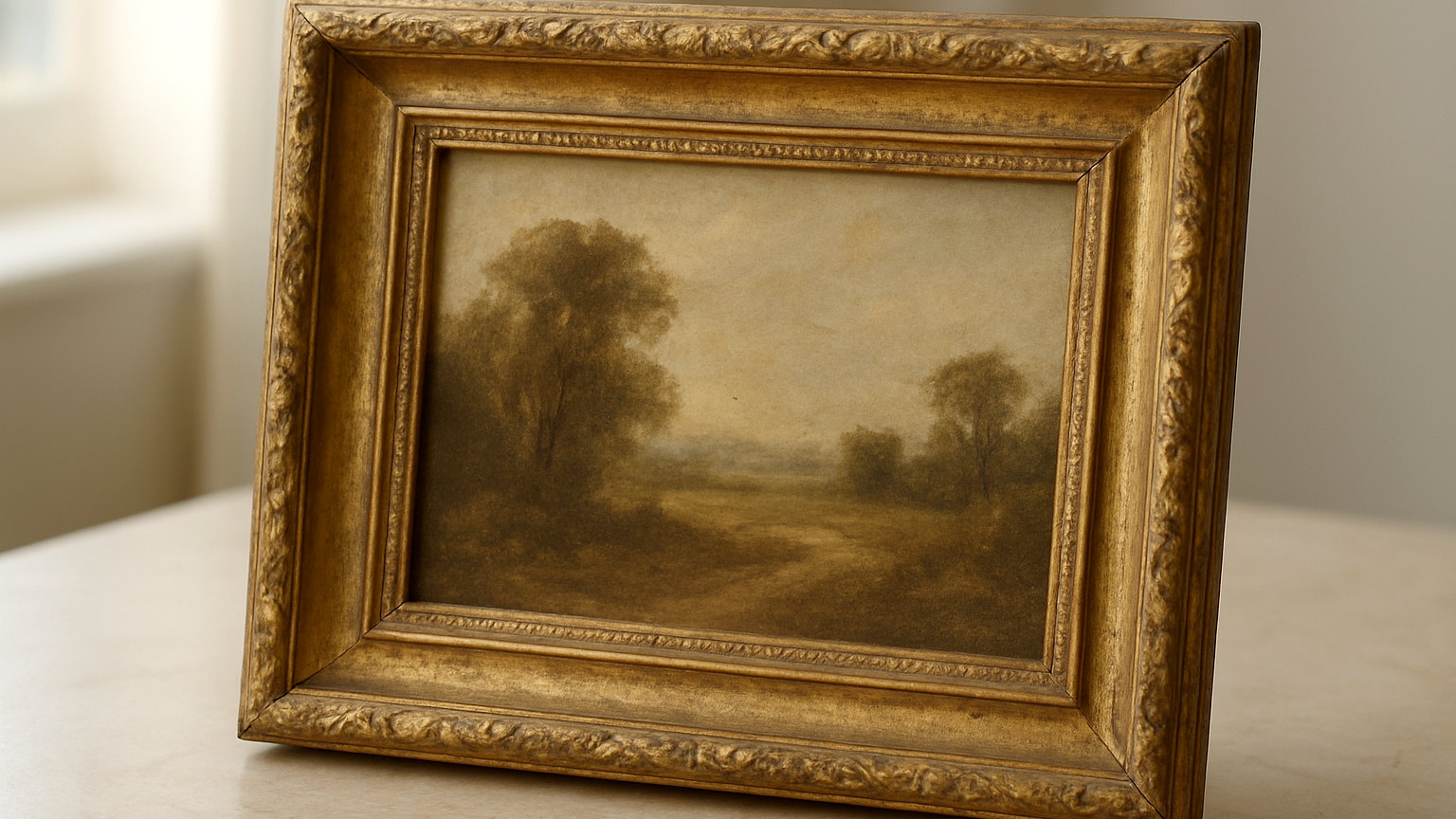
Usually a timber carcass with decoration applied over it, rather than carved from the solid. The decoration may be carved wood, gesso, or a moulded composition material pressed into shape.
Gesso is a chalk and glue mixture that can be moulded or carved and then gilded. Composition is a similar idea using a mixture pressed into moulds and applied to the frame, which allowed elaborate ornament to be produced cheaply.
How do you tell carved from moulded?
By looking for repetition and for shrinkage cracks. Carved wood ornament varies subtly between repeats, since no carver produces two identical results, and it follows the grain of the timber.
Moulded composition repeats exactly and frequently shows fine shrinkage cracks running across the ornament as the material dried and aged over decades. Those cracks are characteristic rather than damage, and their presence is a useful identification feature.
What does the gilding tell you?
Quality and period. Water gilding, the traditional method, lays gold leaf over a coloured clay called bole, usually warm red, and can be burnished to a mirror brightness.
Look for that red showing through where the gilding has worn on high points. Oil gilding cannot be burnished and has a flatter uniform appearance. Modern gold paint sits evenly including in deep recesses where leaf would never reach, and tarnishes to a dull greenish brown.
What should you check at the corners?
The joints, since that is where frames fail. Corners are mitred and frequently reinforced, and they open as the timber moves with humidity.
Look for gaps at the mitres, for splits running from the corner, and for repairs. Also check whether the ornament continues correctly around the corner, since a frame that has been cut down to fit a different picture usually shows an interrupted pattern.
Is the frame original to the picture?
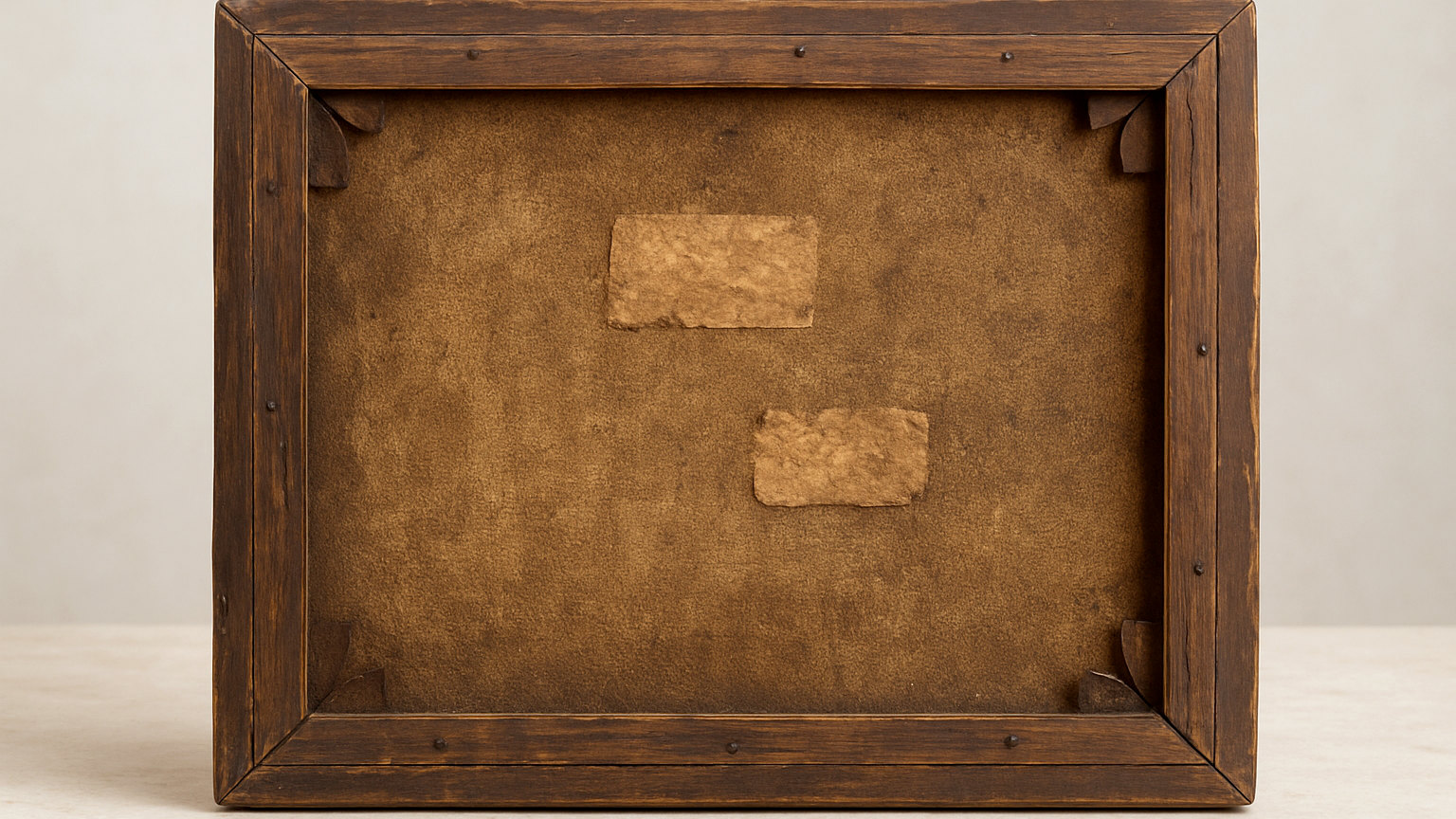
Frequently not. Check whether the rebate, the recess the picture sits in, fits the canvas or panel neatly or has been packed out or cut back.
Look at the back for old nail holes and marks suggesting a different sized picture. An original frame adds real value to a painting, and a period frame that fits well is desirable in its own right even where it was not the first one.
How do you date a frame?
By profile and ornament, which followed fashion closely. The overall section, whether it swells outward, hollows inward or steps, is the first thing to note.
Then the ornament: acanthus leaves, egg and dart, running patterns, corner cartouches and pierced scrollwork all belong to recognisable periods. Compare against reference illustrations rather than judging by impression, since revivals copied earlier profiles closely.
Should a frame be regilded?
Rarely, and it almost always reduces value. Regilding removes the accumulated surface and replaces it with something uniform, and worn original gilding is far more desirable.
Conservation is different: consolidating loose gesso, stabilising flaking and filling small losses reversibly are all legitimate. Ask any restorer whether the proposed work can be undone before agreeing to it.
How should a frame be cleaned?
With almost nothing. Dust very gently with a soft brush, working with the direction of the ornament rather than against it.
Never use water, solvents or any proprietary cleaner, since water dissolves the glue in gesso and lifts leaf immediately. Never rub a gilded surface with a cloth, since leaf is thin enough to be removed by pressure alone.
Are old frames worth buying separately?
Certainly, and they are frequently cheap. Empty period frames sell for a fraction of what a comparable new frame would cost and are far better made.
Measure the rebate before buying, since finding a picture to fit an existing frame is easier than the reverse. Check the corners are sound and the ornament complete, since replacing missing composition ornament is skilled and expensive work.