An antique watch contains a small machine that was built to be maintained and has probably been neglected for decades. Most of the damage these movements suffer now happens in the hands of well meaning owners rather than through fair wear, and almost all of it comes from three habits: winding too far, setting hands the wrong way, and storing a watch somewhere damp.
How should you wind an antique watch?
Slowly, steadily, and stopping the moment you feel resistance. Turn the crown in short smooth movements rather than one continuous spin, and pay attention to the feel through your fingers.
A mainspring reaches full wind and then simply stops. That firm stop is the signal to cease immediately. Continuing to force it is how mainsprings break, and a broken mainspring means a strip down and replacement rather than a quick fix. Wind at the same time each day if the watch is in use, since consistent winding gives better timekeeping.
What is different about a key wound watch?
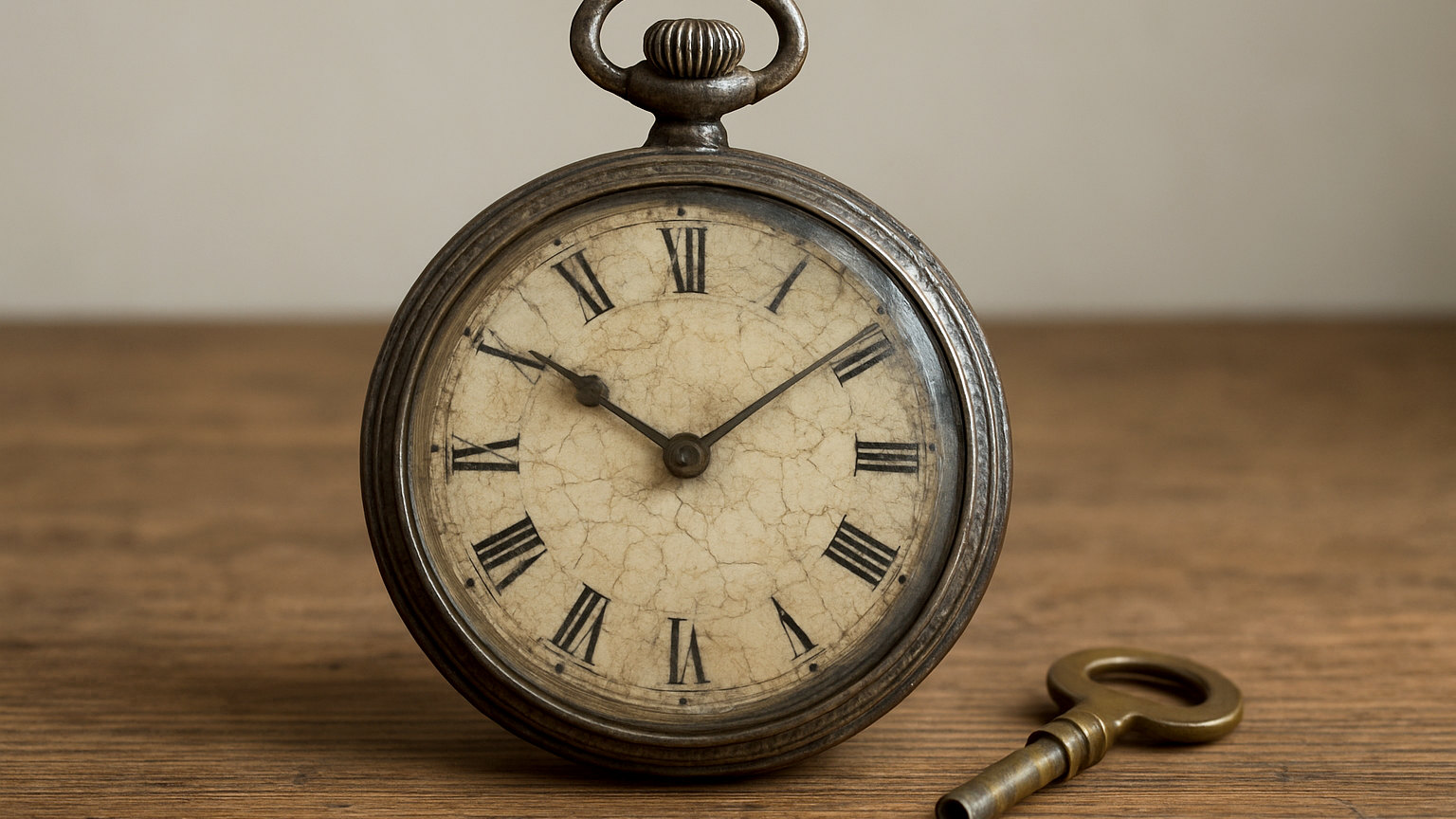
Earlier watches wind with a separate key rather than a crown, and many have two winding holes: one for the mainspring and one to set the hands. Using the wrong hole or the wrong size key causes real damage.
Use a key that fits the square properly, since a loose key rounds off the winding arbor. Support the watch rather than gripping the case tightly, and turn in the direction the mechanism allows without forcing. Some open face watches wind through the back and some through the dial side, so establish which before starting.
Which way should the hands be moved?
Forwards, always, and never backwards past a striking or calendar mechanism. On a plain timepiece with no complications, backwards is less risky but forwards remains the safer habit.
If the watch has a calendar, avoid changing the date during the hours around midnight when the change mechanism is engaged, since forcing it then can break the fine parts that operate it. Move hands gently and never force past a point of resistance.
Should a watch that has stopped be started?
Not without an assessment if it has been idle for years. Lubricants dry out and turn to a varnish that holds grit, and running a dry movement grinds the pivots and bearings in a way that is expensive to correct.
A service before restarting costs far less than repairing the wear caused by running it dry. If a watch stops suddenly during normal use, stop winding it and have it looked at, since continuing to wind against a fault usually makes the fault worse.
How should watches be stored?
Dry, stable and flat. Damp is the main enemy, because moisture corrodes steel components inside the movement where you cannot see it happening. Avoid bathrooms, lofts, garages and outside walls.
Store pocket watches lying flat in a lined box or a soft pouch rather than hanging by the bow, which stresses the pendant over time. Keep watches apart from each other so cases do not scratch, and keep them away from magnets, including speakers, phone cases and magnetic clasps, since magnetised movements run wildly fast.
Should a watch be left running or stopped?
Opinions differ, and both are defensible. Running keeps lubricants distributed and reveals faults early. Leaving a watch stopped avoids wear entirely on a piece kept purely as an object.
For a collection, a reasonable compromise is to run each watch occasionally rather than continuously. What matters more than either choice is the service interval, since a watch running on old oil accumulates wear whether it is worn daily or wound once a month.
How often does an antique watch need servicing?
Every few years if it is in regular use, and before being brought back into use after a long rest. A service means dismantling, cleaning, inspecting for wear, replacing worn parts and relubricating.
Use a watchmaker experienced with antique movements rather than a general repairer, and ask what will be done to any worn parts. A good watchmaker preserves original components wherever possible, because originality matters to value and replacement parts for early movements often have to be made by hand.