Watches reward knowledge more than almost any other collecting field, because the valuable part is hidden inside and the visible part is the least important. A tired looking watch with a fine movement can be worth many times a bright one with an ordinary movement, and telling them apart means opening the case.
How do you open a pocket watch?
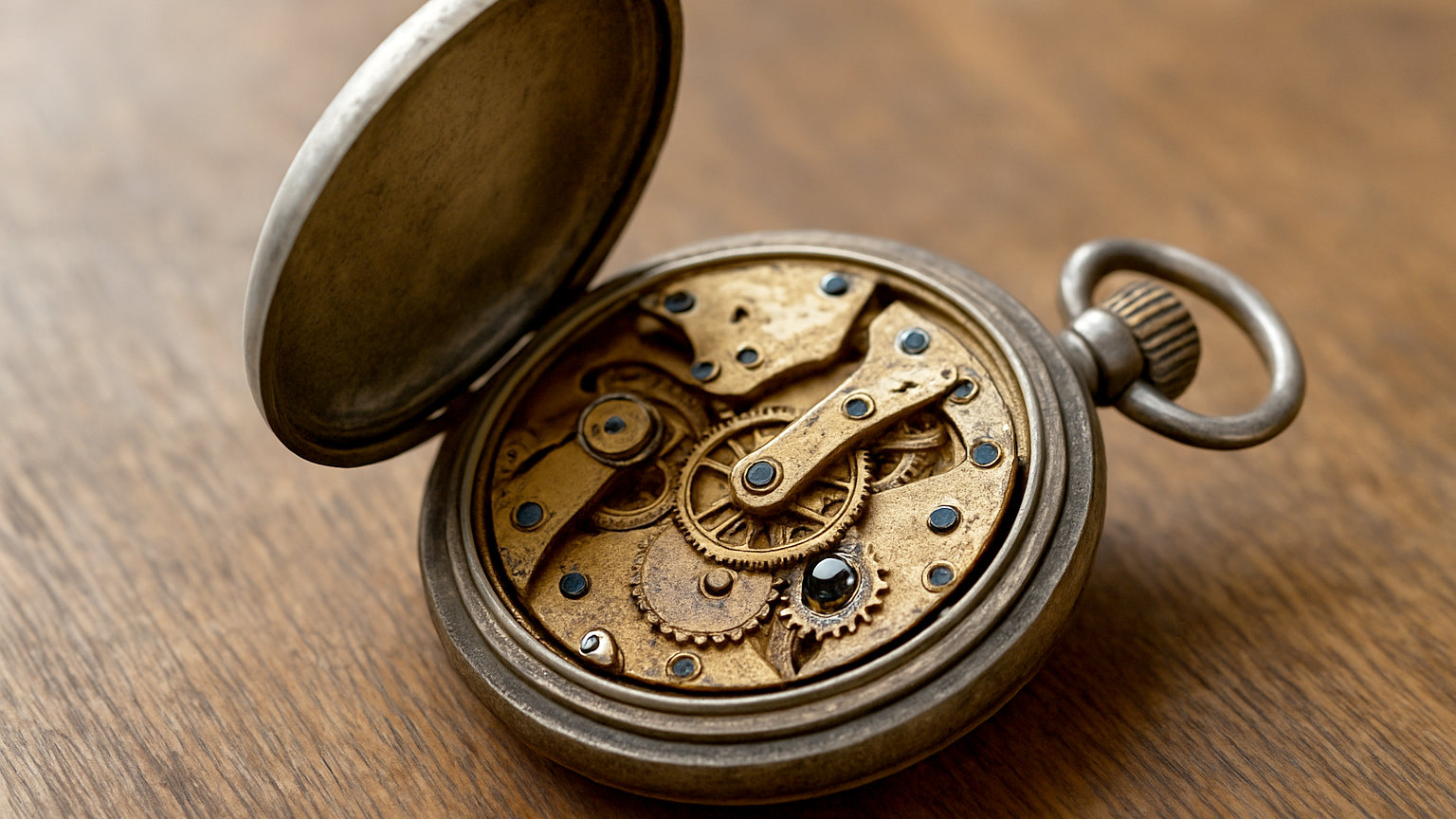
Carefully, and only if you can do so without tools. Many cases have a hinged back that opens with a thumbnail in a small lip, and some have a screw back that unscrews by hand. Others require a specific case knife and should be left to a watchmaker.
Work over a soft cloth in a clean, dust free spot, hold the watch by the case rather than the movement, and never touch the movement components with bare fingers. If the back resists, stop. Forcing a case back is how cases get scratched and springs get bent.
What should you look for in the movement?
The name and serial number first, usually engraved on the plate, which identify the maker and often give a production year through published records. Then the level of finishing: engraved plates, decorated bridges, jewelled bearings and a finely cut balance all indicate quality.
Count the jewels if they are marked, since higher counts generally indicate better movements. Look at whether the movement is a fusee type, using a chain and cone to even out the mainspring force, which indicates earlier and usually better English work.
Why does the dial matter so much?
Because it is the most visible original surface and the easiest thing to ruin. Collectors strongly prefer an original dial with honest age, including hairline cracks in enamel and gentle discolouration, over a refinished one that looks new.
A professionally repainted dial can cost a collectable watch a large part of its value, even though it looks better. Signs of refinishing include printing that is slightly too crisp, lettering with the wrong spacing, and a surface that lacks the subtle depth of fired enamel. Check under magnification before assuming a clean dial is good news.
Does the case add much?
Less than people expect, unless it is precious metal. Cases were frequently replaced during a watch life, and a movement in a later case is common rather than scandalous, though it should be reflected in the price.
Gold and silver cases carry hallmarks that date them precisely, and comparing that date with the movement serial number is the quickest way to detect a mismatch. Gold filled and rolled gold cases have a thin gold layer over base metal and are worth far less, showing brassy wear at the high points.
What condition problems reduce value most?
Replaced parts, crude repairs and heavy wear in the bearings. Look for screw heads that are burred from ill fitting screwdrivers, which indicates unskilled work inside.
Missing hands, a cracked crystal and a worn case are relatively minor and often repairable. A movement with missing components is more serious, since replacements for early watches must frequently be made by hand at real expense. Ask a watchmaker for an estimate before committing to a project piece.
Should you have an old watch serviced?
Yes if you intend to run it, and by a watchmaker experienced with antique movements rather than a general repairer. Old oils turn to varnish and running a dry movement causes wear that is expensive to correct.
Do not wind a watch that resists, and do not force hands to move. If a watch has been unused for decades, have it examined before running it at all. Storage is straightforward: keep it dry, away from magnets, and lying flat rather than hanging by a bow.
Where is the market strongest?
Fine English fusee work, complicated movements with additional functions, and named makers of reputation all attract committed collectors. Vintage wristwatches from certain makers have risen sharply and now outperform many pocket watches.
Ordinary silver cased pocket watches remain remarkably affordable given the craftsmanship involved, which makes them an excellent entry point. Buy the movement rather than the case, and buy originality rather than shine.