Pocket watches are among the best value in antiques. They contain genuinely fine hand work, they survive in quantity, they take almost no space, and ordinary examples cost very little. The field is also large enough to be daunting, which is why choosing a focus at the outset matters more than anything else.
Why start with pocket watches?
Because the craftsmanship to price ratio is exceptional. A silver cased English watch with a jewelled lever movement can be bought for a modest sum and represents hours of skilled hand work.
They also date themselves precisely, since a precious metal case carries a hallmark giving the exact assay year. Few antiques let you learn a field where every example tells you when it was made.
How should you choose a focus?
Narrowly. Collecting everything produces an accumulation of ordinary watches with no direction, which becomes discouraging and is hard to sell.
Pick one thing: a single maker, a movement type such as fusee or verge, a period, a case material, or watches from one town. A narrow focus lets you learn properly, recognise what is scarce and build something coherent.
What should you buy first?
An inexpensive complete running example of a common type, specifically to take apart visually and learn from. Handling matters more than reading.
Buy something you can afford to be wrong about. Look at the movement, learn where the numbers are, understand how the case opens, and get used to what normal wear looks like before spending seriously.
What should you prioritise?
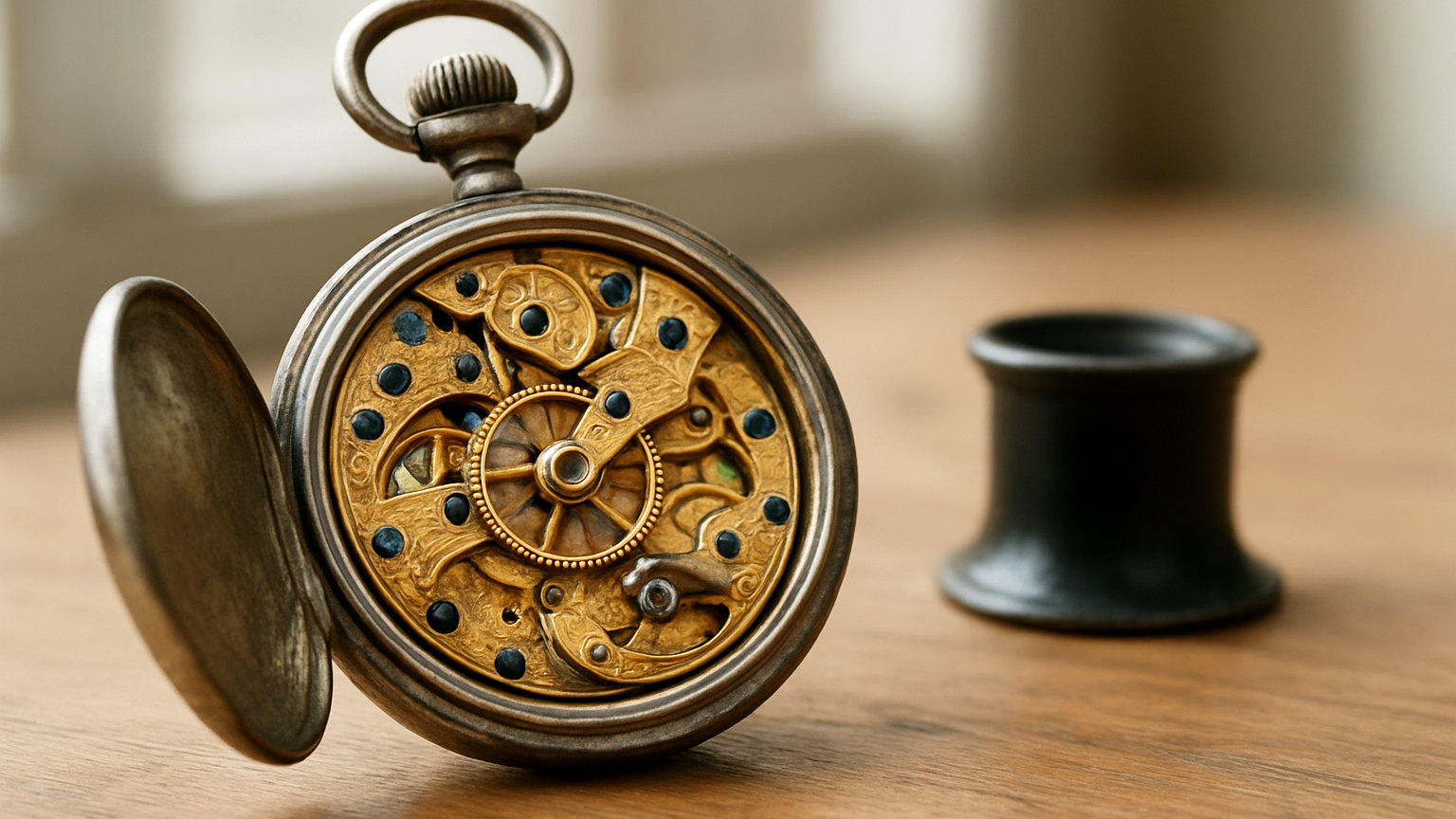
The movement above the case, always. Quality of finishing, the escapement type, jewel count and the general standard of work are what separate a good watch from an ordinary one.
The case matters for its metal and its condition, and a good movement in a plain case is a normal and honest combination. Buy the mechanism and treat the case as secondary, which is the opposite of how most beginners buy.
What condition should you accept?
Original and honest rather than pristine. An original unrefinished dial with age spotting is worth considerably more than a bright refinished one, and a case with honest wear beats a polished one.
Avoid anything with a movement missing parts, since replacements for early watches must frequently be made by hand at real expense. A watch needing a service is a routine cost; a watch needing parts is a project.
What should you learn to check?
Whether the case and movement belong together, by comparing the case hallmark year against the movement serial number. A gap of decades means the watch has been recased.
Also whether the dial is original, whether the hands match each other, and whether the case has been over polished so the hallmarks are nearly flat. These four checks catch most of the problems in the field.
Where should you buy?
From established dealers and specialist auctions to begin with, since they describe faults and stand behind descriptions. General salerooms offer better prices and require you to know what you are looking at.
Join a horological society, which costs little and provides expertise, meetings and people who will look at your purchases honestly. That is worth more than any book in the first year.
What should you budget for servicing?
More than beginners expect, and it should be part of the purchase decision. A watch that has stood unused for decades needs a service before running, since old oil turns to varnish and running dry causes expensive wear.
Use a watchmaker experienced with antique movements, and instruct them explicitly not to refinish the dial or polish the case. A service costs a meaningful proportion of what an ordinary watch is worth, which is why buying a running example matters.
What should you avoid?
Buying for investment, buying anything described vaguely, and buying gold cases purely for the metal. The first disappoints, the second usually has a reason, and the third destroys watches.
Also avoid the temptation to make everything work at once. A collection of ten unserviced watches is a liability; three good running examples you understand is a collection.